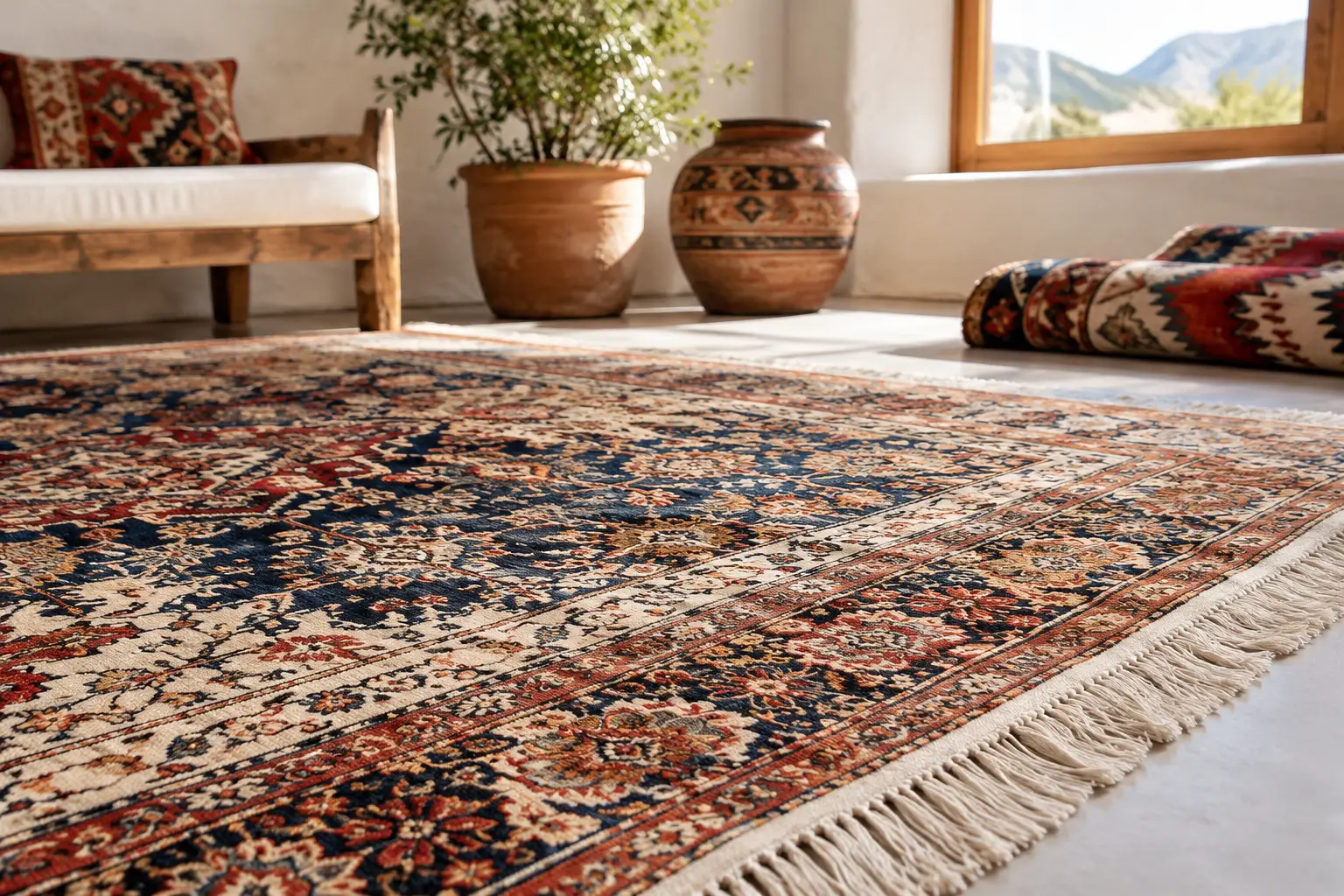
Rugs smell when odor-causing material settles deep into the fibers, foundation, backing, or pad. Dust, moisture, pet urine, food spills, and even old cleaning residue can all leave a rug smelling stale, sour, musty, or sharp.
The smell may seem to appear suddenly after a humid day, a heater comes on, or the rug is moved. Usually, though, the source has been there for some time. A rug holds far more than what is visible on its surface, especially a hand-knotted wool rug with a dense pile or an everyday rug with a thick backing.
Why do rugs smell even when they look clean?
A clean-looking rug can still hold pounds of dry soil over years of use. Fine grit, skin cells, pet dander, cooking oils, and outdoor dust work down through the pile with foot traffic. They do not always create a strong odor while dry, but they can smell noticeable when humidity rises or moisture reaches the rug.
Is dust the source of a stale or earthy smell?
Often, yes. New Mexico’s dry climate helps rugs dry quickly after a small spill, but it also means fine dust can travel easily indoors. Vacuuming removes surface debris, yet very fine particles settle below the pile and into the rug’s foundation. In a handmade rug, the foundation may be cotton, wool, or a combination of fibers that can retain that material for years.
When a rug is shaken, rolled, or warmed by sunlight, that buried dust can release an earthy or stale odor. This is one reason a rug may smell stronger after it is brought out of storage or moved from one room to another.
Can moisture make a rug smell musty?
Yes. Moisture is one of the most common reasons an odor becomes noticeable. A damp rug, pad, or floor beneath the rug creates conditions for mildew and bacterial growth. The source might be a spilled drink, a wet dog, an overwatered plant, a leaking window, or a rug returned to the floor before it was fully dry.
The pad matters here. A rug can feel dry on top while its pad remains damp underneath. If the odor is strongest near one edge or when you lift a corner, inspect the floor and pad as well as the rug. Do not put a damp rug back in place and hope the smell will fade. Give it airflow immediately, and avoid folding or stacking it while it is wet.
Why does pet urine smell worse later?
Pet urine can be difficult because it travels beyond the visible spot. Liquid moves through the pile, then into the foundation and pad. As urine dries, it can leave concentrated residues that reactivate with humidity or fresh moisture. That is why a rug may smell fine for weeks and then suddenly smell strong after rain, mopping nearby, or a change in indoor humidity.
A surface spray may make the top fibers smell better for a short time, but it rarely reaches all the affected layers. The same is true of many home deodorizing powders. They can add fragrance while leaving the original contamination in place, and their fine particles may be difficult to remove from dense wool pile.
Could the rug pad or backing be causing the odor?
It could. Rubber, latex, adhesive, and foam backings can break down as they age, especially after heat exposure. The result may be a rubbery, chemical, or oily smell. In some cases, the backing has bonded to the floor or transferred residue onto the rug.
Old rug pads may also collect dust, pet hair, and spills. If the rug smells cleaner after you remove the pad, the pad may be part of the problem. Replace a deteriorating pad rather than trying to wash it, and make sure the new pad is appropriate for the floor and the rug’s construction.
How can I tell where the odor is coming from?
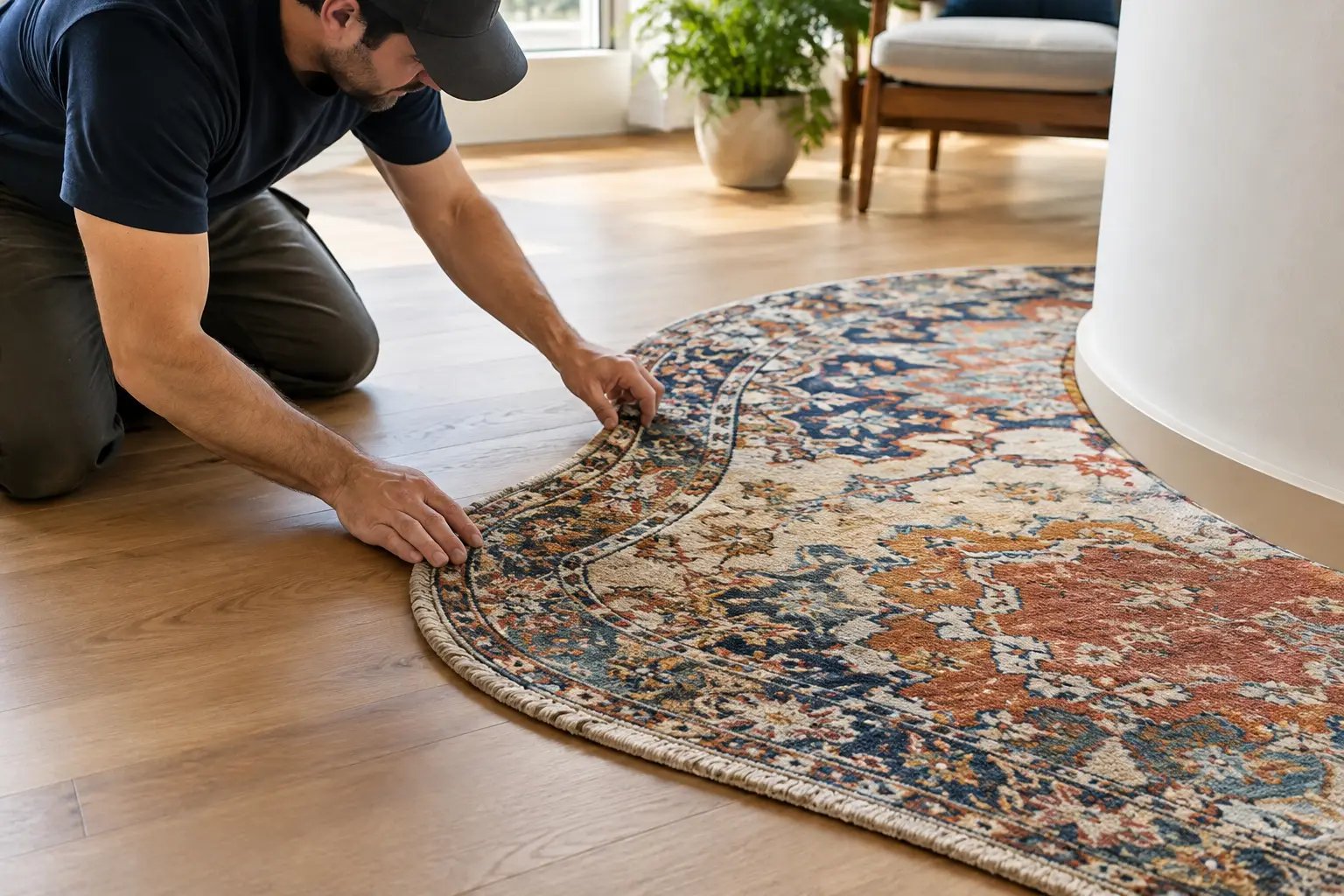
Start by moving close to the rug rather than relying on how the whole room smells. Check the surface, then carefully lift a corner and smell the underside and pad. Notice whether the odor is strongest in a particular area, along an edge, or across the entire rug.
A musty smell concentrated underneath often points to retained moisture, a damp pad, or a floor issue. A sharp ammonia-like smell suggests urine. A sour odor can come from old food, drinks, or organic residue. A dusty, dry smell may indicate embedded soil. These clues help, but they do not always tell the whole story because odors can move through multiple layers.
If the rug was inherited, bought secondhand, or stored for a long time, it may carry a combination of odors. Antique, Oriental, Persian, Navajo, and Southwest textiles deserve extra caution. Their fibers, dyes, and construction vary, so a treatment that is harmless on a synthetic rug may create color bleeding, distortion, or fiber damage in a handmade textile.
Can I remove a rug smell at home?
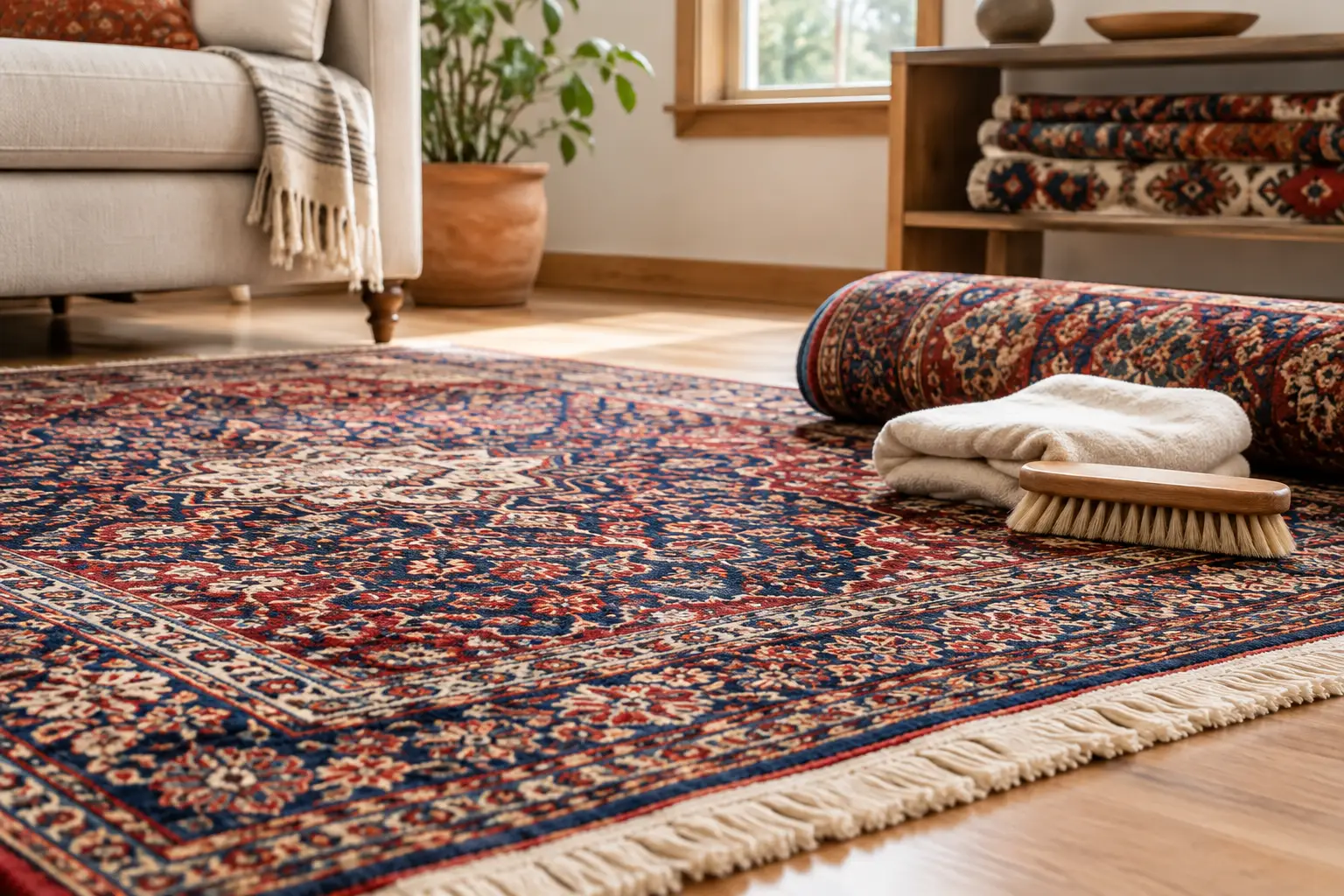
For a mild odor with no staining or dampness, basic care may help. Vacuum both sides if the rug is small enough to handle safely and its condition allows it. Air it out in a dry, shaded, well-ventilated space for several hours. Direct, prolonged sun can fade colors, particularly in older rugs and textiles with sensitive dyes, so shade is the safer choice.
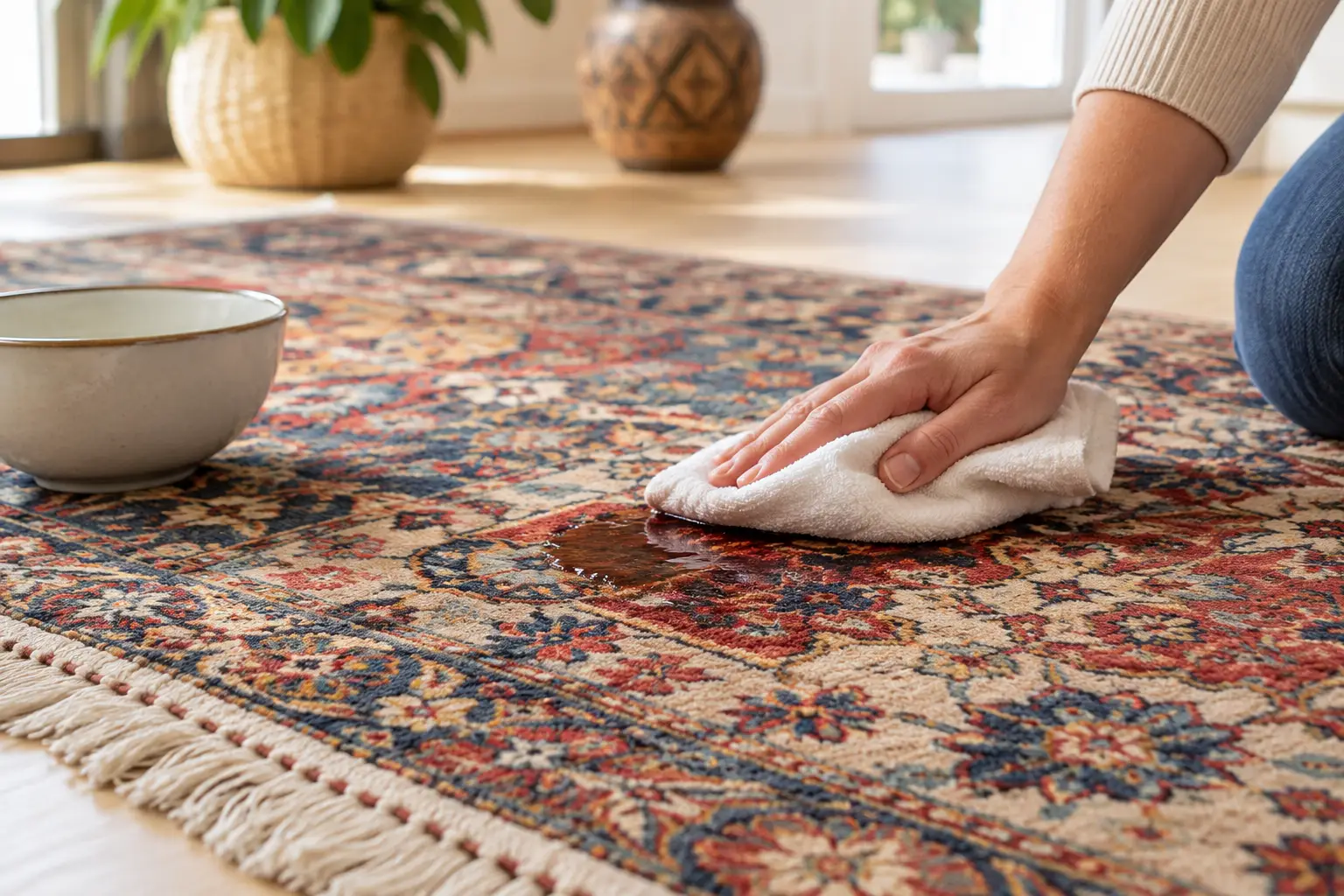
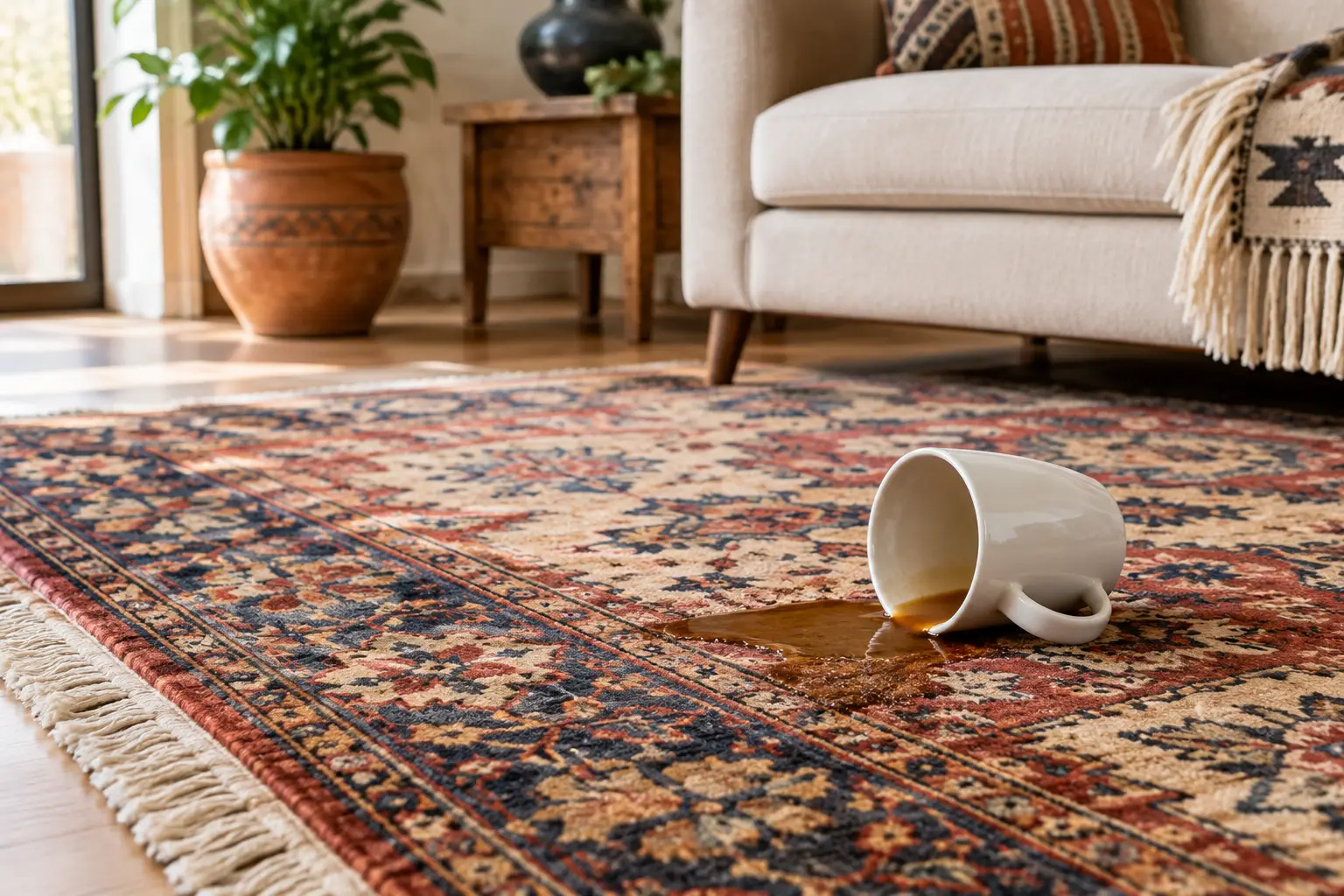
If there has been a fresh spill, blot it promptly with clean, white absorbent towels. Press down firmly, replace the towel as it becomes damp, and do not rub. Rubbing spreads liquid and can push it deeper into the pile. A fan can help dry the area, but avoid heat and make sure the rug is dry on both sides before returning it to a pad.
Home care has limits. Do not soak a rug, use a rented machine, apply bleach, shampoo it heavily, or scrub an odor with a brush. These approaches can leave detergent residue, cause dyes to run, shrink a cotton foundation, distort the rug, or create a larger moisture problem. Fragrance products may also complicate professional odor treatment because they mask the source rather than remove it.
When does a smelly rug need professional washing?
A rug needs professional attention when the odor returns after airing out, when urine has reached the foundation or pad, or when the rug has been wet for more than a day. Visible staining, color transfer, a stiff or crunchy area, and a mildew smell are also reasons to stop home treatment.
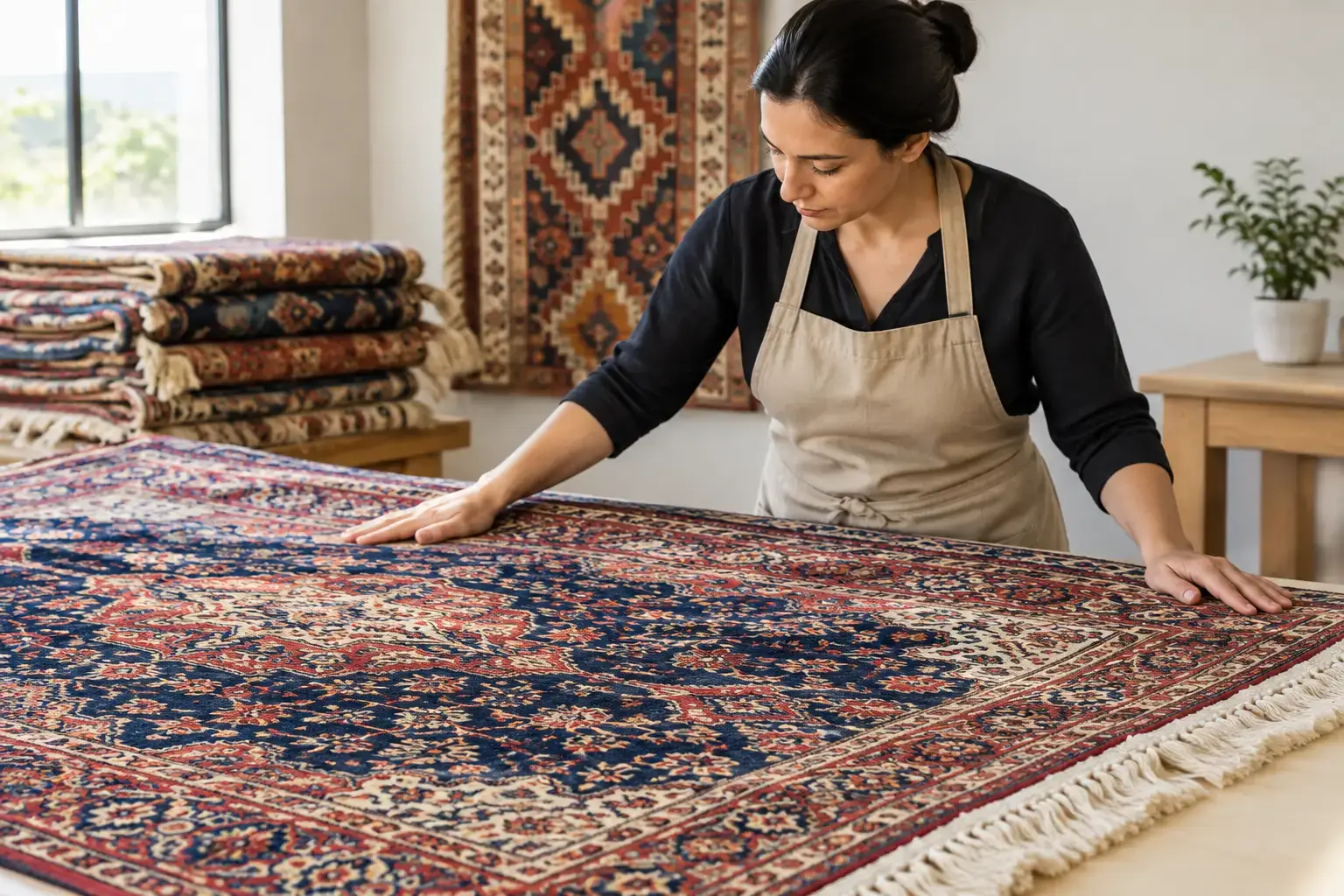
This is particularly true for silk, viscose, antique rugs, hand-knotted wool, and Navajo or Southwest textiles. These pieces can be structurally delicate even when they look sturdy. Fringe, side bindings, weak areas, and older repairs may need attention before the rug is washed.
A specialist can inspect the fibers and construction, test dyes, and determine whether odor treatment should focus on the whole rug or specific affected areas. This matters because not every rug should be cleaned by the same method. A machine-made synthetic rug, for example, is not handled the same way as a finely woven Persian rug or a flatwoven textile.
What happens during professional odor treatment?
Effective odor care begins with identifying what is in the rug and how far it has traveled. At One World Rug Care, rugs are inspected and dye-tested before cleaning. They are dusted to remove embedded dry soil, then washed by hand in cool water using methods suited to the material and condition of the rug.
For urine and other organic odors, treatment must address the affected fibers and foundation rather than simply perfume the pile. The rug is then dried in a climate-controlled room. Thorough drying is as important as washing because remaining moisture can create a new musty odor or weaken natural fibers.
Some odors are more persistent than others. How fully an odor can be reduced depends on its age, the amount of contamination, prior cleaning attempts, the rug’s materials, and whether the pad or floor has also been affected. Honest assessment is part of careful rug care, especially with older or valuable pieces.
How can I keep rugs from smelling again?
Regular vacuuming helps, but frequency depends on traffic. In an entry, family room, or pet area, vacuum once or twice a week. In a quiet room, every one to two weeks is usually enough. Use a suction-only setting or turn off the beater bar for delicate rugs, fringe, and hand-knotted pieces.
Address spills right away, rotate rugs about every six months to distribute wear and sun exposure, and keep an eye on the pad beneath. If a pet accident occurs, blot immediately and arrange professional care when the liquid has soaked through. For a rug in seasonal use, store it only when it is clean and fully dry. A clean, dry rug is far less likely to develop an unpleasant surprise when it comes back out.
Rug Care in Albuquerque and Northern New Mexico
When an odor persists, the safest next step is to have the rug and its pad evaluated before more moisture or cleaning products are added.
Have a rug that needs care? One World Rug Care has been cleaning, repairing and protecting area rugs in Albuquerque since 2012. Email a few photos of your rug to admin@oneworldrugcare.com for a free estimate, call us at (505) 821-0302, or visit the shop at 7200 Jefferson St NE, Suite A, Monday to Saturday 9 to 5. Pickup and delivery is free in Albuquerque and Santa Fe on orders of $150 or more, and available in Taos, Durango, Pagosa Springs and Las Cruces.