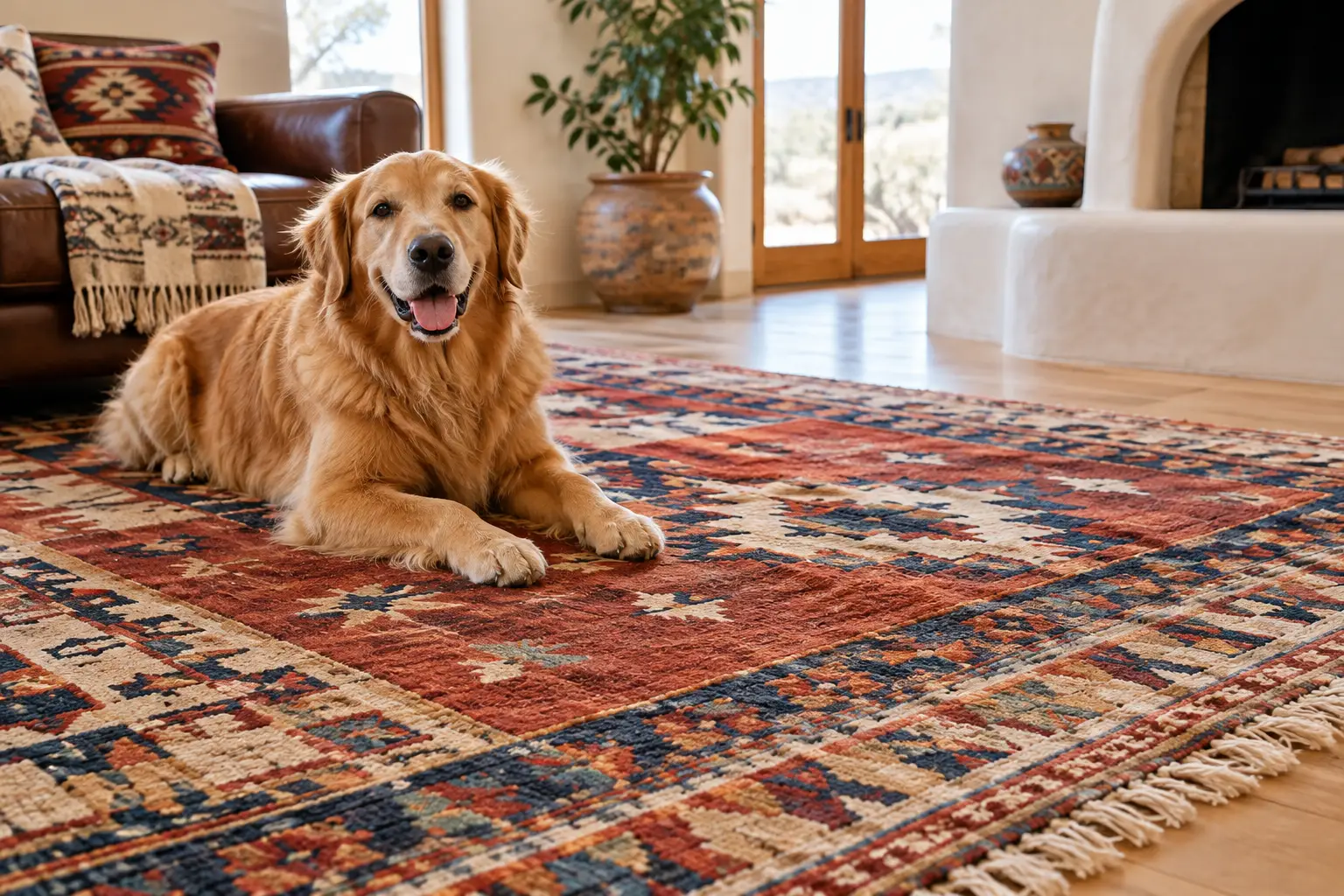
To remove pet smell from rugs, absorb fresh moisture quickly, avoid soaking the fibers, and address the urine beneath the surface rather than trying to cover the odor. Knowing how to remove pet smell from rugs safely matters because urine can travel through the pile, backing, and pad long before the rug looks stained.
A rug may smell fine after a quick surface treatment, then become noticeable again on a warm afternoon or during a humid summer storm. That does not mean the rug is beyond care. It usually means odor-causing residue remains somewhere the household treatment did not reach.
Why does pet urine make a rug smell days later?
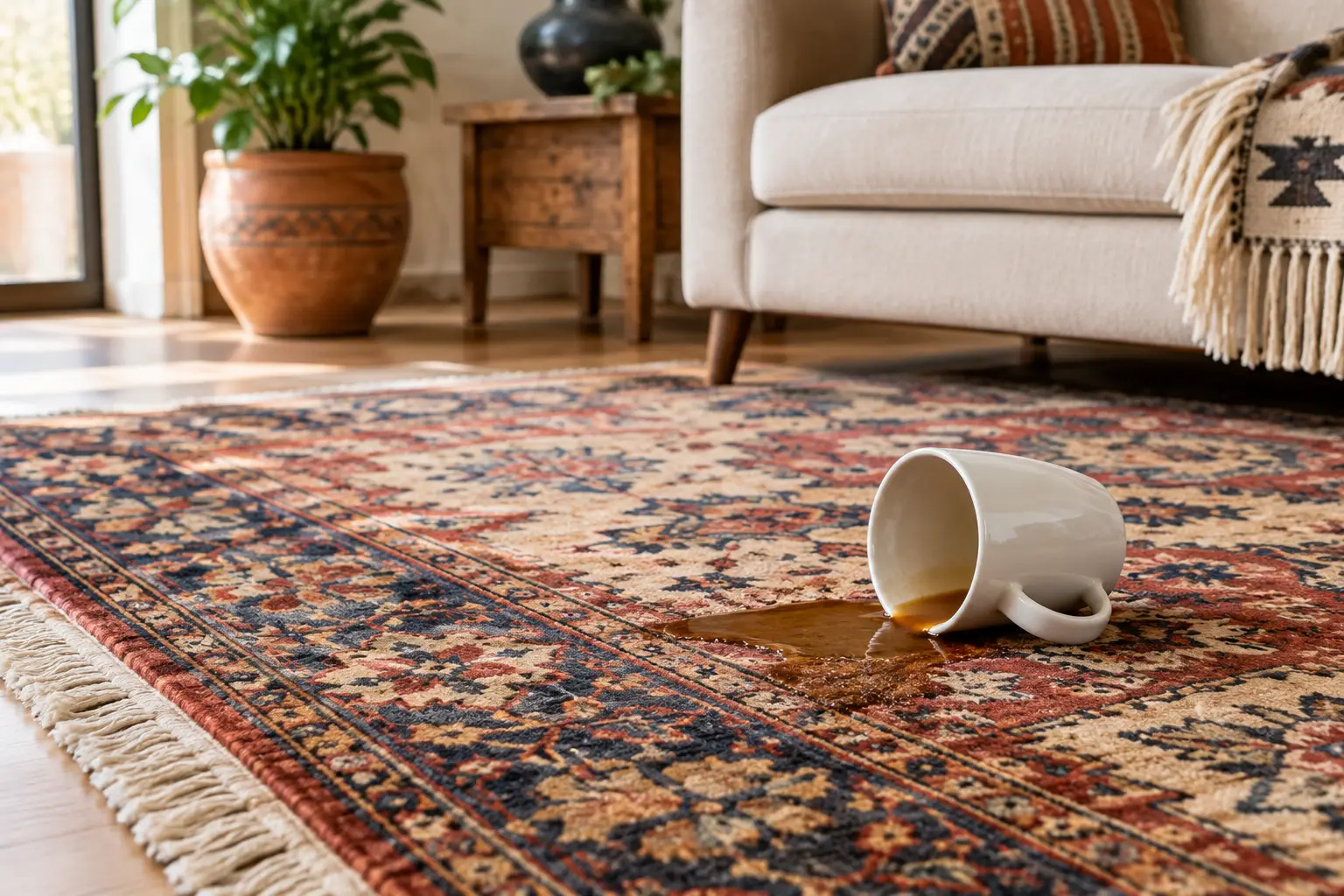
Fresh urine is mostly water, but it carries salts, proteins, and other compounds into the rug. As it dries, concentrated residue can remain in the fibers and at the base of the rug. Moisture in the air can reactivate that residue, which is why an old accident may seem to return without a new incident.
The construction of the rug changes the problem. A thin synthetic rug may hold an accident near the surface. A dense hand-knotted wool rug can allow moisture to settle deep in the pile and foundation. On a tufted rug, urine may reach the adhesive. On silk, viscose, antique, Navajo, Persian, Oriental, or other handmade rugs, the wrong cleaner or too much water can cause color movement, texture changes, or browning.
The rug pad deserves attention too. If urine passed through the rug, a pad may continue to hold odor even after the rug looks clean. Flooring beneath the pad should also be checked once the rug is lifted, especially after a large or repeated accident.
How do you remove pet smell from rugs at home?
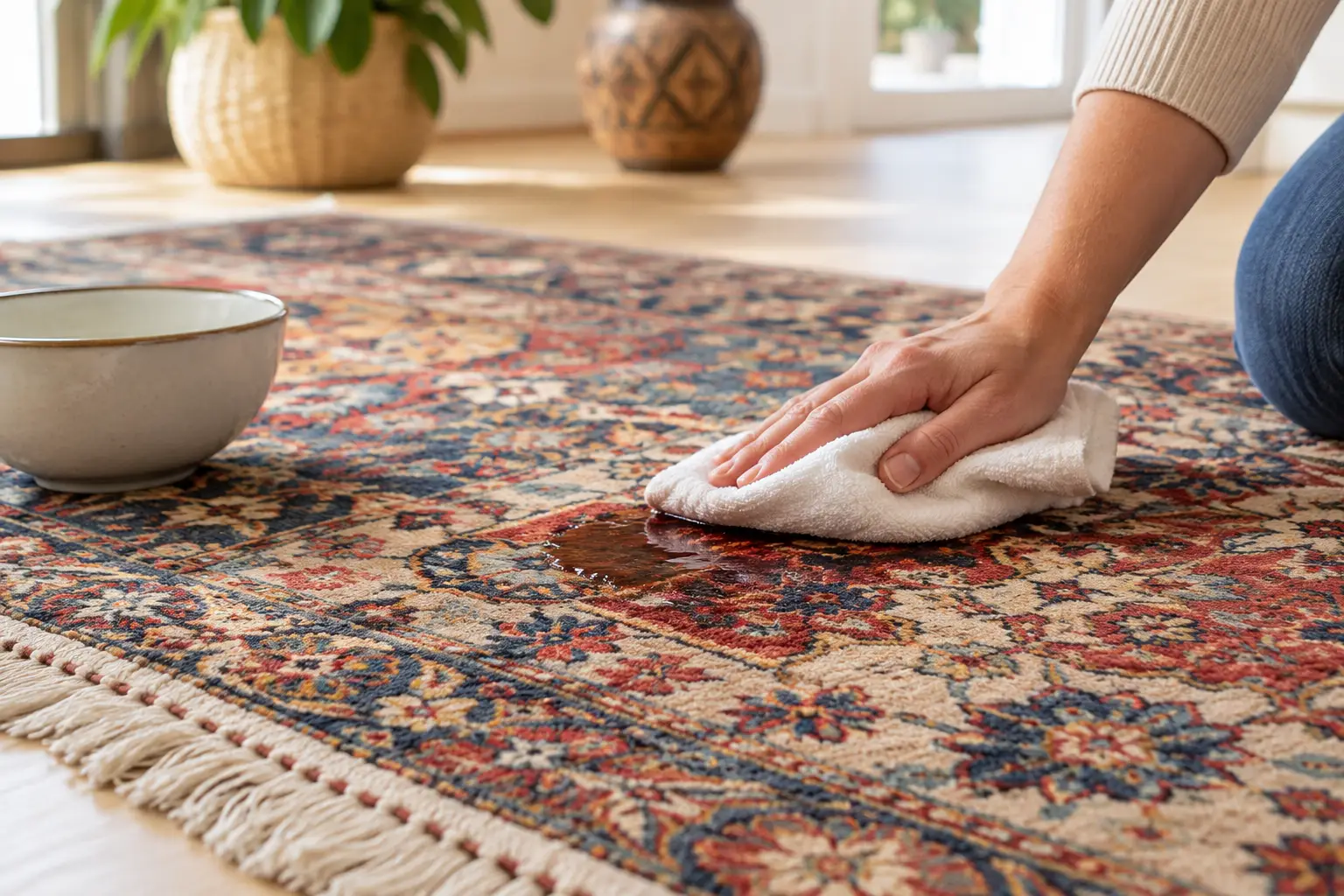
For a fresh accident, focus on containment, not deep cleaning. Blot the area with clean, white absorbent towels for 30 to 60 seconds at a time. Replace the towel as it becomes damp, and continue until it picks up very little moisture. Press straight down rather than rubbing, which can spread the spot and distort the pile.
If the rug can be safely lifted, place a dry towel beneath the affected area as well. This helps draw moisture away from the back of the rug. Keep pets away from the area while it dries, and allow air circulation around the rug. A photograph of the spot, taken before it disappears, is useful if professional treatment is needed later.
Do not flood the rug with water, shampoo, vinegar, or household deodorizer. Flooding can push urine farther into the foundation, pad, or floor. Fragranced products may mask the odor for a day or two while leaving the source in place. Heat can also set certain stains and may damage fibers, adhesives, or unstable dyes.
What should you avoid on valuable rugs?
Avoid powders, harsh oxidizers, bleach, and strong alkaline cleaners on wool, silk, viscose, antique, and handmade rugs. These materials do not respond like wall-to-wall carpet. Wool has a protective natural scale structure that can be affected by aggressive chemistry. Silk and viscose can lose luster, stiffen, or develop water marks. Older dyes may bleed when they are exposed to moisture or the wrong pH.
Household enzyme products may help with a small, recent accident on some colorfast synthetic rugs, but they are not a universal answer. A bottle cannot tell you whether a rug has fugitive dyes, a cotton foundation, weak fringe, or previous color damage. If the rug is valuable, sentimental, handmade, or has a persistent odor, it is wiser to stop after careful blotting and have it evaluated.
Can baking soda or air freshener remove the odor?
Baking soda can absorb some surface odor while dry, but it does not remove urine salts embedded in the rug. Fine powder can also settle into a dense pile and be difficult to remove completely. Air fresheners and scented sprays have the same limitation: they change what you smell without necessarily changing what remains in the fibers.
A useful distinction is odor reduction versus odor treatment. Odor reduction may make a room more comfortable for a short time. Odor treatment means locating the affected area, addressing the contamination in the pile and foundation, and cleaning the rug in a way appropriate to its materials. Repeated accidents generally call for the second approach.
If the odor is strongest on the back of the rug, along the edges, or underneath when the rug is lifted, surface products are unlikely to be enough. That is also true when the smell returns after a few dry days.
When does a pet-smelling rug need professional care?
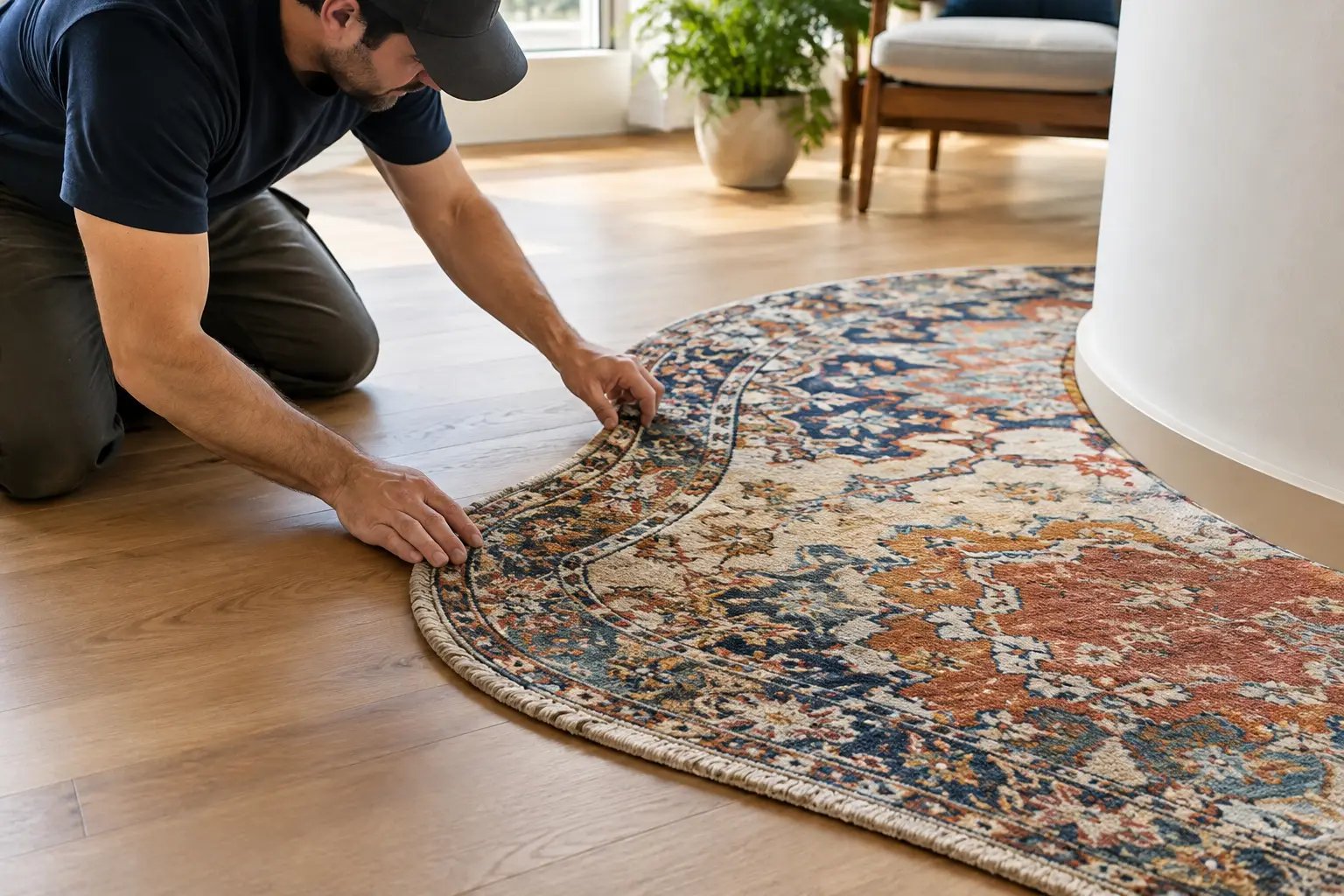
A professional evaluation is appropriate after a large accident, multiple accidents, or any accident involving a rug with delicate or uncertain fibers. It is also appropriate when a stain has dried, the odor returns after home blotting, or the rug has been stored while damp. Rugs with fringe, loose edges, old repairs, color bleeding, or a musty smell need extra care because moisture can reveal existing weaknesses.
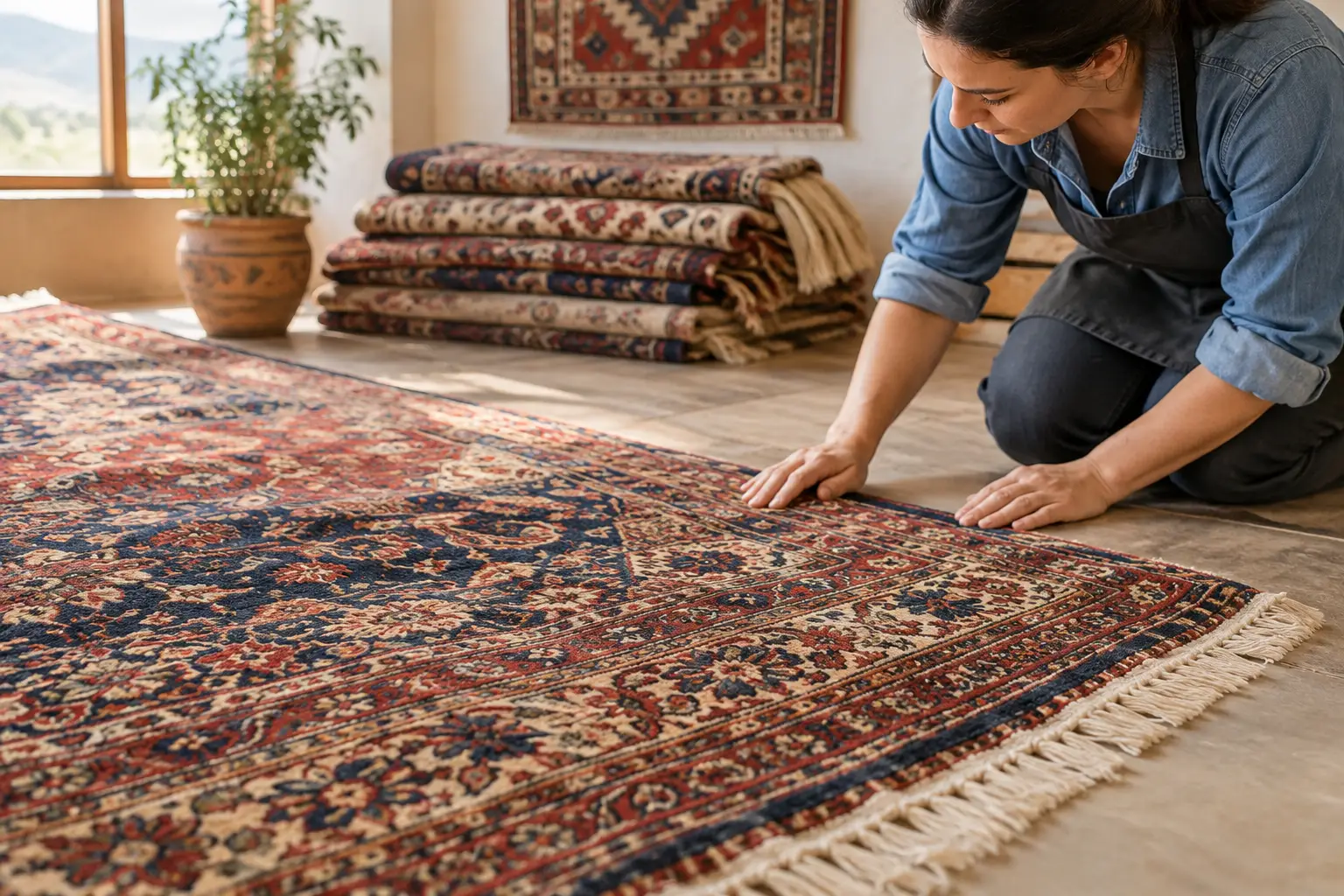
In-plant cleaning allows the entire rug to be handled rather than only treating its face. At One World Rug Care, rugs are inspected and dye-tested before cleaning. They are dusted to remove dry soil, then washed by hand in cool water with methods chosen for the rug’s fiber, dyes, and construction. Controlled drying matters as much as washing, because a rug needs to dry thoroughly without prolonged dampness in its foundation.
This process is particularly useful for wool, handmade, antique, silk, and viscose rugs, where a generic cleaning method can create a second problem while trying to solve the first. It also gives a specialist the chance to inspect the pad, fringe, edges, and backing for related concerns.
What happens if pet odor is left in a rug?
Leaving urine residue in place can encourage a pet to return to the same location. It can also attract dust and create a sticky area that soils faster than the rest of the rug. Over time, repeated wetting may weaken cotton foundations, affect adhesives in some constructions, or leave a visible color change.
Prompt care is gentler than waiting for a spot to become a long-term problem. That does not mean every small accident requires immediate removal from the home. It does mean a rug should be assessed sooner when the odor is persistent, the accident was substantial, or the rug is an heirloom or investment piece.
How can you prevent pet odor from returning?
Start with a clean, dry rug and pad. If an older pad retains odor, replacing it may be more sensible than placing a cleaned rug back over the same source. Keep an eye on the areas pets favor, especially corners near doors, furniture edges, and quiet rooms used less often.
Regular vacuuming helps remove dry soil that can hold everyday odors, although it will not remove urine contamination. Rotate rugs every six to 12 months when practical to even out wear and sun exposure. For households with young pets, senior pets, or an animal recovering from illness, a washable barrier or temporary change in room access can protect a fine rug during a difficult period.
Rug Care in Albuquerque and Northern New Mexico
A pet accident does not have to decide a rug’s future, but prompt, fiber-aware care gives it the best chance.
Have a rug that needs care? One World Rug Care has been cleaning, repairing and protecting area rugs in Albuquerque since 2012. Email a few photos of your rug to admin@oneworldrugcare.com for a free estimate, call us at (505) 821-0302, or visit the shop at 7200 Jefferson St NE, Suite A, Monday to Saturday 9 to 5. Pickup and delivery is free in Albuquerque and Santa Fe on orders of $150 or more, and available in Taos, Durango, Pagosa Springs and Las Cruces.