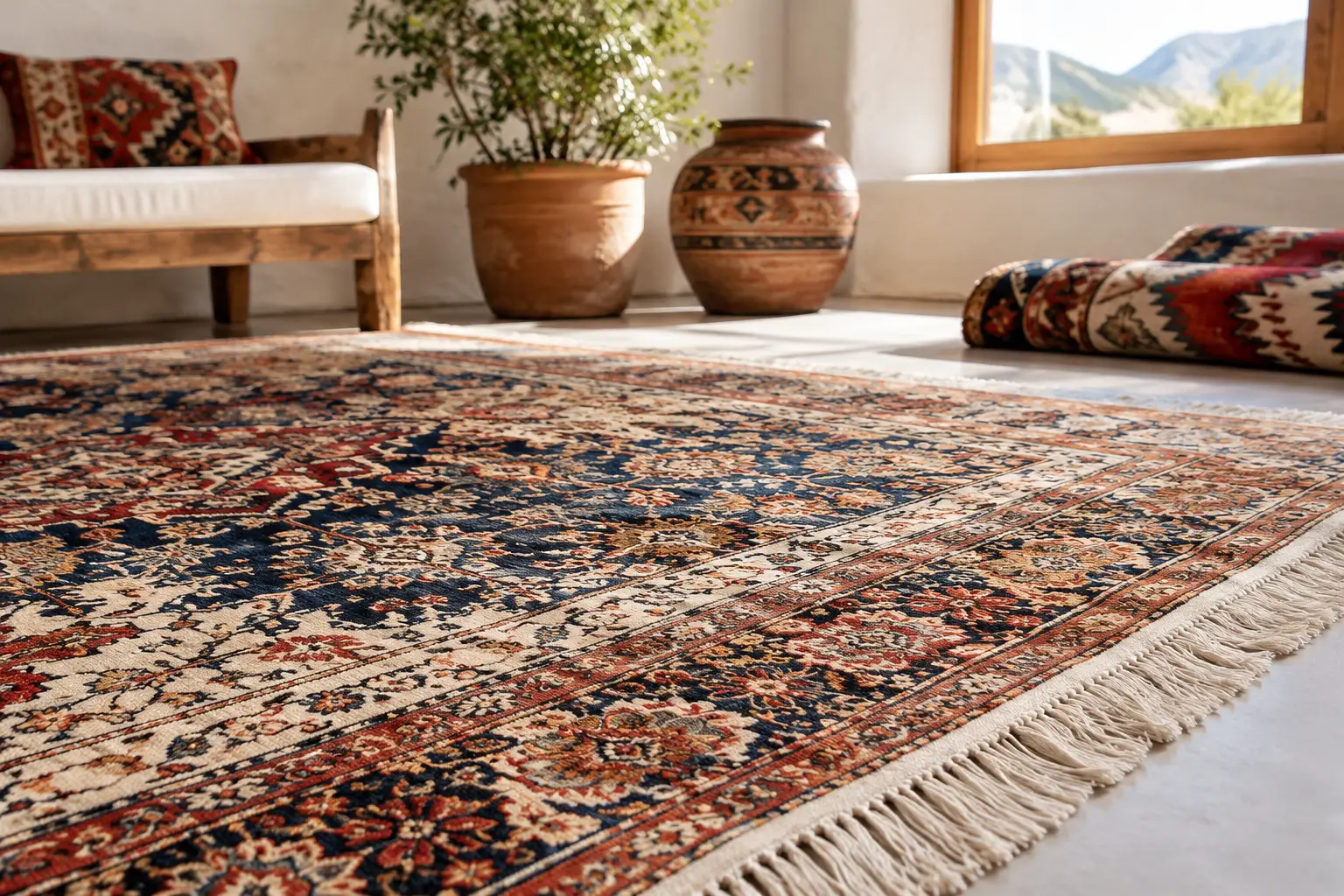
Handmade rug cleaning Santa Fe households can rely on is a controlled, material-specific process, not a one-size-fits-all surface treatment. A hand-knotted wool rug, a Navajo textile, and a viscose rug may all look like area rugs, but they can react very differently to water, agitation, and cleaning solutions.
For a valuable or delicate rug, proper cleaning begins with knowing what it is made of, how it was constructed, and what has happened to it over time. That is why handmade rugs are best cleaned in a rug-care shop where they can be inspected, dusted, washed, and dried under controlled conditions.
Why does a handmade rug need different care?
Handmade rugs carry more variation than most machine-made rugs. Wool may be resilient but still vulnerable to dye bleeding, shrinkage, or distortion if it is cleaned too aggressively. Silk and viscose can have a soft sheen, yet their fibers may become stiff, brown, or permanently changed by the wrong moisture level or cleaning chemistry. Antique rugs can have weakened foundations and worn edges that need gentle handling before any wash begins.
Construction matters just as much as fiber. A hand-knotted rug has a pile tied to a foundation, while a flatwoven textile may have no pile at all. Fringe is often part of the foundation rather than a decorative trim. Pulling, brushing, or treating fringe carelessly can damage the structure of the rug itself.
Navajo and Southwest textiles also deserve a careful approach. Their wool, dyes, age, and weave structure vary widely. Before cleaning, a specialist needs to assess color stability and identify fragile areas, old repairs, stains, or insect damage. A process that is acceptable for an everyday synthetic area rug may be inappropriate for a handmade textile.
What happens during handmade rug cleaning in Santa Fe?
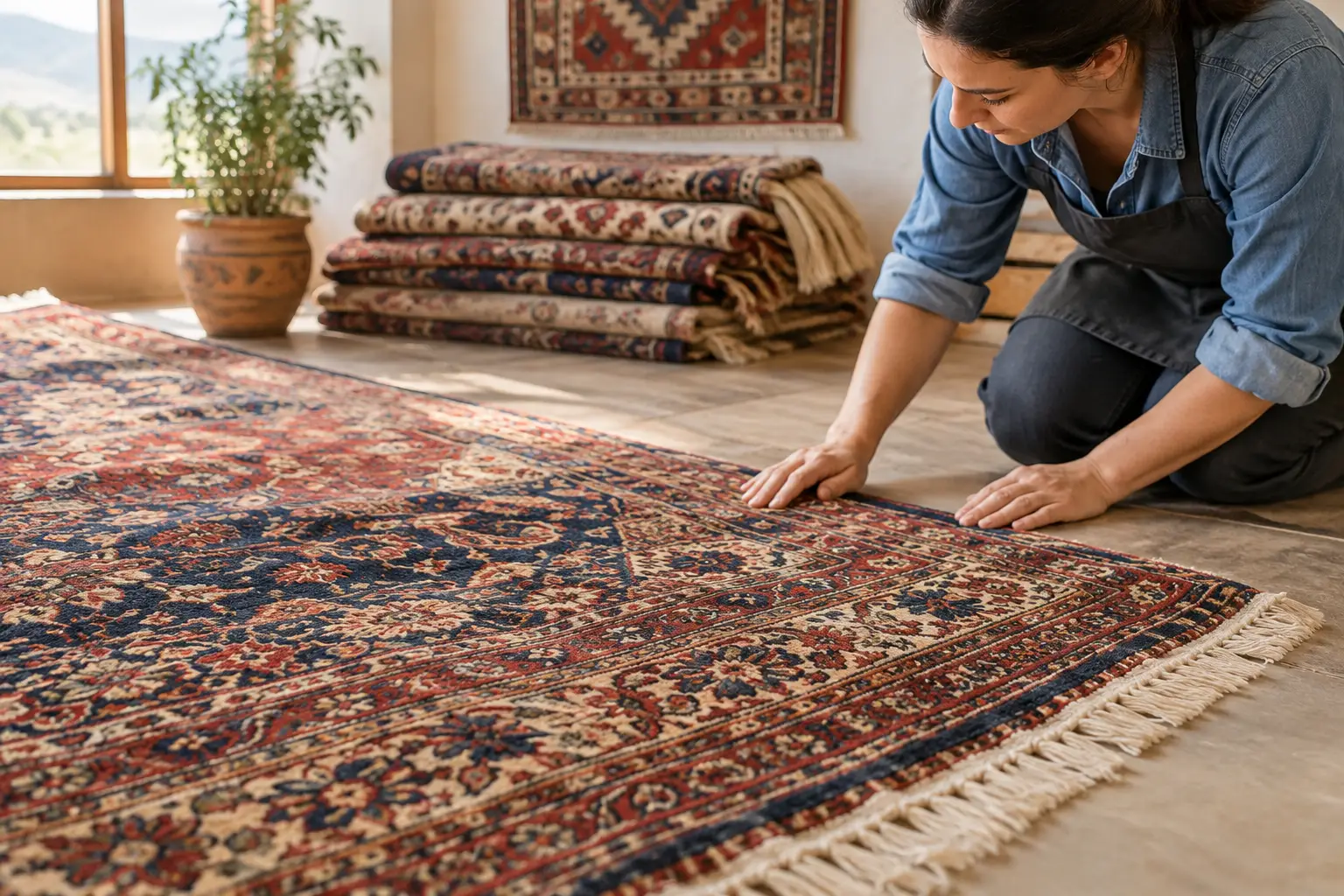
A thorough in-plant process gives a rug the attention that cannot be provided by cleaning it where it lies on the floor. At One World Rug Care, every rug is first inspected and dye-tested. The inspection records the rug’s fiber, construction, condition, odors, stains, fringe, edges, and any repair concerns. Dye testing helps determine whether colors are stable enough for washing and what method is appropriate.
The rug is then dusted to remove dry soil embedded beneath the pile. This is a significant step. Fine dust, sand, pet dander, and grit settle deep into rugs over months and years, especially in homes with pets, fireplaces, open windows, or high foot traffic. Vacuuming at home helps with surface debris, but it does not remove all of the compacted particulate matter held within a dense handmade pile.
After dusting, the rug is washed by hand in cool water using methods selected for its material and condition. Cool-water washing is particularly useful where dyes or delicate fibers call for restraint. The goal is not simply to make the surface look brighter. It is to flush away soil and residues while protecting the fibers, color, and shape of the rug.
Finally, the rug is dried in a climate-controlled room. Controlled drying matters because a rug that stays damp too long can develop odor, browning, dye movement, or foundation problems. Drying time depends on the rug’s size, thickness, fiber, and moisture level. A dense wool rug and a thin flatweave do not dry on the same schedule, and a careful shop allows the rug to dry fully before it is returned.
Can pet urine and odor be treated without harming the rug?
Often, yes, but pet incidents need prompt and honest assessment. Urine can travel through the pile into the foundation and backing or pad beneath it. What looks like a small spot on top may be much larger underneath, especially after repeat accidents in the same area.
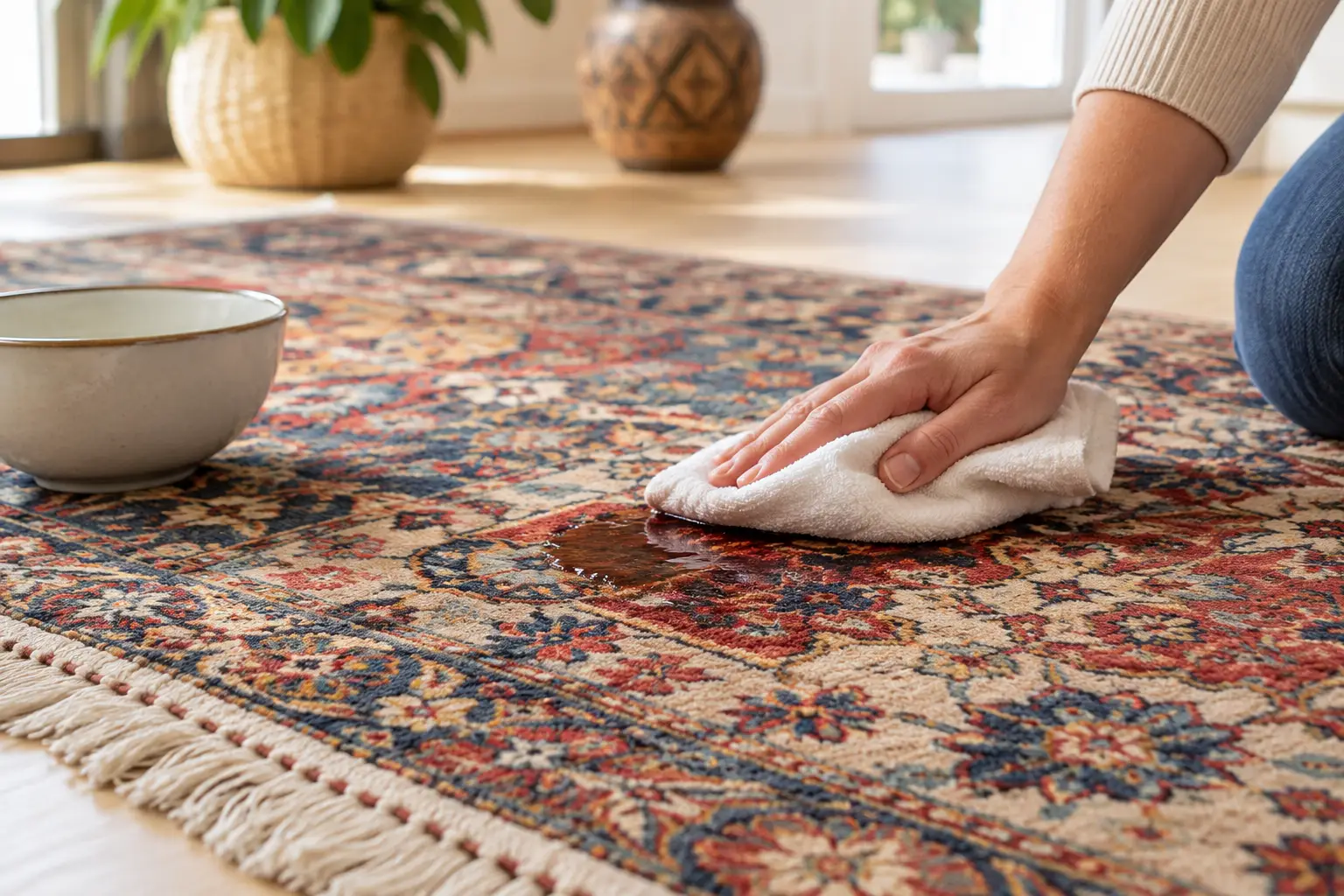
At home, blot fresh moisture with clean white towels and keep pets away from the spot while it dries. Avoid saturating the rug with store-bought products, vinegar mixtures, or heavily scented deodorizers. Those products may leave residues, spread the affected area, or interfere with later treatment. Never use a steam cleaner on a handmade rug.
Professional treatment is more appropriate when an odor returns in humid weather, a pet has used the same area more than once, the rug feels stiff after an accident, or staining is visible on both sides. The rug needs to be evaluated for how far the contamination has traveled. Treatment can address urine and odor concerns, but results depend on the fibers, dye stability, age of the contamination, and prior products used on the rug.
When is a spill safe to handle at home?
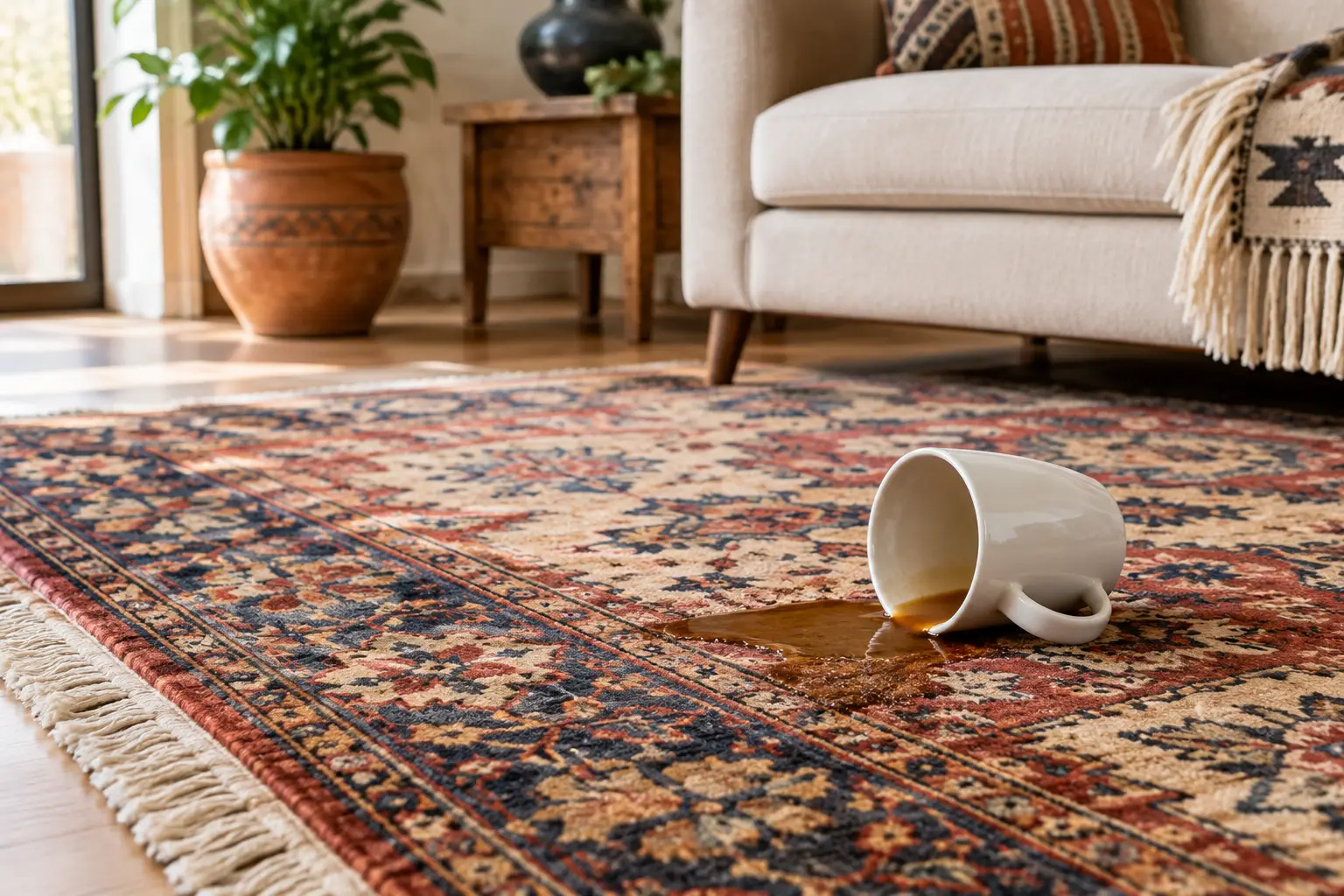
A fresh spill is usually safest to address with quick blotting. Use clean white towels, press gently from the outside of the spill toward the center, and replace the towel as it absorbs moisture. Do not scrub. Scrubbing can fuzz wool, distort pile direction, push a stain deeper, or spread color.
For a small water-based spill on a stable everyday rug, light blotting may be enough until professional advice is available. If the spill involves wine, coffee, cooking oil, paint, ink, pet waste, or a colored beverage, stop after basic blotting. The same is true if the rug is silk, viscose, antique, handmade, or has visible color variation. These are situations where an attempted home remedy can become the larger problem.
Take a few clear smartphone photos in natural light, including one of the whole rug and one close-up of the affected area. Photos can help a rug specialist provide an initial assessment and estimate before the rug is moved.
What else should be checked while the rug is at the shop?
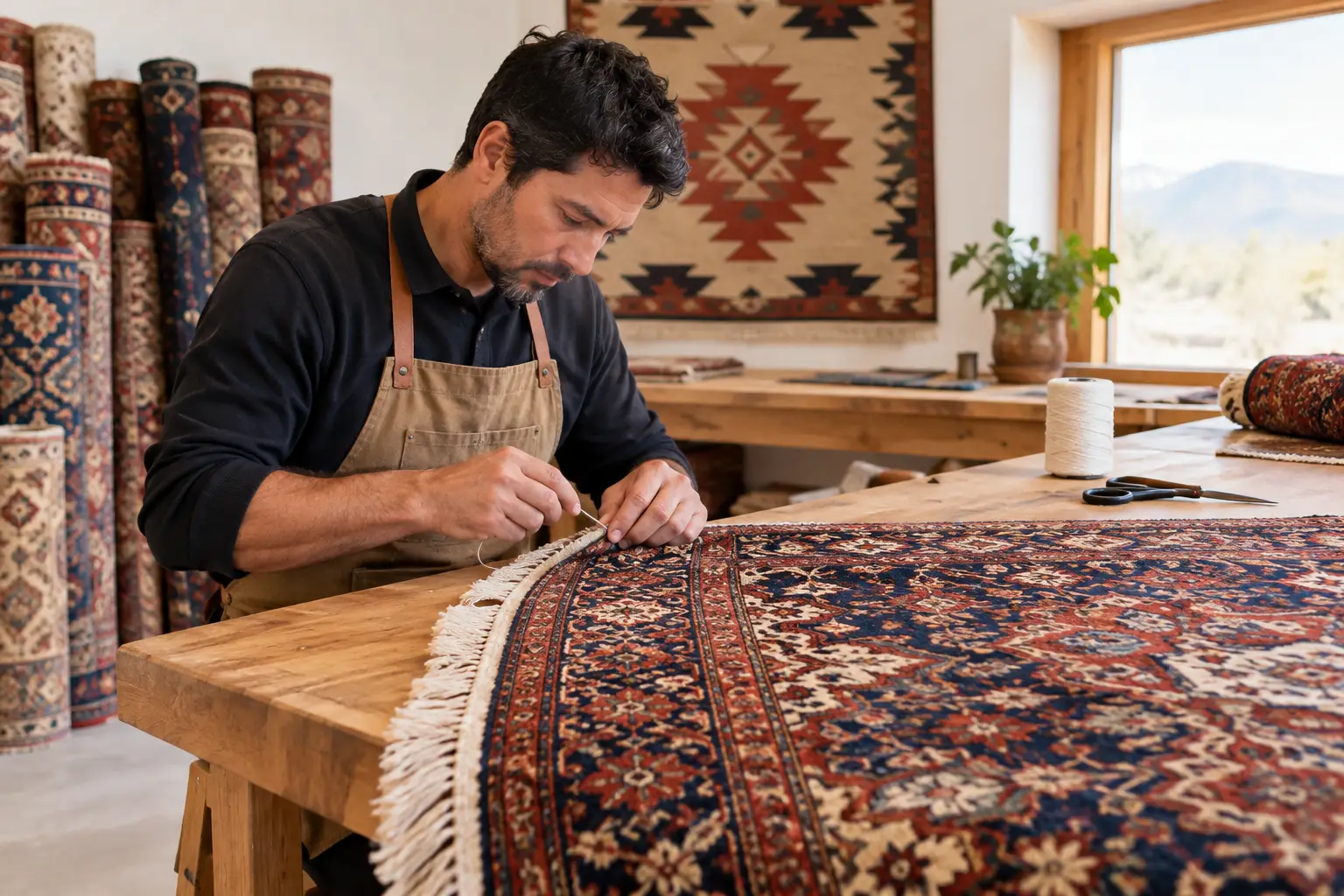
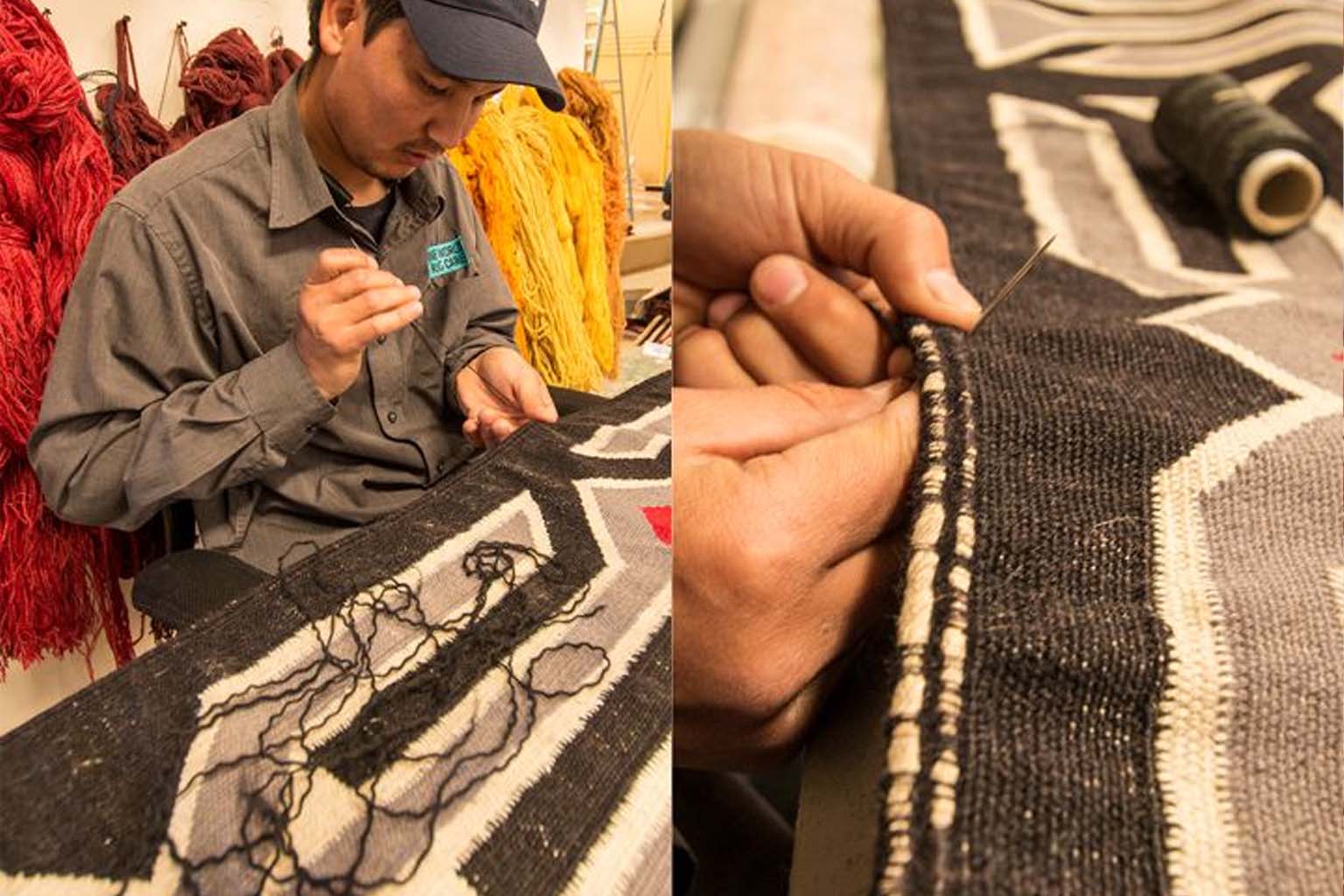
Cleaning is a useful time to look beyond soil and stains. Worn fringe, loose edges, breaks in the foundation, moth activity, sun fading, and old repairs can be easier to see once surface soil has been removed. Catching a loose edge early may prevent a small repair from becoming a larger loss of pile or structure.
Rug pads deserve attention as well. An old pad can trap grit, break down, discolor flooring, or allow a rug to slip and wrinkle. A properly selected eco-friendly rug pad can provide cushioning, improve stability, and reduce wear from movement underfoot. The right choice depends on the rug’s weight, the flooring beneath it, and whether the rug is in a busy entry, dining room, hallway, or quieter space.
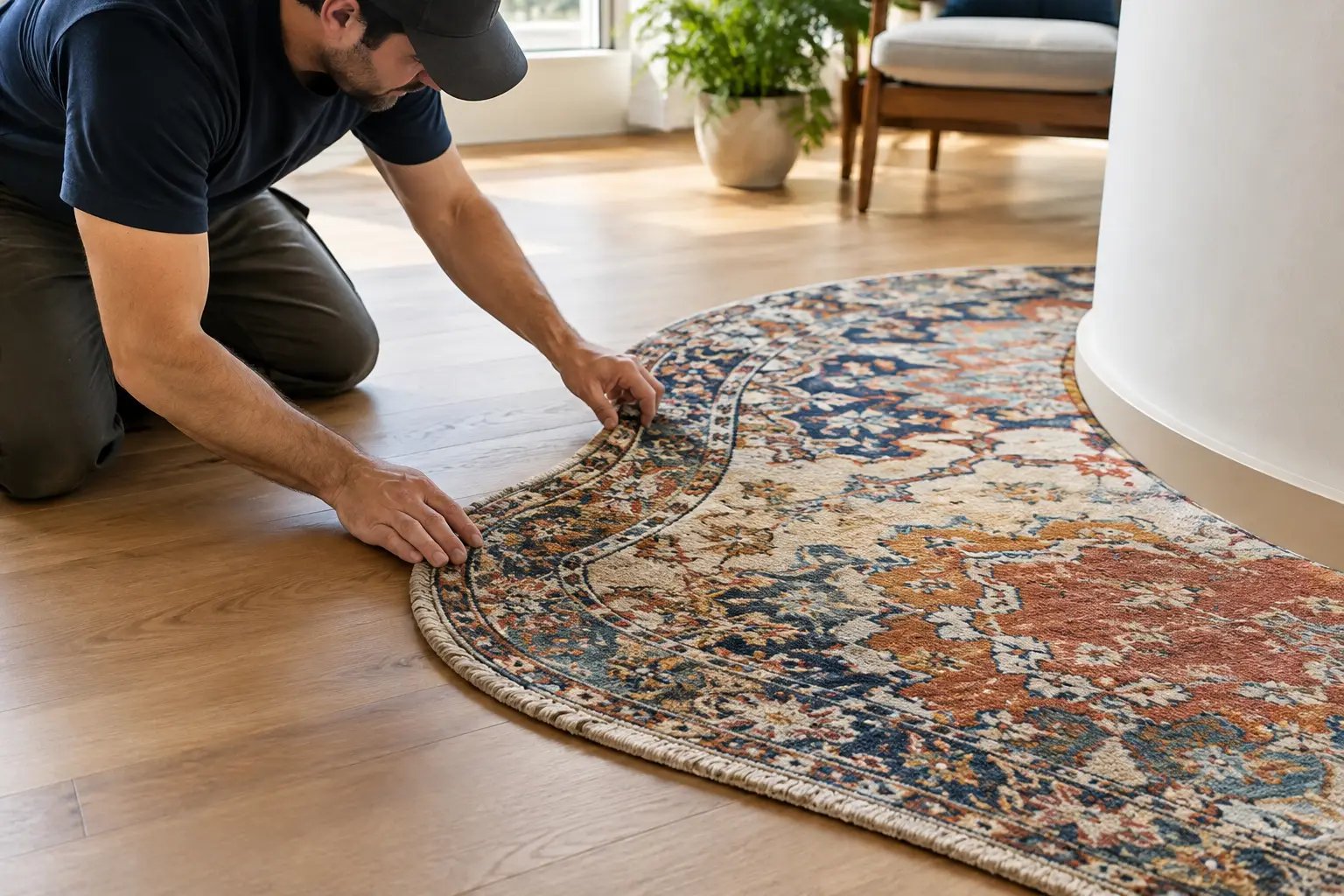
For rugs that need to fit an unusual room, doorway, or commercial setting, sizing, binding, shaping, and fitting may be worth discussing at the same time. These services should be planned around the rug’s construction so the finished edge is secure and appropriate for its use.
How often should a handmade rug be professionally cleaned?
There is no single calendar that fits every home. A handmade wool rug in a low-traffic guest room may only need professional cleaning every few years. A rug in an entryway, dining area, or home with active pets and children may need attention sooner. Second homes can be deceptive: a rug may receive less foot traffic, but it can still collect dust, dry soil, and insect activity while the property is unoccupied.
Between cleanings, vacuum regularly with care. For most rugs, use suction without an aggressive beater bar, especially near fringe and edges. Rotate the rug about once or twice a year if sunlight or traffic is uneven. If furniture leaves deep impressions, move the piece gradually rather than dragging it across the pile.
Watch for a dull or gritty feel, a lingering odor, faded-looking color that does not improve with vacuuming, curling edges, thinning fringe, or unexplained fiber loss. These are practical signs that the rug may need a closer look. A free verbal appraisal can also be helpful for inherited rugs when you need guidance on condition and next steps.
Rug Care in Albuquerque and Northern New Mexico
For Santa Fe homeowners, collectors, and second-home owners, pickup and delivery can make careful shop cleaning much easier to arrange.
Have a rug that needs care? One World Rug Care has been cleaning, repairing and protecting area rugs in Albuquerque since 2012. Email a few photos of your rug to admin@oneworldrugcare.com for a free estimate, call us at (505) 821-0302, or visit the shop at 7200 Jefferson St NE, Suite A, Monday to Saturday 9 to 5. Pickup and delivery is free in Albuquerque and Santa Fe on orders of $150 or more, and available in Taos, Durango, Pagosa Springs and Las Cruces.