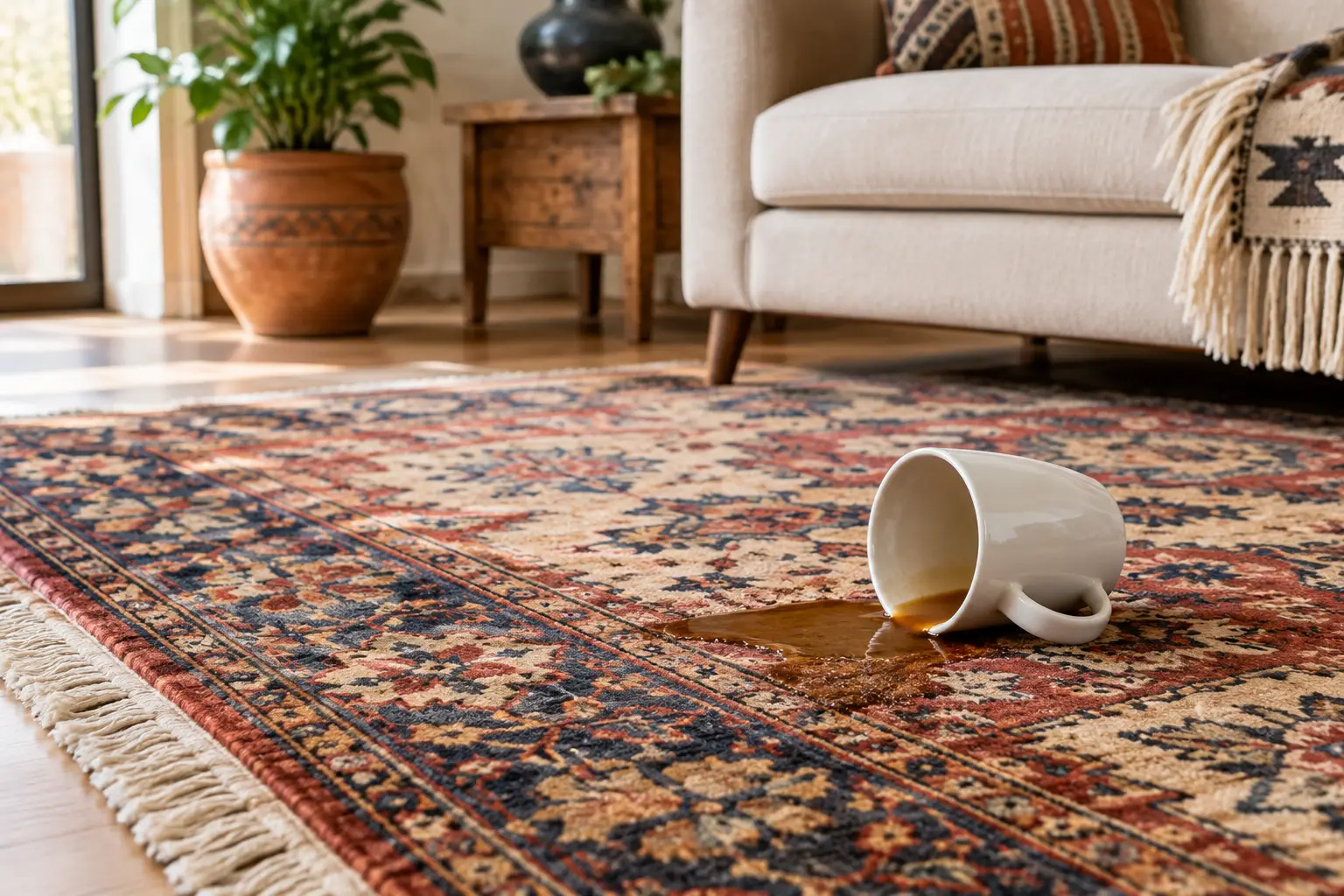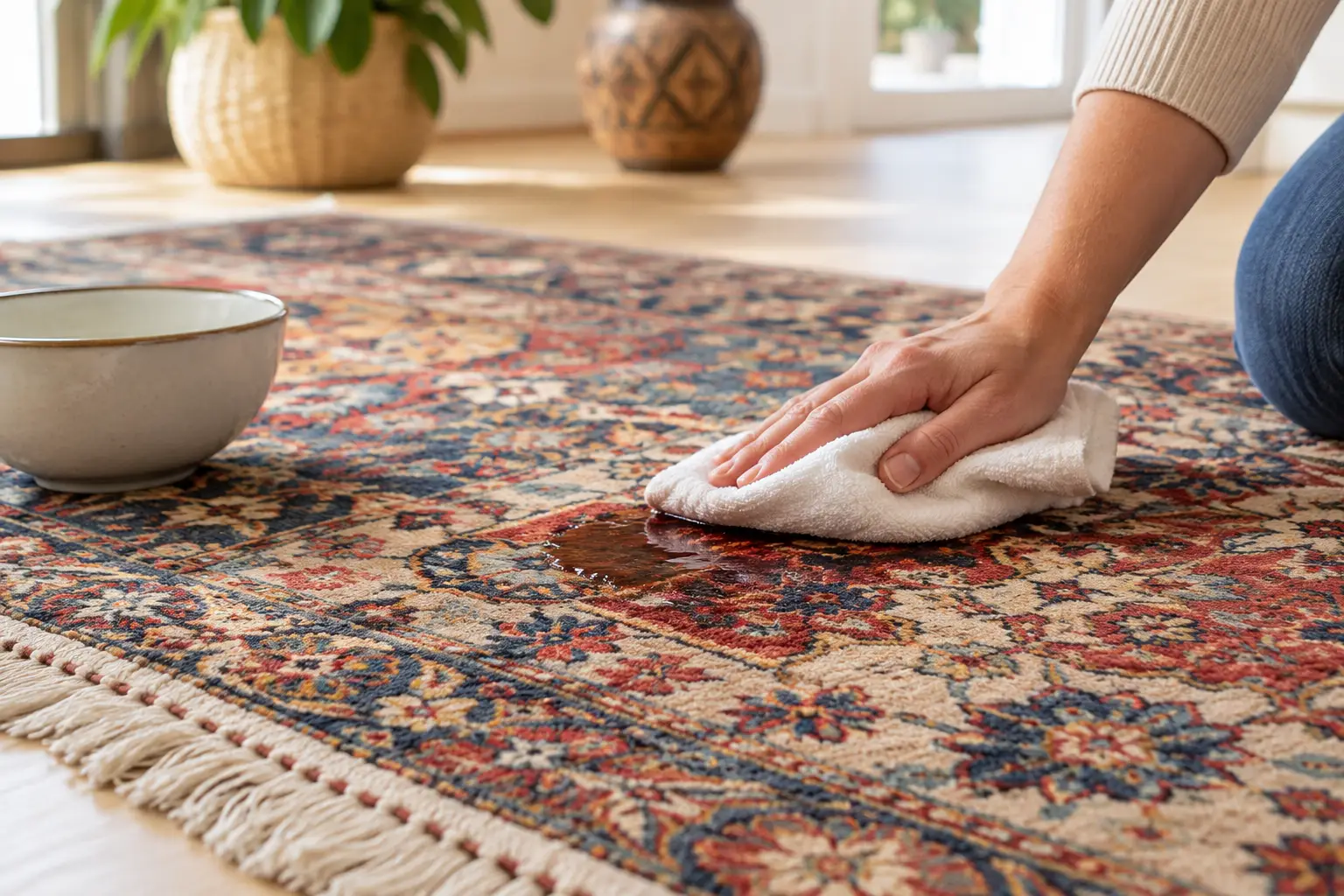
To blot rug spills, act promptly: lift the liquid with a clean white cloth, working from the outside edge toward the center, and never rub. Use gentle pressure, change to dry sections of cloth often, and stop before moisture travels through the rug into the pad or floor.
Knowing how to blot rug spills can prevent a small accident from becoming a permanent stain, but the right response depends on what spilled and what the rug is made of. A sturdy synthetic area rug may tolerate a little plain water after blotting. A hand-knotted wool, silk, viscose, antique, Navajo, or Southwest textile calls for a much more restrained approach.
What should I do in the first five minutes after a rug spill?
First, remove anything solid without pressing it into the pile. Use the edge of a spoon or a dull utensil to lift food, mud, or other thick material away from the rug. Do not scrape aggressively, especially on looped wool, silk, or low-pile handmade rugs.
Then place a clean, white, absorbent cotton towel or plain white paper towel over the spill. Press straight down with your hands or the flat of your palm for several seconds, then lift the towel straight up. Move to a dry section and repeat. White materials matter because colored towels can transfer dye when wet.
Keep blotting until the towel is no longer picking up liquid. For a fresh drink spill, this may take two to five minutes. For a larger accident, work steadily for 10 minutes or longer, replacing towels as they become damp. The goal is to remove as much liquid as possible before it has time to wick down through the pile, foundation, and backing.
If the rug can be safely lifted by two people, check beneath it after blotting. Put clean towels between the rug and floor to catch moisture. This is particularly useful on wood floors and under rugs with a dense pile or thick pad. Do not fold a wet rug over itself or leave a soaked section against the floor.
How do I blot a rug spill without rubbing it in?
Blotting is a lifting motion. Rubbing is a grinding motion. That difference is where many home stain treatments go wrong.
Start at the outer edge of the spill and work inward. This helps keep the spill from spreading into clean fibers. Press lightly at first, then use firmer pressure only if the rug is durable and the liquid is still coming up. Twisting, scrubbing, and circular motions can distort pile, fuzz wool fibers, spread color, and push residue deeper into the rug.
On a flatweave, kilim, Navajo rug, or other textile with a low profile, use especially light pressure. These pieces do not have a deep pile to hide damage, and moisture can move across the woven structure quickly. Blot from the face, then check the back for dampness rather than repeatedly saturating the front.
Avoid colored napkins, printed paper towels, microfiber cloths that may snag, and anything with a rough surface. A clean white cotton towel is usually the safest household choice. If you only have paper towels, place several layers over the spill and replace them frequently instead of grinding them into the rug.
Should I add water or a cleaner after blotting?
Sometimes plain cool water can help with a small water-based spill, but it is not automatically the next step. The first priority is dry blotting. Adding water too soon can spread coffee, wine, juice, pet urine, or sauce over a larger area, and it can leave the rug wetter than you can dry at home.
If the spill is clear water or a small amount of a light-colored beverage on a washable everyday rug, lightly dampening a white cloth with cool water and blotting once or twice may be reasonable. Follow immediately with dry towels. Never pour water directly onto the rug, and do not use hot water. Heat can set proteins, affect dyes, and create problems for natural fibers.
Be cautious with household spot removers. A product that appears harmless on a carpet can discolor wool, stiffen fibers, leave a sticky residue that attracts soil, or cause dye bleeding in a handmade rug. Oxygen cleaners, peroxide, vinegar, dish soap, ammonia, bleach, and powdered products all carry risks depending on the stain and fiber. Silk and viscose are particularly vulnerable, and many antique rugs have dyes that should be tested before any wet treatment.
If a cleaner has already been applied, do not layer another product over it. Blot up what you can with dry white towels and make note of the product used. That information helps a rug specialist choose a safer next step.
What changes when the spill is pet urine, wine, or oil?
Different spills leave different problems behind. Color is only one concern. Odor, sugar, tannins, proteins, oils, and acids can remain in the rug after the visible wetness is gone.
Pet urine needs attention as soon as possible because it can move through the face fibers into the foundation, backing, pad, and floor beneath. Blot thoroughly from the front, then place dry towels under the affected area if possible. Avoid masking odor with fragrance products or heavily soaking the spot. Once urine has dried, odor may become more noticeable on humid days, and a surface treatment may not reach contamination below the pile.
Red wine, coffee, tea, berries, and colored drinks can leave a visible dye stain. Blotting limits the spread, but avoid home bleaching or strong stain removers. A pale spot from color loss can be harder to correct than the original stain.
Oil-based spills such as salad dressing, lotion, butter, makeup, or candle wax need a different approach. Lift the excess gently and blot any liquid portion, but do not add water or try to dissolve the material with solvents from the garage or kitchen. Oils can travel through fibers and attract dust long after the first cleanup.
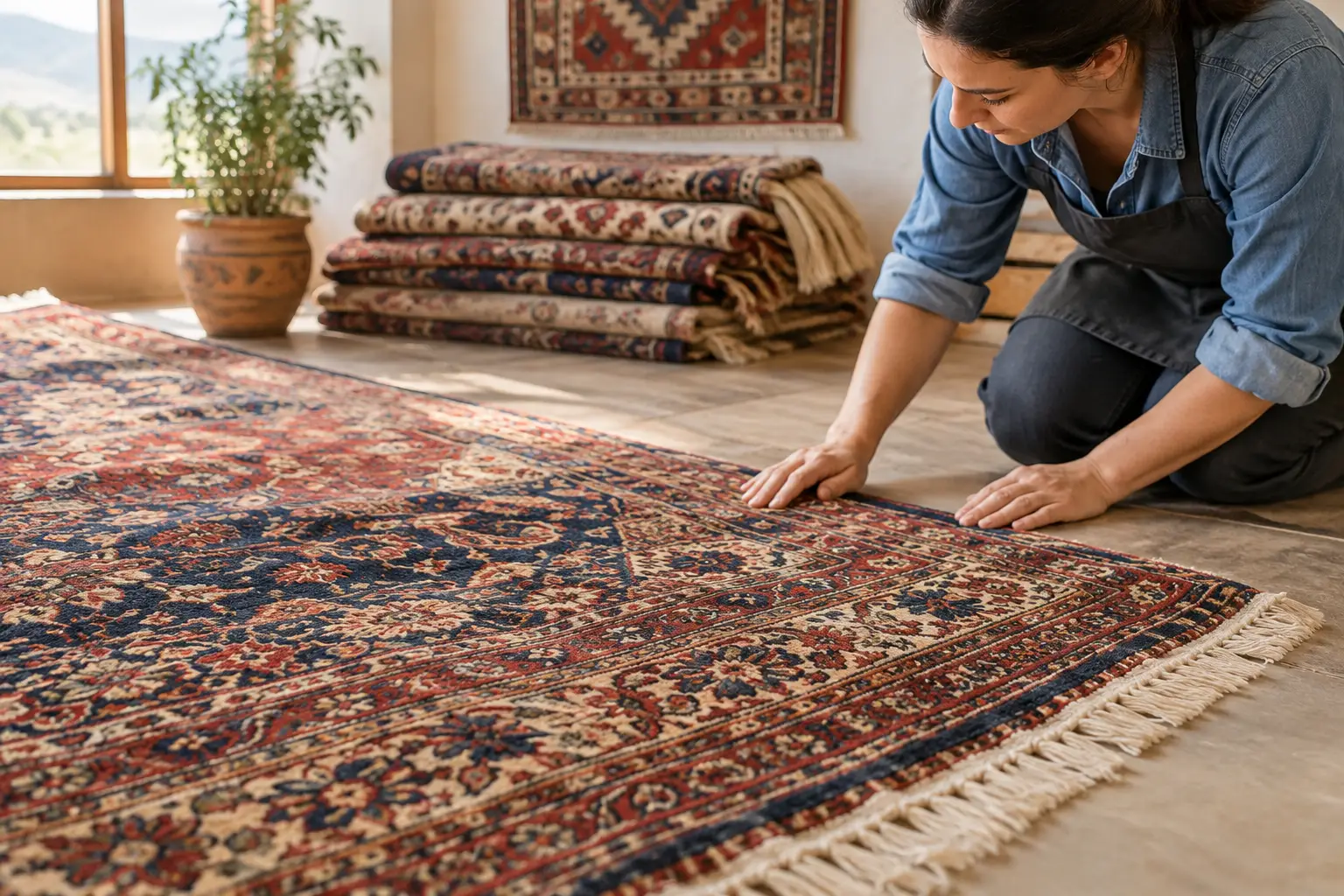
For any spill, take a clear photo after the initial blotting, preferably in natural light. Include a close-up and a wider photo that shows the rug’s overall design and affected location. Photos help determine whether the rug needs professional washing, targeted stain treatment, or pet odor treatment.
Which rug fibers need professional help sooner?
A handmade wool rug can often withstand careful blotting, but it still deserves restraint. Wool has natural resilience, yet its dyes, pile, foundation, and fringe may react differently to moisture and cleaning products. A wool rug that feels dry on top can still be wet underneath.
Silk and viscose should be treated as professional-care rugs after the initial dry blotting. Both can show watermarking, texture changes, color movement, or pile distortion when wet. Do not brush, scrub, or use a hair dryer on these fibers.
Antique, Oriental, Persian, Navajo, and Southwest rugs may have hand-spun wool, delicate fibers, unstable dyes, or prior repairs that are not obvious at a glance. Fringe and edges are often the first areas to show damage from a spill. If liquid reaches either, blot gently and arrange an inspection rather than trying to wash the area at home.
A rug also needs professional attention when the spill is larger than a dinner plate, has soaked through to the pad, has left odor after drying, or has caused colors to run. In-shop care allows a rug to be inspected and dye-tested before it is washed by hand using methods suited to its materials. It can then be dried in a climate-controlled room rather than left to dry slowly on the floor.
How can I help the rug dry after I blot it?
Air movement is useful, but heat is not. After removing as much moisture as possible, keep the rug flat and allow room-temperature air to circulate around it. A fan aimed across the surface can help. If the rug is damp underneath, elevate the affected section slightly with clean, dry towels and replace them as needed.
Do not put a wet rug in direct sun, over a heater, or in a dryer. Do not roll it up while damp. Fast, uneven heat can shrink foundations, distort fibers, fade colors, or encourage dye movement. If it is still noticeably damp after several hours, or if the underside remains wet, it is time to get professional advice.
A prompt blot is a useful first response, not a substitute for proper washing when liquid has traveled deep into an heirloom or heavily soiled rug.
Rug Care in Albuquerque and Northern New Mexico
After a spill, a few clear photos and an honest description of what happened can help determine the safest care for your rug.
Have a rug that needs care? One World Rug Care has been cleaning, repairing and protecting area rugs in Albuquerque since 2012. Email a few photos of your rug to admin@oneworldrugcare.com for a free estimate, call us at (505) 821-0302, or visit the shop at 7200 Jefferson St NE, Suite A, Monday to Saturday 9 to 5. Pickup and delivery is free in Albuquerque and Santa Fe on orders of $150 or more, and available in Taos, Durango, Pagosa Springs and Las Cruces.