The most reliable way to protect rugs from spills is to act quickly, blot instead of rub, and keep liquids from reaching the rug’s foundation. Prevention also matters: thoughtful placement, a proper rug pad, and professional fiber protection can make an accident far less serious.
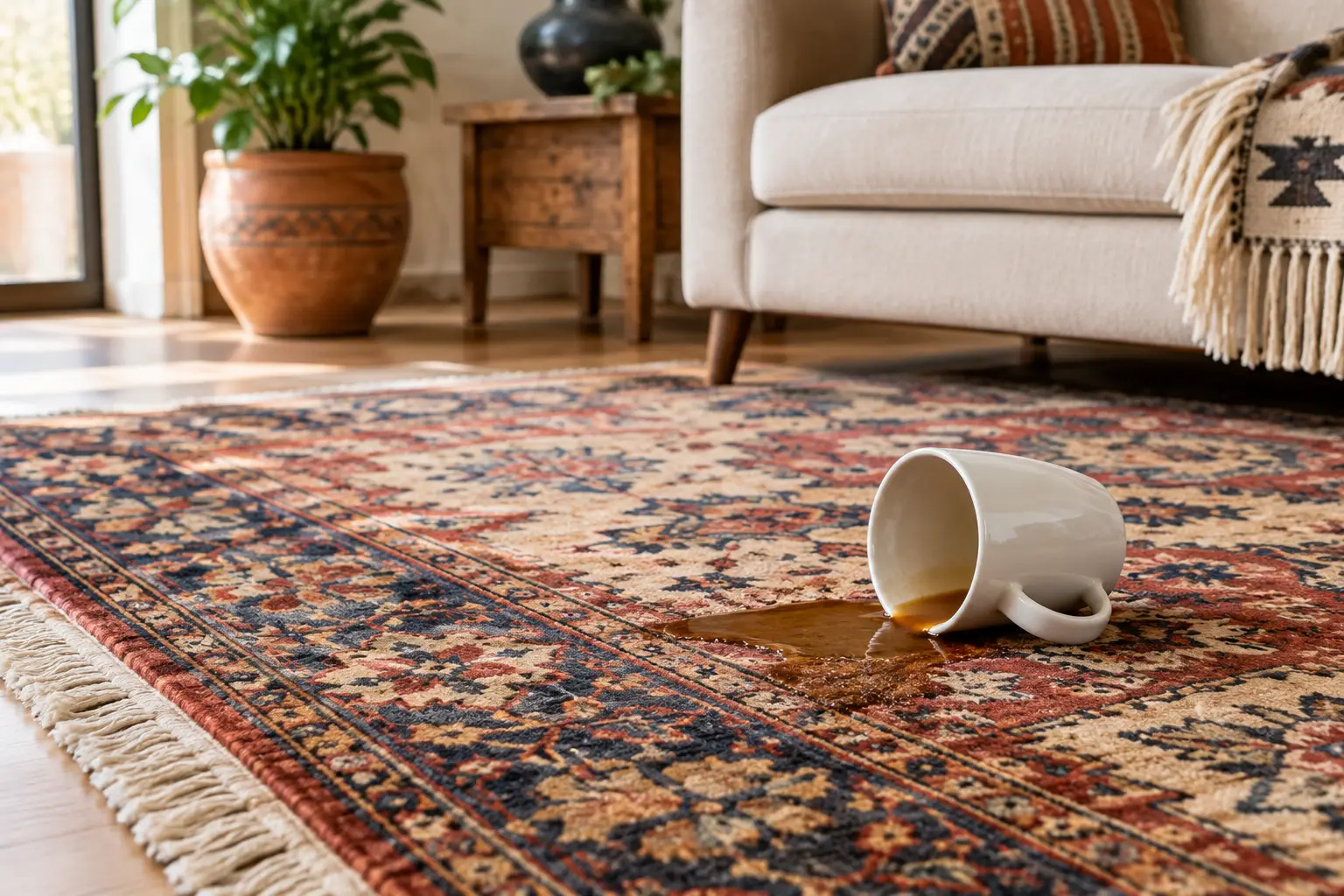
A spilled drink can look small on the surface while moving deep into a hand-knotted rug, through the pile, and into the cotton or wool foundation below. That is why a calm response in the first few minutes is more useful than a strong household cleaner applied in a hurry.
What should I do the moment something spills on a rug?
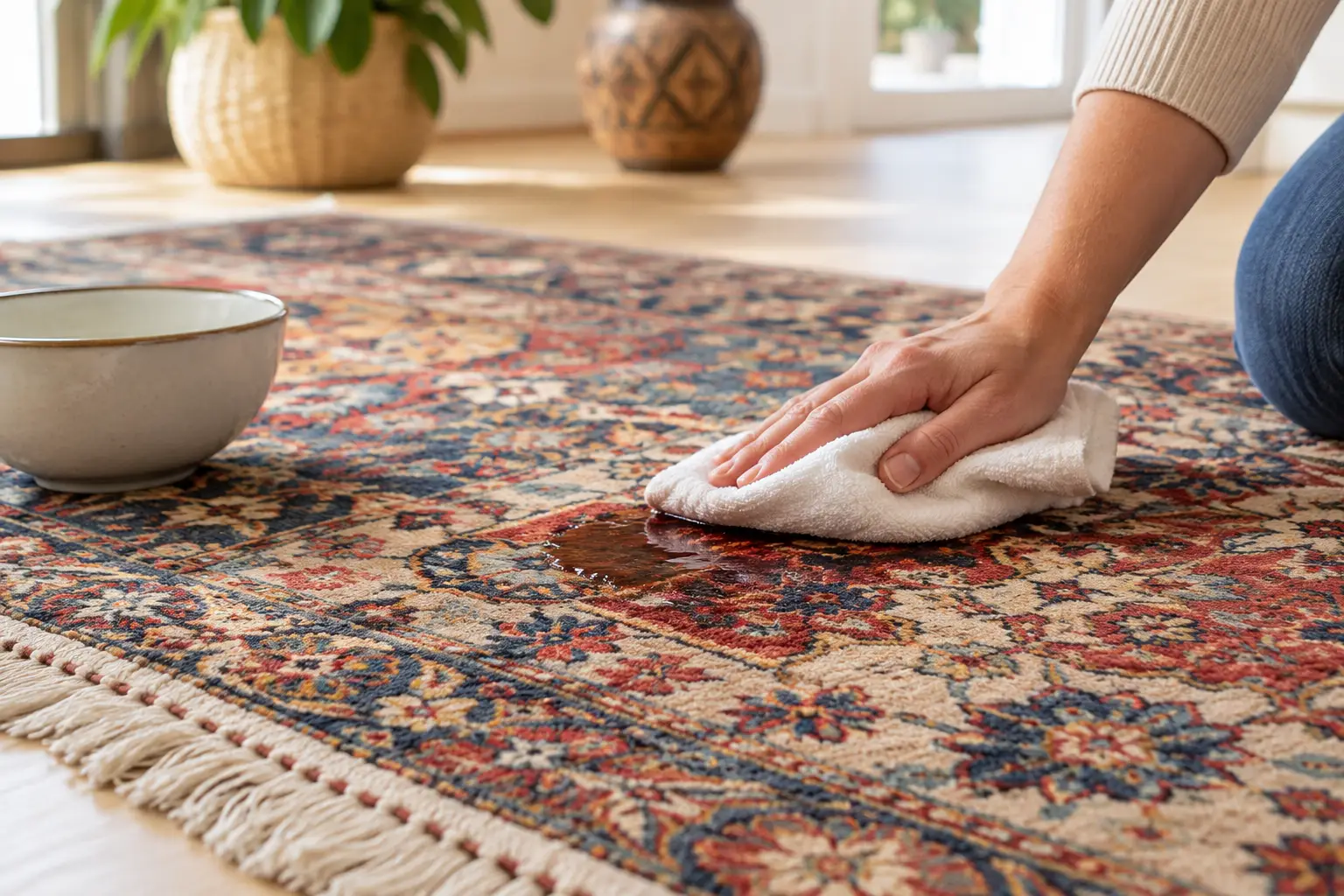
Start by removing the source of the spill, then blot the area with clean white cotton towels or plain white paper towels. Press straight down firmly and replace the towel as it absorbs moisture. Continue for several minutes, working from the outside edge toward the center so the spill does not spread.
Do not scrub. Rubbing pushes liquid farther into the fibers, roughens wool, and can distort the pile of silk, viscose, and older handmade rugs. Colored towels, printed napkins, and dark cloths can transfer dye when wet, so white absorbent materials are the safer choice.
For a spill that is mostly water, thorough blotting and air circulation may be enough. Lift one edge of the rug after 10 to 15 minutes if you can do so safely and check whether the pad or floor beneath feels damp. A wet pad can keep moisture against the rug for days, creating odor, dye movement, or damage to the foundation.
If the spill contains coffee, wine, juice, sauce, milk, pet urine, or anything oily, blot what you can and arrange professional evaluation promptly. These materials leave behind sugars, proteins, tannins, or oils even when the surface looks clean.
Why does the rug’s fiber make such a difference?
Everyday synthetic rugs may tolerate more routine spot care than a handmade wool rug, but the construction still matters. A machine-made rug often has an adhesive backing that can weaken with excess water. A hand-knotted Oriental or Persian rug may have natural dyes, a cotton foundation, and hand-spun wool that respond differently from one section to another.
Wool is naturally resilient and can resist minor spills when treated quickly, but it also holds moisture deep in its pile. Silk and viscose deserve extra caution. Both can show water marks, texture changes, or color movement when exposed to the wrong cleaning product or too much moisture.
Navajo and Southwest textiles need a similarly careful approach. Their fibers, dyes, age, weave structure, and condition should be assessed before any cleaning method is chosen. Avoid applying stain sprays, vinegar, dish soap, salt, baking soda, or powdered cleaners to these rugs. A product that appears harmless online can leave a residue, alter color, or make later professional cleaning more difficult.
How can I prevent spills before they happen?
You cannot make a lived-in home spill-proof, especially with children, pets, guests, and dinner in the family room. You can reduce the odds that a spill becomes a permanent problem by matching the rug to the room and the way it is used.
Place fine silk, antique, and sentimental rugs away from frequent food and drink traffic when possible. In a breakfast nook or television room, an easier-care wool or durable synthetic rug may be the practical choice. This is not about hiding valuable rugs away. It is about giving a delicate textile a setting where it can be enjoyed without taking unnecessary risk.
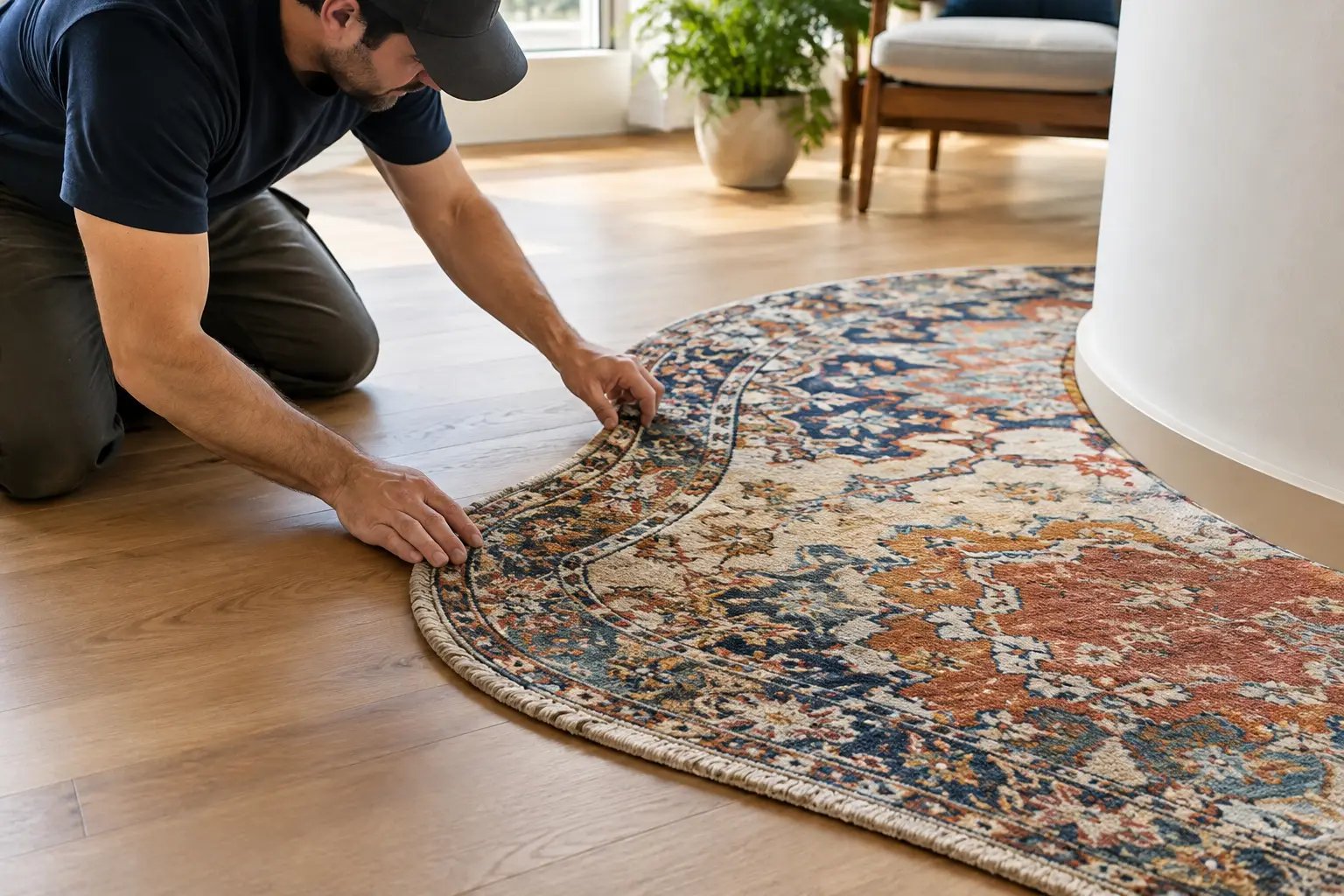
A stable, properly sized rug pad is another layer of protection. It helps keep the rug from shifting when someone reacts to a spill, cushions the fibers, and allows air movement underneath. Replace pads that are crumbling, sticky, too thin, or stained from older accidents. A poor pad may transfer residue to the back of the rug or trap moisture where it cannot be seen.
Keep drinks on stable tables rather than directly over a rug, particularly with narrow-legged side tables that tip easily. For households with pets, offer water bowls on a washable tray or hard-surface area rather than beside a valuable rug. These small adjustments are often more effective than any emergency stain treatment.
Does rug protection prevent every stain?
No. Professional rug protection is not a force field, and it does not replace prompt blotting or regular cleaning. It can, however, help liquid remain closer to the surface for longer, giving you more time to absorb a spill before it penetrates deeply into the fibers.
Fiber ProTector rug protection is applied after appropriate cleaning and drying, not as a substitute for cleaning a soiled rug. It is especially useful for rugs in dining rooms, entry areas, homes with pets, and other places where occasional accidents are likely. Whether it is suitable depends on the fiber, dye stability, condition, and construction of the rug.
Protection also has limits. Oily foods, dark dyes, pet urine, and spills left overnight can still create stains or odors. On a delicate or collectible rug, the safest approach is often a combination of protection, sensible placement, and a quick call when an accident occurs.
When is a spill too risky to handle at home?
Call for professional rug care when a liquid has soaked through to the back, the rug smells after drying, colors begin to bleed, or the spill involves pet urine, wine, coffee, grease, paint, or bleach. Also stop home treatment if a rug develops a tide line, a stiff patch, a pale area, or a fuzzy surface after blotting.
Pet urine requires particular attention because the visible spot may be smaller than the affected area underneath. Urine can travel into the foundation and pad, then dry into crystals that reactivate with humidity. Surface cleaning may reduce the appearance while leaving odor and residue below.
A specialist can inspect the rug, test dyes, and determine whether washing is safe. At One World Rug Care, rugs are cleaned in-plant rather than treated like wall-to-wall carpet. Each rug is inspected and dye-tested, dusted, washed by hand in cool water using a material-specific method, and dried in a climate-controlled room. That process is designed to address what is in the rug, not simply what is visible on top.
How do I care for a rug after a spill has been treated?
Once the immediate spill is resolved, check the rug over the next 24 to 48 hours. Smell the area when it is fully dry, look at it in natural light, and feel the back if it is accessible. A lingering odor or dampness is a reason to act before it becomes a larger cleaning issue.
Regular vacuuming also helps protect rugs from the wear that makes stains more noticeable. Vacuum the face of most rugs gently and avoid aggressive beater bars on fringe, delicate edges, and low-pile handmade textiles. Rotate rugs about once or twice a year when sun exposure and foot traffic are uneven.
For inherited, antique, or handmade rugs, take a few clear photos before and after an incident. Photos can help a rug specialist see the construction, colors, and affected area before you move the rug. If a spill is significant, avoid folding a damp rug or rolling it tightly. Moisture held inside a roll is much harder to address safely.
Rug Care in Albuquerque and Northern New Mexico
When a spill involves a rug you value, quick blotting is helpful, but careful professional handling can protect the fibers, dyes, and foundation from further harm.
Have a rug that needs care? One World Rug Care has been cleaning, repairing and protecting area rugs in Albuquerque since 2012. Email a few photos of your rug to admin@oneworldrugcare.com for a free estimate, call us at (505) 821-0302, or visit the shop at 7200 Jefferson St NE, Suite A, Monday to Saturday 9 to 5. Pickup and delivery is free in Albuquerque and Santa Fe on orders of $150 or more, and available in Taos, Durango, Pagosa Springs and Las Cruces.