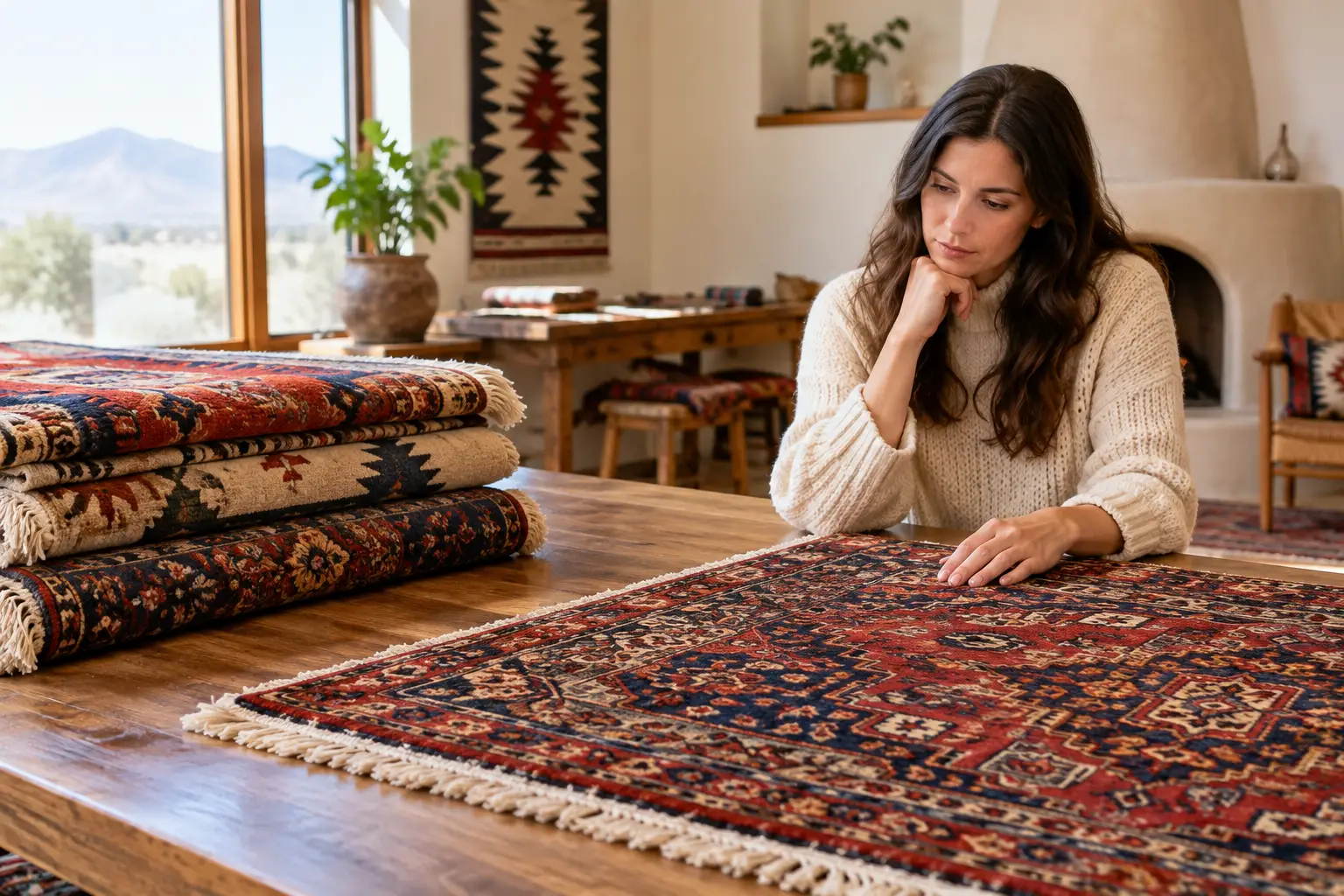
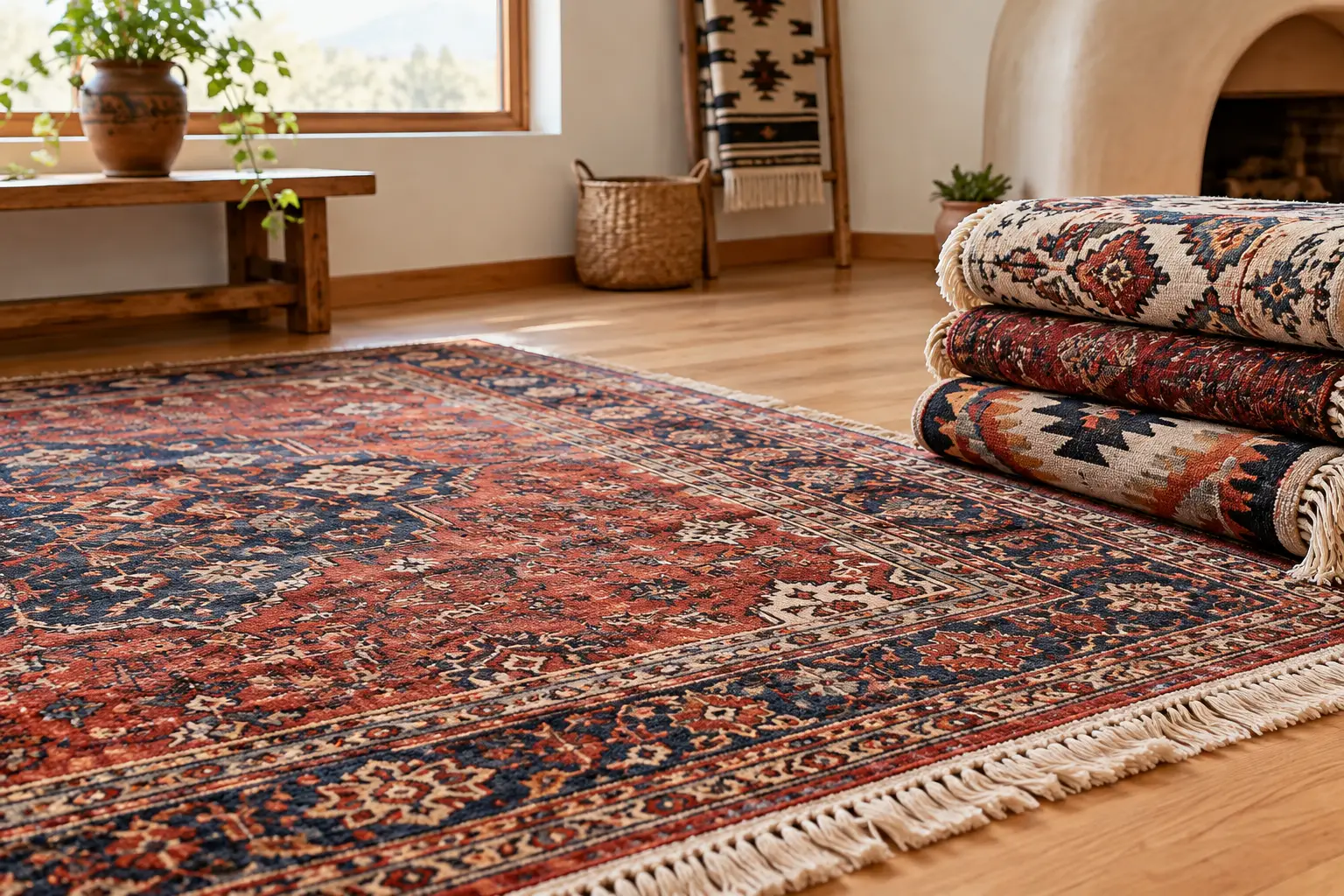
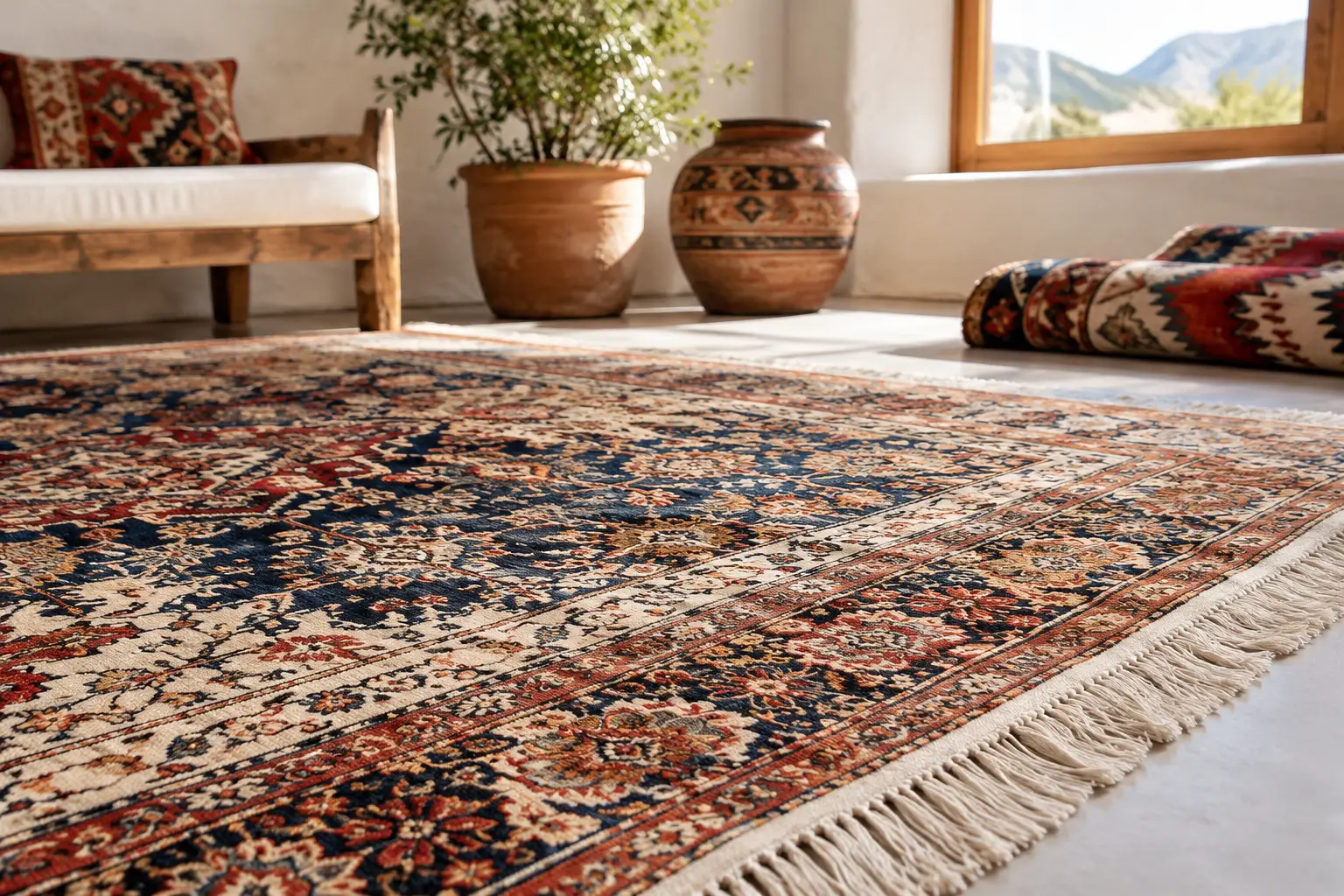
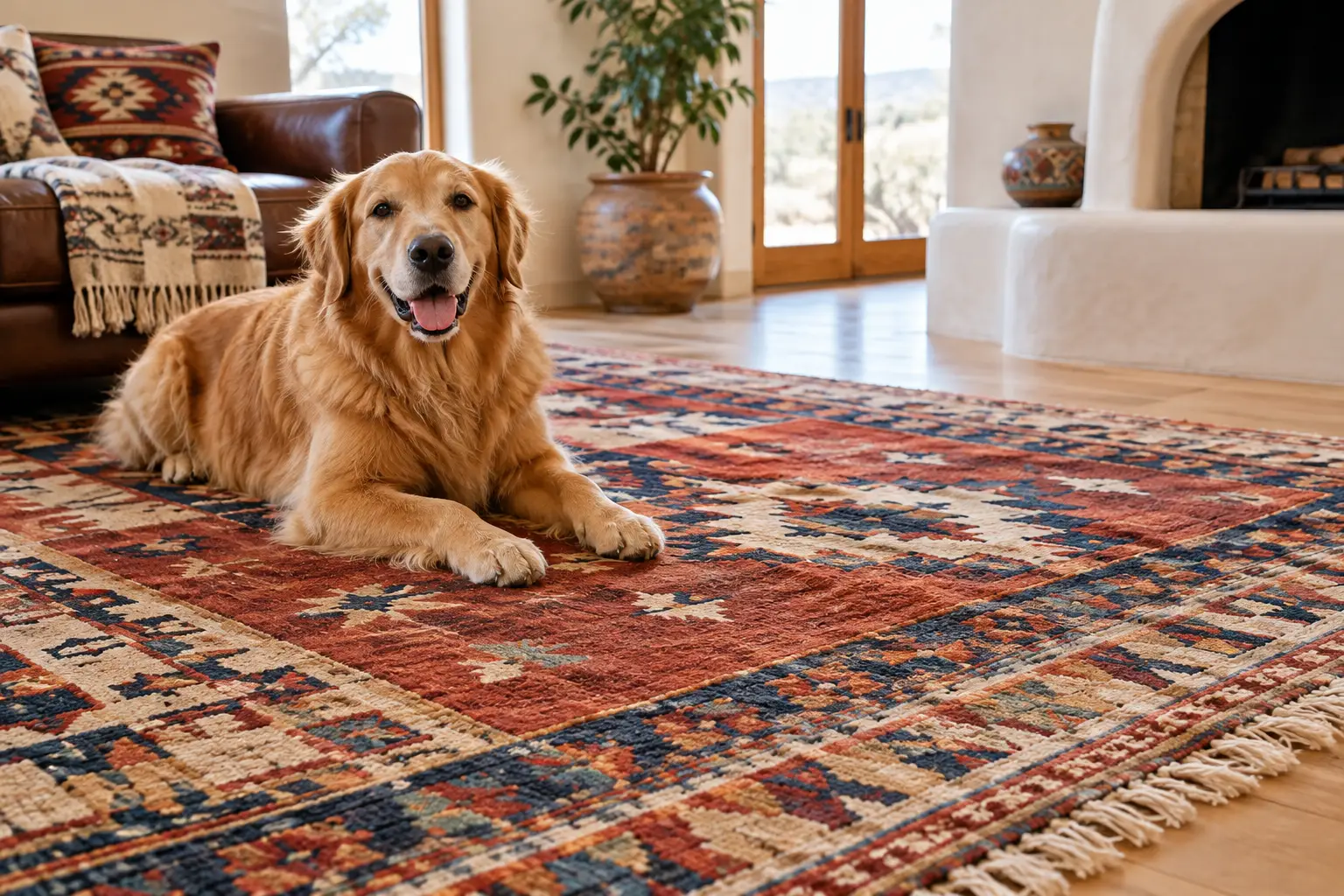
The best rug pad for hardwood floors is usually a dense, non-staining pad made for hard surfaces, sized slightly smaller than the rug. For a valuable handmade, antique, Navajo, silk, or viscose rug, the pad should provide gentle support without adhesives, rubber residue, or excess bulk.
A rug pad does more than keep an area rug from moving. It helps distribute foot traffic, cushions fibers against abrasion, and allows a rug to lie more evenly. On hardwood, though, the wrong backing can leave marks that are difficult to see until the rug is moved years later. Choosing by material rather than by a package claim is the safer approach.
Why does a rug pad matter on hardwood floors?
Hardwood is hard, finished, and susceptible to pressure, trapped grit, moisture, and chemical transfer. Without a pad, a rug can slide when someone steps onto its edge. That movement stresses fringe and side bindings, particularly on hand-knotted rugs, and creates friction between the rug backing and the floor.
A pad also creates a small buffer where dust and fine grit are less likely to grind directly into the floor finish and the rug’s foundation. This is especially useful under dining-room rugs, hallway runners, and entry rugs, where traffic is concentrated in a few paths.
The pad cannot make a rug immune to wear. A wool rug under heavy chair movement will still need attention, and a pet accident can still reach the floor. But a suitable pad reduces avoidable stress and makes routine cleaning easier.
What material is safest beneath a rug?
For most hardwood floors, look for a pad labeled non-staining and intended specifically for hard surfaces. Dense felt with a natural-rubber or latex-free gripping layer can work well when the manufacturer confirms it is safe for finished wood. The key is that the gripping material should not contain plasticizers, oils, or adhesives that can react with a floor finish.
Natural felt is a good choice when support and cushioning are the priority. It works particularly well beneath hand-knotted wool rugs, where a little density helps protect the rug from furniture weight and traffic. Felt alone does not always provide enough grip, so it may be better in rooms where the rug is anchored by furniture, such as beneath a large dining table or bed.
Rubber-backed pads need more caution. Some are appropriate for hardwood, while others can discolor polyurethane, varnish, waxed finishes, or certain engineered-wood coatings. A strong smell, tacky surface, or vague packaging is a reason to choose another pad. Do not assume that a pad is floor-safe simply because it is sold near area rugs.
Avoid PVC, vinyl, low-grade foam, and pads with adhesive coatings on hardwood whenever possible. These materials may yellow, stick, transfer a pattern, or trap moisture against the floor. The risk rises in sunny rooms and homes with radiant heat, where materials and finishes experience more temperature change.
How thick should a rug pad be?
For a living room, bedroom, or den, a pad around 1/4 inch thick is often a practical balance of support and comfort. It gives a rug body underfoot without making the edges too high. A thicker pad can feel pleasant, but it may create a trip edge or cause doors to drag.
Runners and entry rugs usually need a lower-profile pad, often around 1/8 inch. A thinner pad helps the rug stay close to the floor while still adding grip. Measure nearby door clearance before ordering. If the door clears the rug by only a small margin, even a modest pad may create a problem.
Under dining tables, thickness depends on the chairs. A dense, thinner pad can be preferable because chairs move more smoothly and table legs remain stable. Under a large hand-knotted rug with a heavy table, choose a supportive pad rather than a soft, spongy one that compresses unevenly.
Should the pad be the same size as the rug?
No. Cut the pad about 1 inch short of the rug edge on all four sides. That means a pad for an 8-by-10-foot rug should measure roughly 7 feet 10 inches by 9 feet 10 inches. This lets the rug edge settle naturally and keeps the pad from showing.
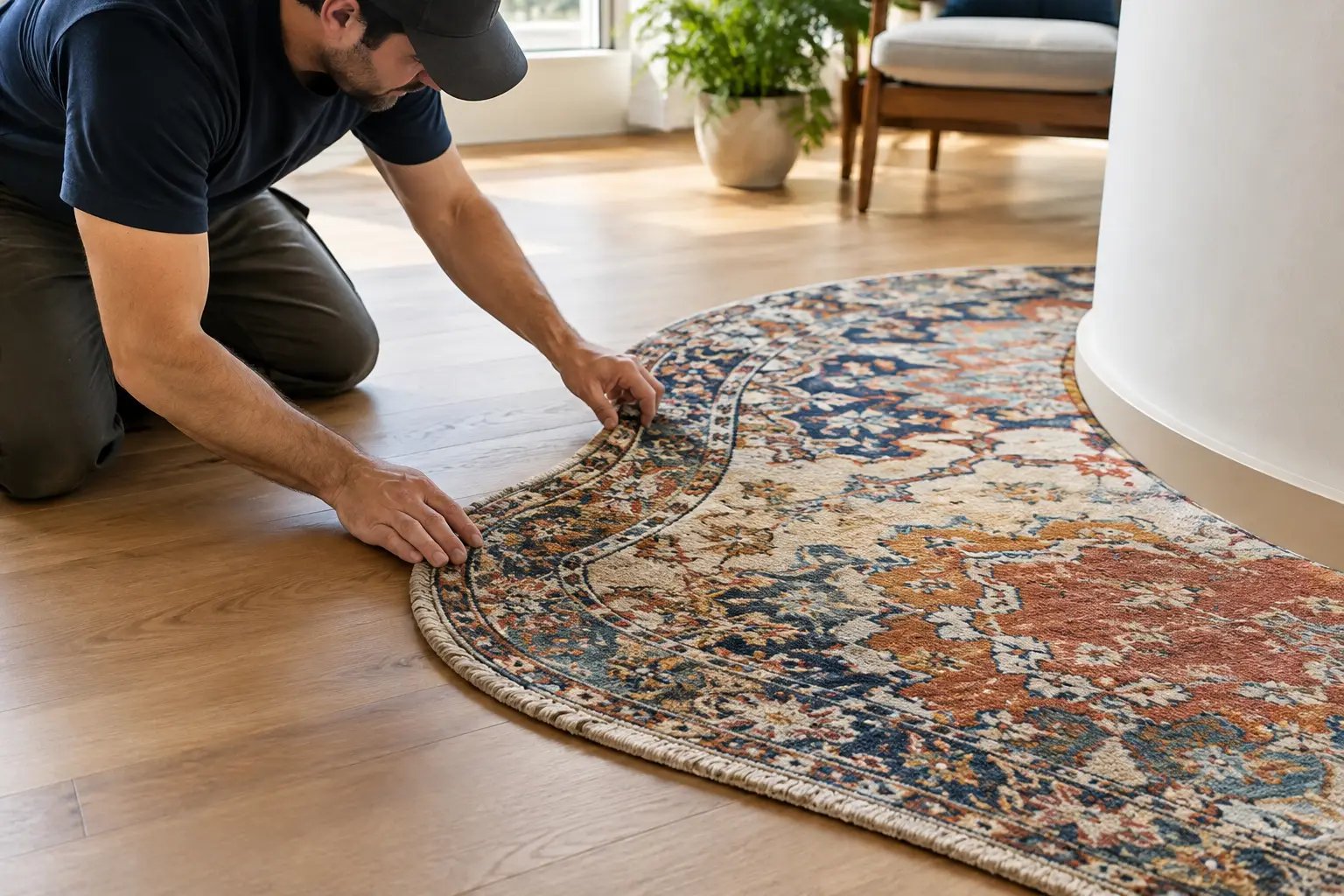
For a runner, leave the same margin at the ends and sides. If a rug has uneven handmade edges, do not try to force it perfectly square with an oversized pad. A custom-cut pad follows the rug’s general shape while respecting its character.
Pads should lie flat with no folds, overlaps, or taped seams. A raised seam can show through a thinner rug and create a concentrated pressure point. If a pad bunches, curls, or shifts during installation, remove it and correct the fit rather than trying to hold it down with tape.
Can a rug pad damage a hardwood finish?
Yes, especially when a pad is made from incompatible materials or is left in place without inspection for many years. Heat, sunlight, humidity, floor-cleaning products, and a floor’s particular finish all affect how materials interact. The same pad may behave differently on an older waxed floor than on a newer factory-finished engineered floor.
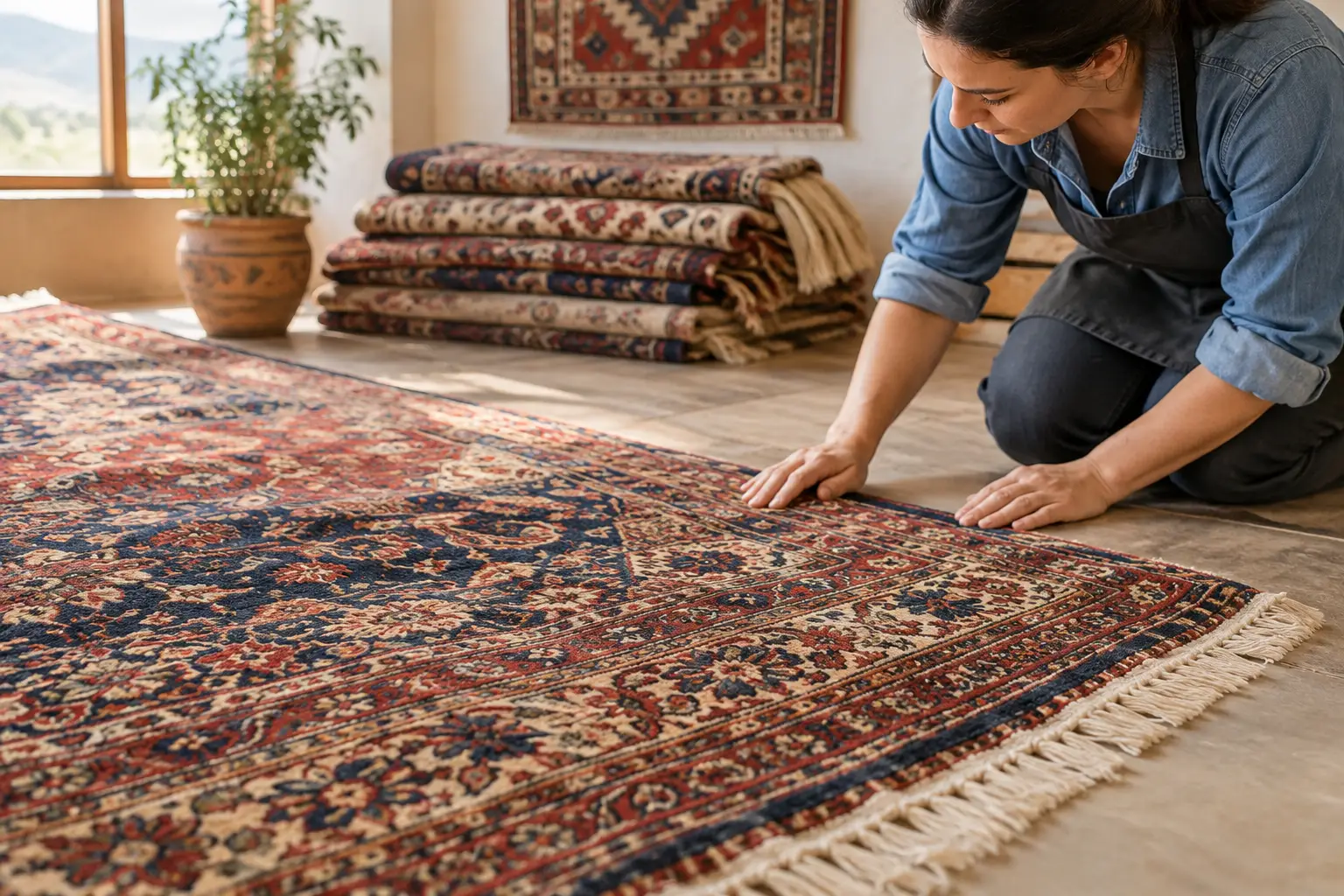
Check beneath rugs at least twice a year. In Albuquerque and other dry high-desert homes, inspect after heating season and again during warmer months. Look for discoloration, tackiness, grit, signs of moisture, or insect activity. In a second home that sits closed for long periods, checking before and after an extended absence is sensible.
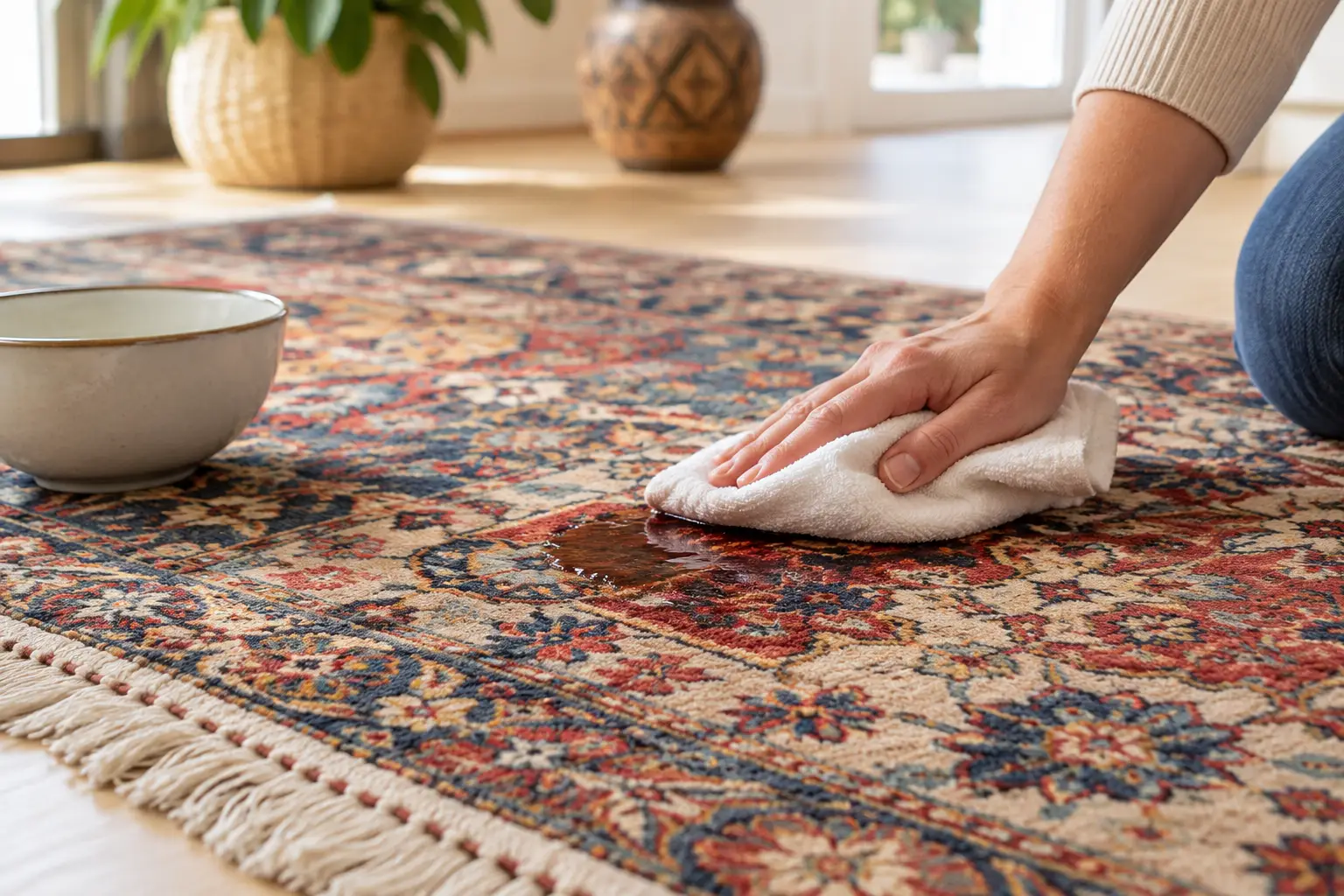
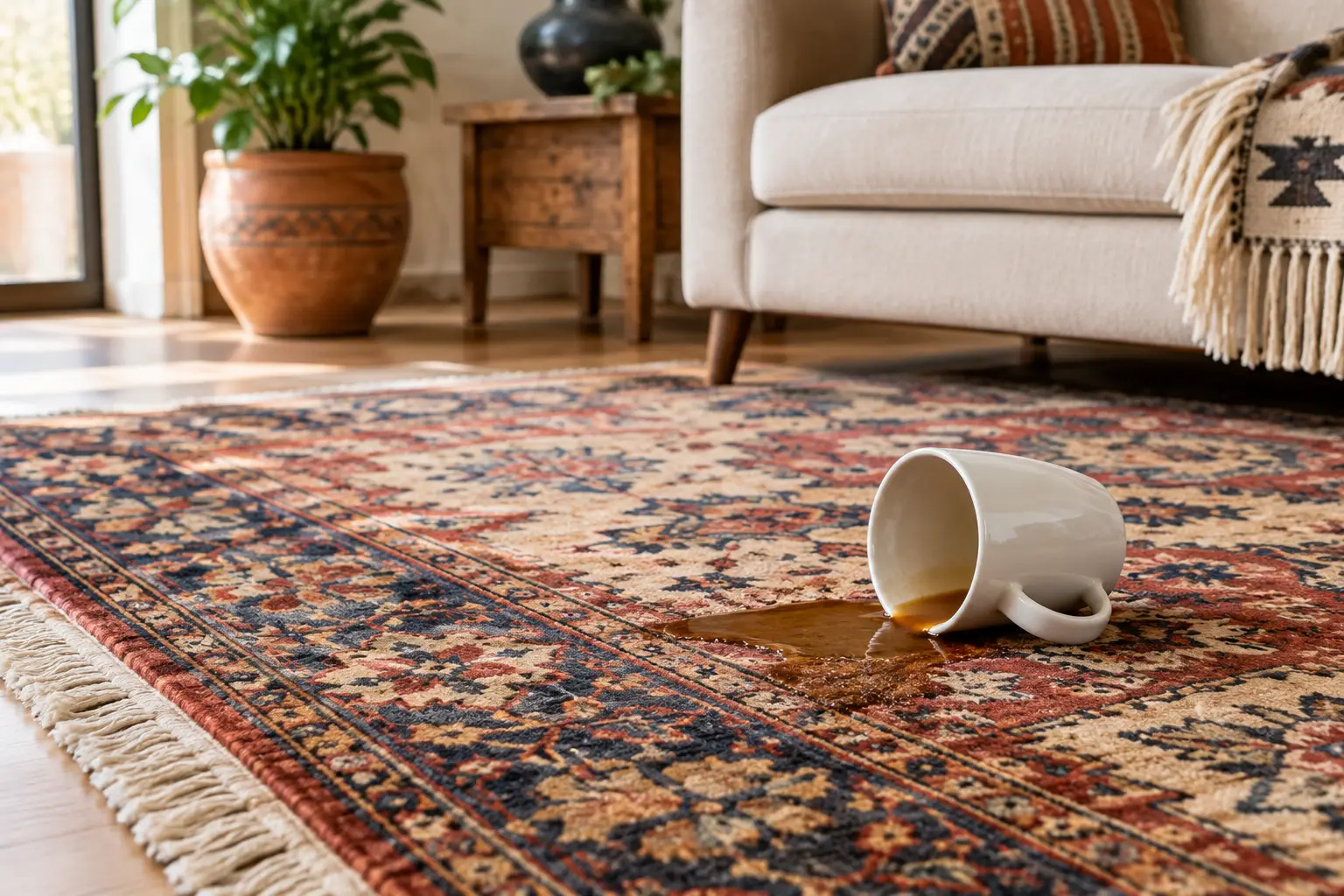
If a spill or pet accident reaches the pad, lift the rug and pad promptly. Blot the rug from the face and back with clean white towels and allow air circulation beneath it. Do not pour cleaning solution through the rug or soak the pad. Urine can travel into the foundation and floor seams, and odor treatment often requires a controlled wash at a rug-cleaning facility.
Which rugs need extra consideration?
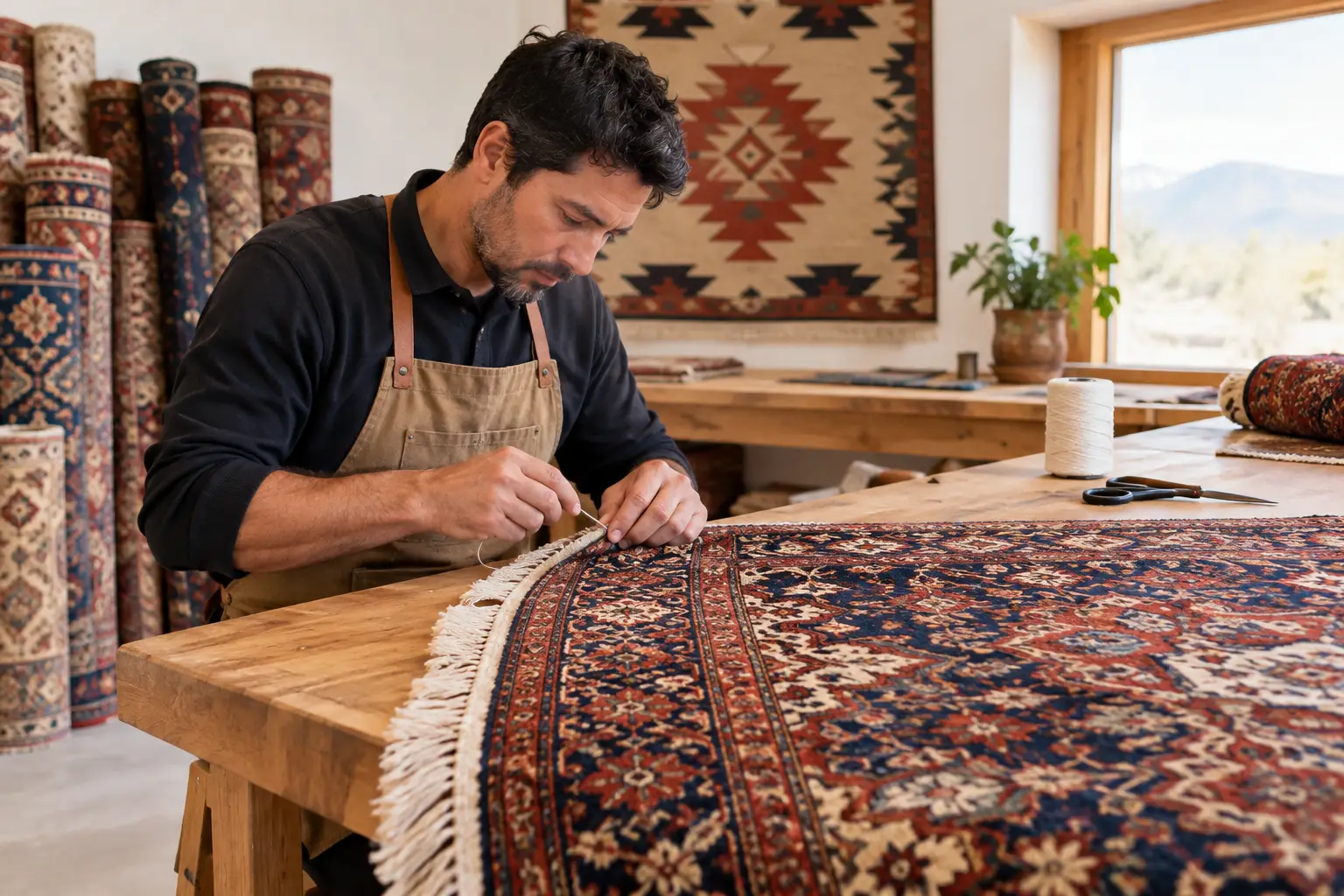
Handmade rugs deserve a pad that supports rather than grips aggressively. Persian and Oriental rugs often have wool pile over a cotton or wool foundation, and their fringe is part of the rug structure, not an add-on. A pad helps limit shifting, but it should never be attached to the fringe or secured with adhesive strips.
Navajo and Southwest textiles may be flatter, more delicate, and less forgiving of bulky padding. A thin, stable felt pad is often more appropriate than a thick cushion. Keep these rugs away from direct, sustained sunlight where possible, and inspect edges for wear before placing furniture on them.
Silk and viscose rugs require particular care because their fibers can crush, shade, and react poorly to moisture. Select a smooth, supportive pad and avoid rough, open-grid backings that may telegraph through the pile. If the rug has color movement, fading, stiffness, or a spill that reached the foundation, professional inspection is safer than home spot treatment.
When should I replace a rug pad?
Replace a pad when it becomes crumbly, sticky, compressed, stained, or uneven. Many pads slowly flatten under furniture, so a rug that once felt supported may begin to show wear in traffic lanes. Replace it sooner if it has absorbed a significant pet accident or if you see any change to the hardwood beneath it.
When moving a rug, roll it rather than folding it, and keep the pad rolled separately. Vacuum both sides of a washable everyday rug only as its construction allows, but do not aggressively vacuum fringe or delicate hand-knotted edges. A specialist can assess whether embedded dust, odor, moth activity, or worn bindings call for washing or repair before the rug goes back over a new pad.
Rug Care in Albuquerque and Northern New Mexico
A carefully chosen pad protects both the floor and the rug, but regular inspection is what catches problems before they become permanent.
Have a rug that needs care? One World Rug Care has been cleaning, repairing and protecting area rugs in Albuquerque since 2012. Email a few photos of your rug to admin@oneworldrugcare.com for a free estimate, call us at (505) 821-0302, or visit the shop at 7200 Jefferson St NE, Suite A, Monday to Saturday 9 to 5. Pickup and delivery is free in Albuquerque and Santa Fe on orders of $150 or more, and available in Taos, Durango, Pagosa Springs and Las Cruces.