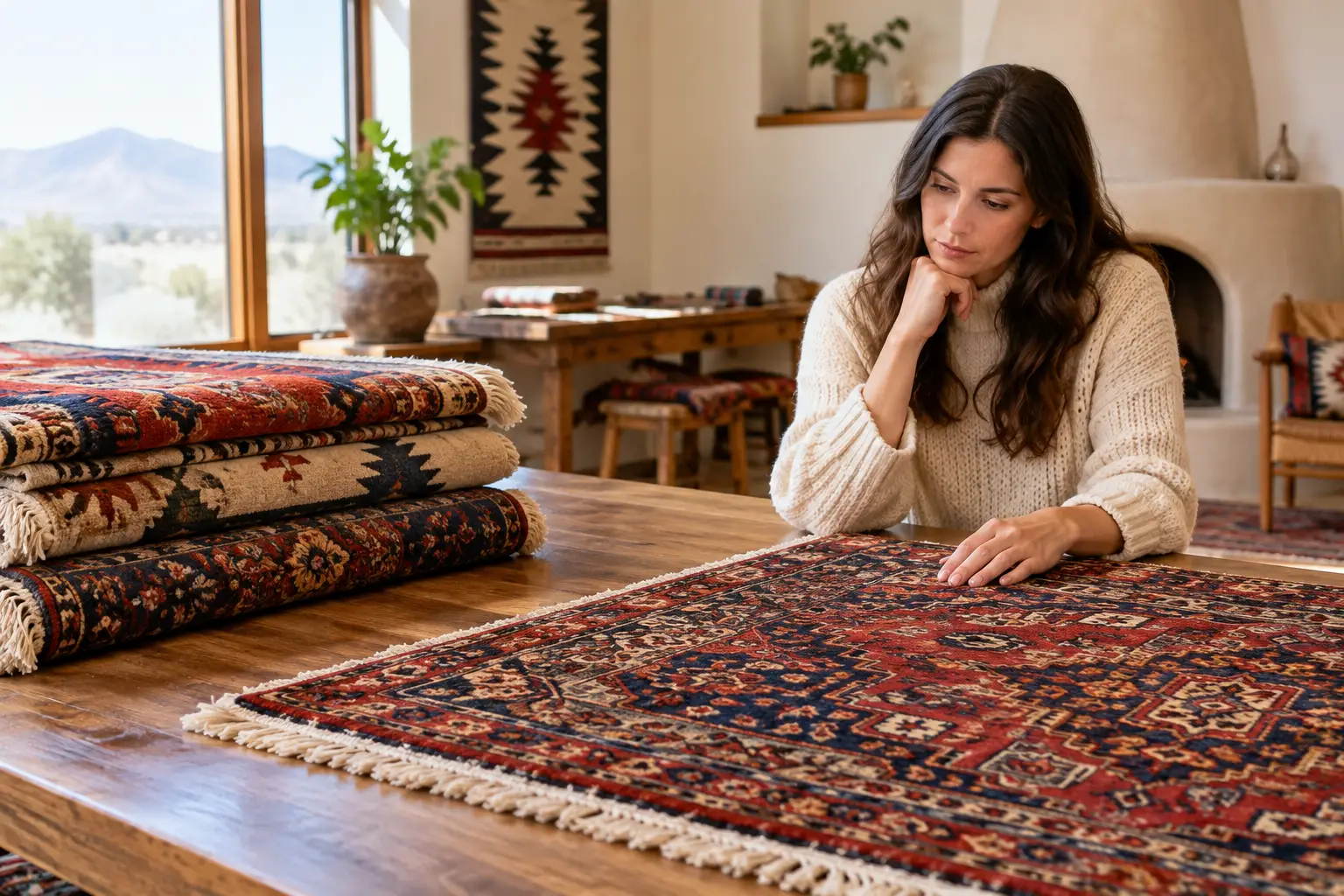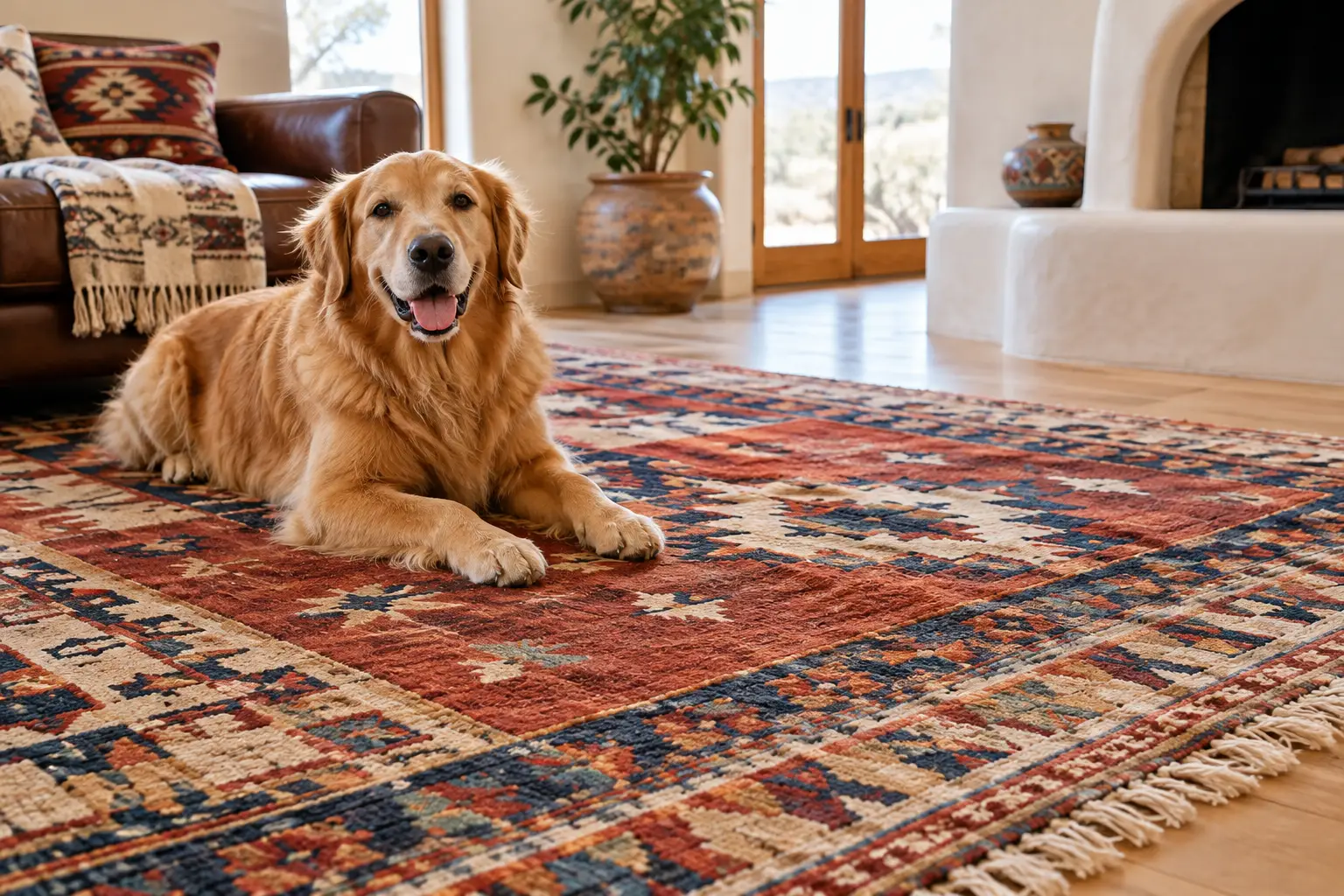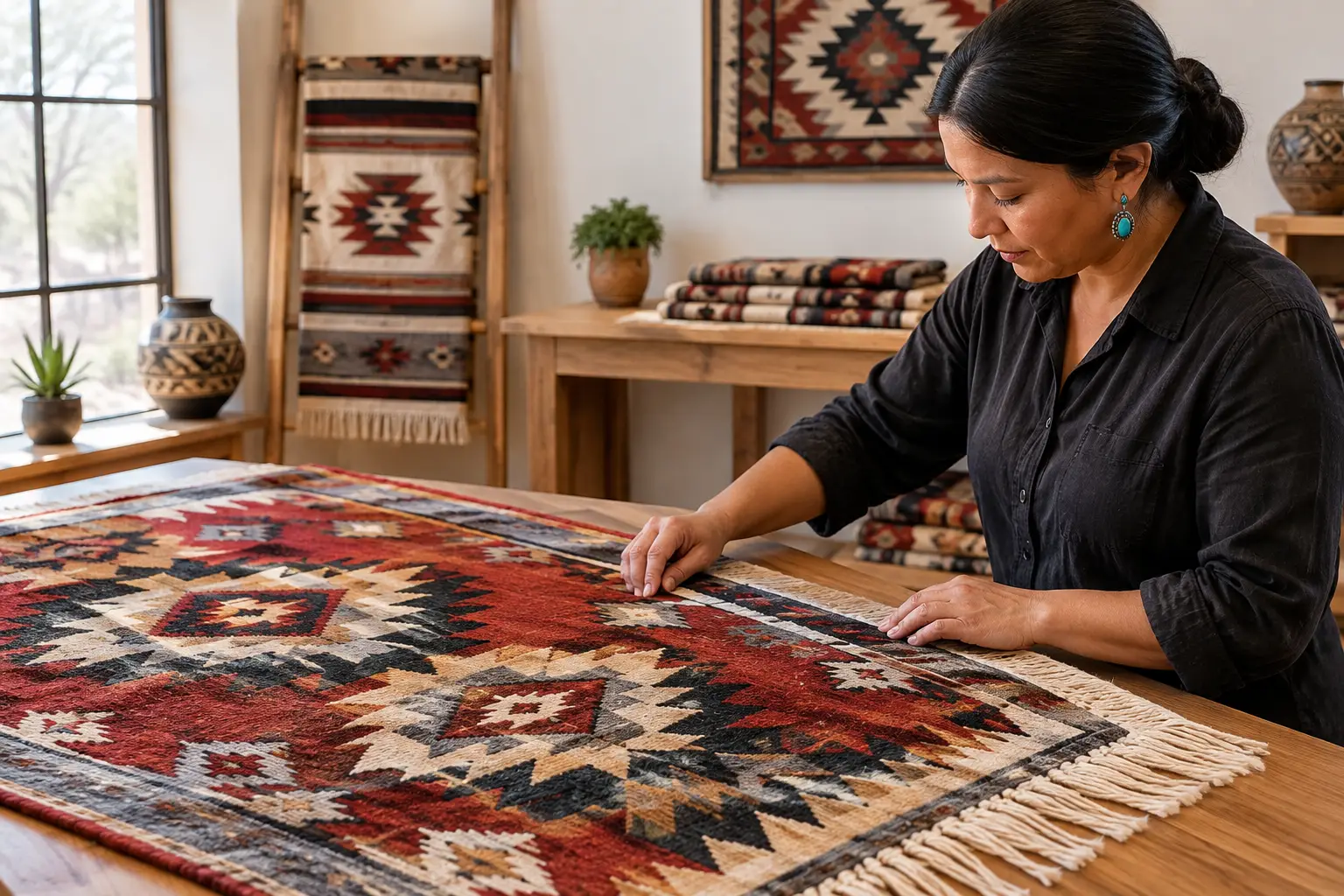
A Navajo textile care guide starts with gentle handling: limit direct sun, remove soil carefully, address spills without scrubbing, and avoid home washing. These textiles can have sensitive wool, hand-dyed color, and structural details that need more than ordinary rug care.
A Navajo or Southwest textile is often a meaningful part of a home, whether it was collected, inherited, or chosen to anchor a room. It deserves care that respects both the fiber and the handwork. The goal is not to make a textile look newly manufactured. It is to keep it clean, stable, and usable while preserving the character that makes it worth keeping.
What belongs in a Navajo textile care guide?
Start with the textile’s construction, condition, and location in the home. Many Navajo textiles are woven from wool, a fiber that can hold dust deep in its foundation while showing little surface soil. Wool also reacts differently than synthetic rugs when it gets wet, is exposed to heat, or meets the wrong cleaning product.
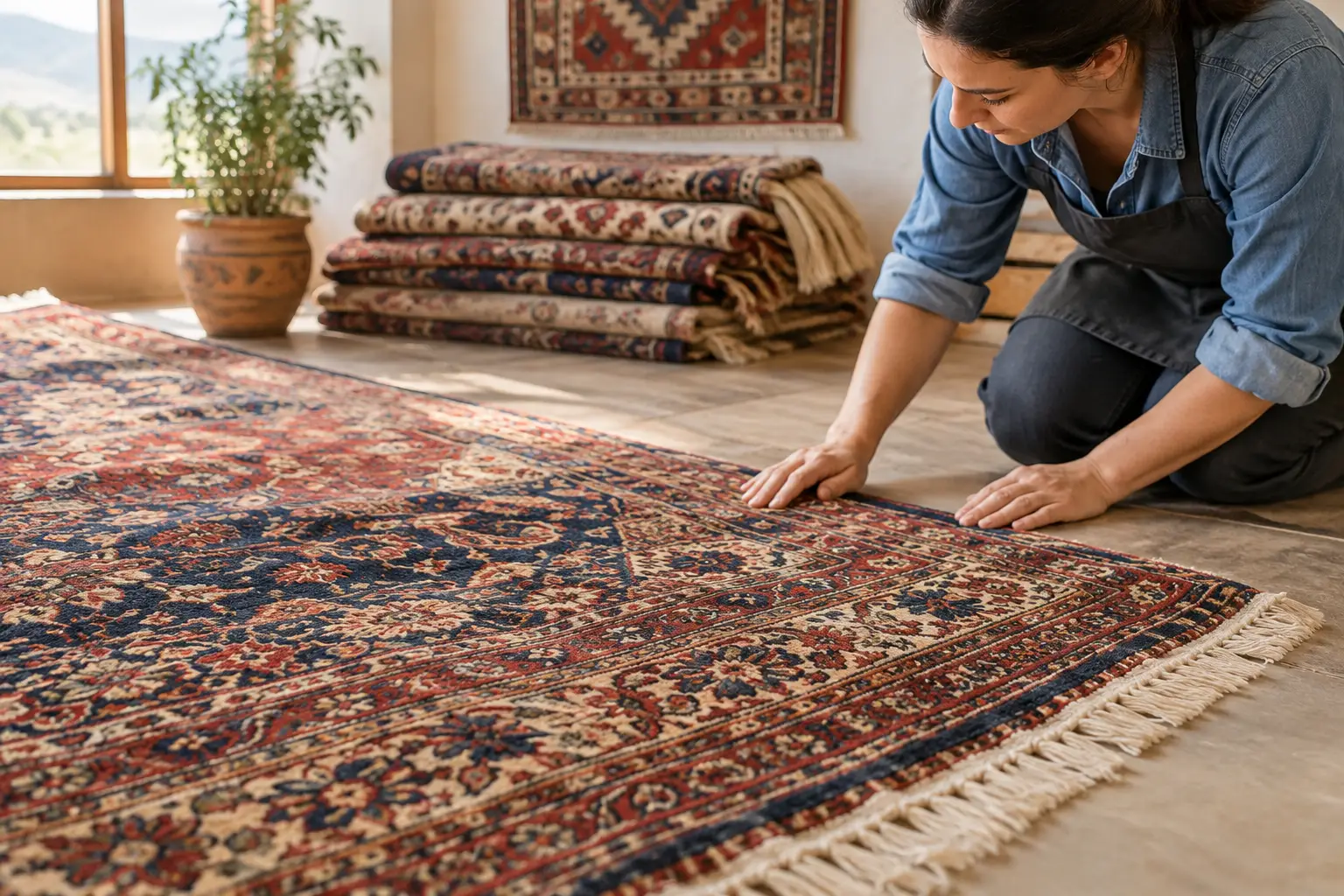
Look closely before you move or clean anything. Note weak edges, broken yarns, areas of thinning, pet accidents, food spills, and places where colors look uneven. Take a few clear photos for your records, especially if the piece is inherited or may need an appraisal later. Photos make it easier to notice gradual fading or new damage over time.
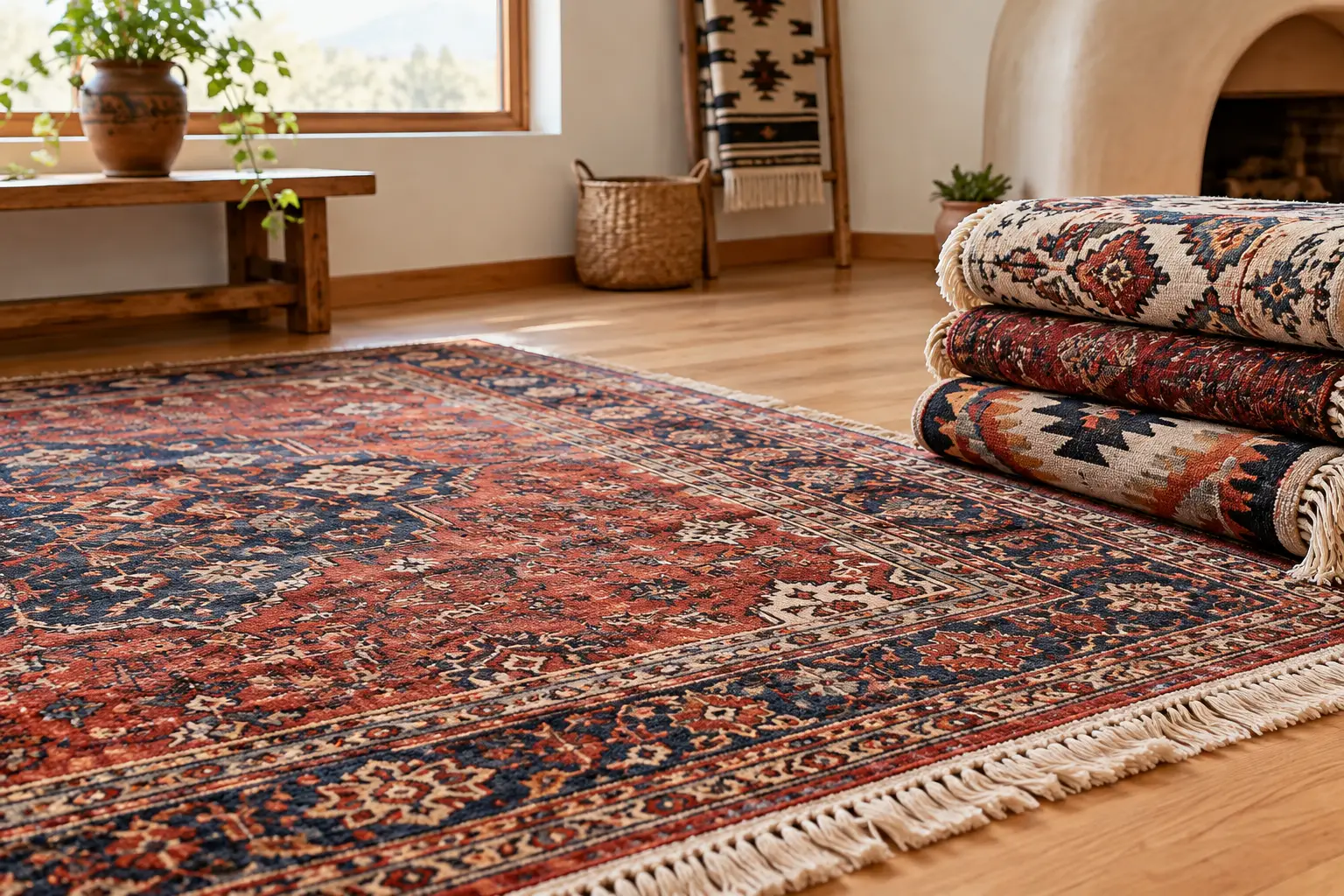
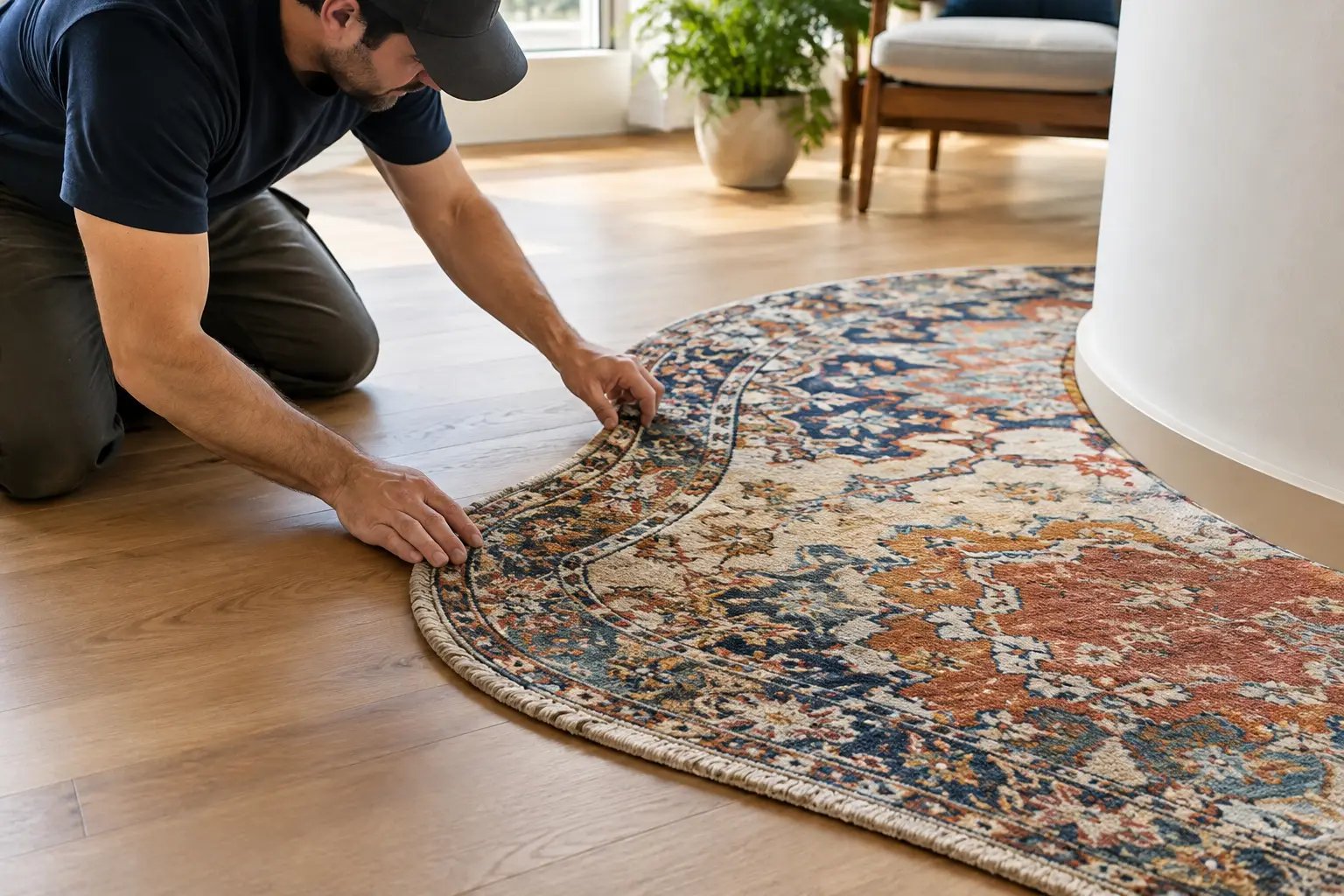
Placement matters as much as cleaning. Keep the textile away from repeated direct sunlight when possible. Rotate a floor textile about every six months if one side receives more light or foot traffic than the other. If it is displayed on a wall, use a support method appropriate for its weight rather than fastening through the weave or pulling the upper edge tight.
A rug pad can also reduce wear for a textile used on the floor. The pad should be clean, stable, and correctly sized, with no adhesive backing that could transfer to the wool. A worn, crumbling, or incorrect pad can create uneven pressure and leave residue behind.
How should you remove everyday dust?
Dust is abrasive. As people walk across a woven textile, fine grit works down between the yarns and gradually wears the fibers. A textile can look clean on top while holding a surprising amount of dry soil underneath.
For regular maintenance, vacuum gently once every one to two weeks in active areas, or less often for a textile with light use. Use suction only when possible. Turn off the beater bar or rotating brush, and keep the vacuum head moving. Do not make repeated passes over thin areas, loose yarns, repaired sections, or fragile edges.
Avoid vacuuming fringe, tassels, or edge cords. Not every Navajo textile has fringe, and woven edges are not something to treat like the fringe on a machine-made rug. If you see loose yarns, do not trim them. A specialist should determine whether they are structural yarns, a repair issue, or simply surface fibers that can be stabilized.
Every few months, inspect the back as well as the face. Look for grit, insect activity, discoloration, and signs that the rug pad is sticking or breaking down. A brief inspection catches small concerns before they become a larger repair.
What should you do when a spill happens?
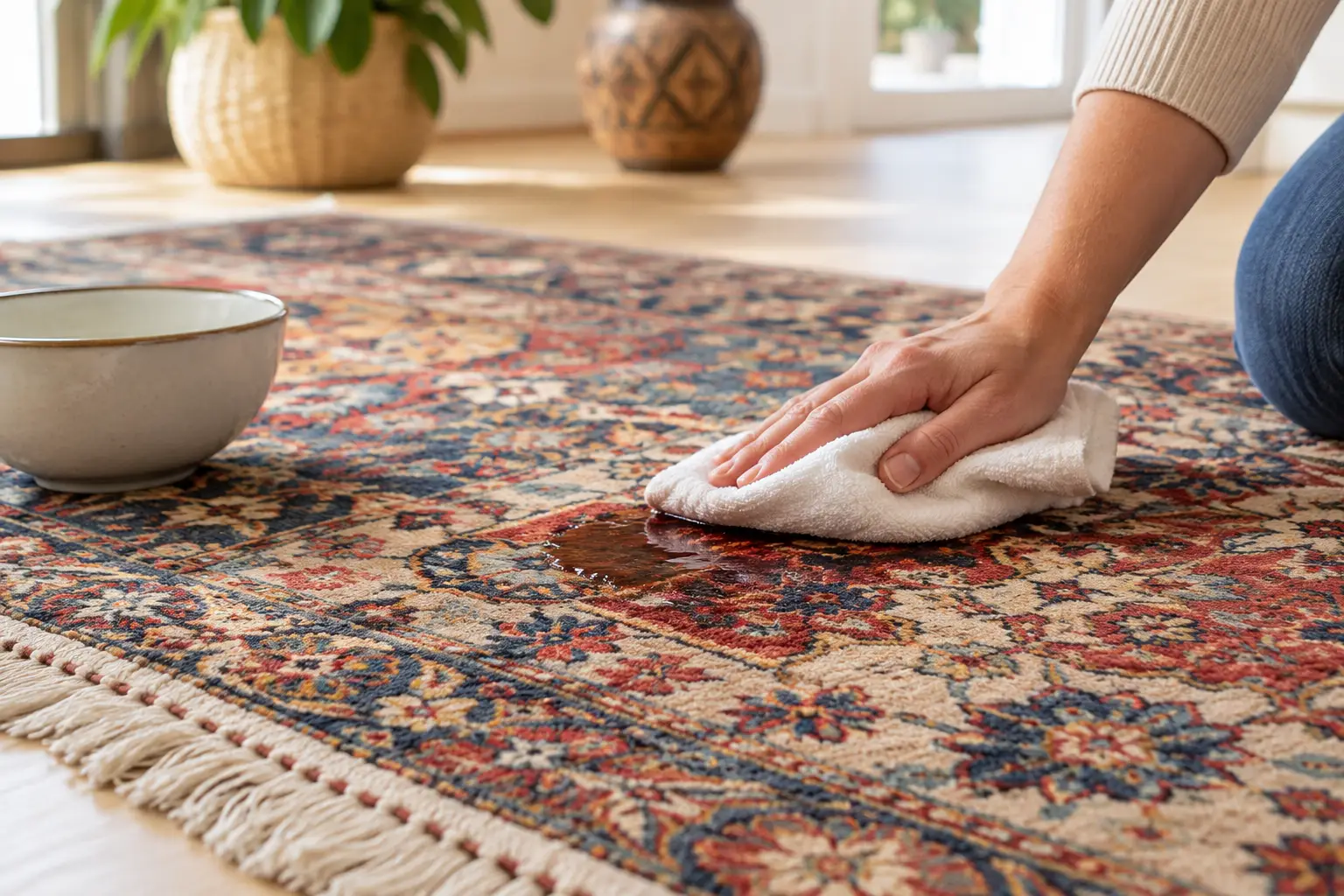
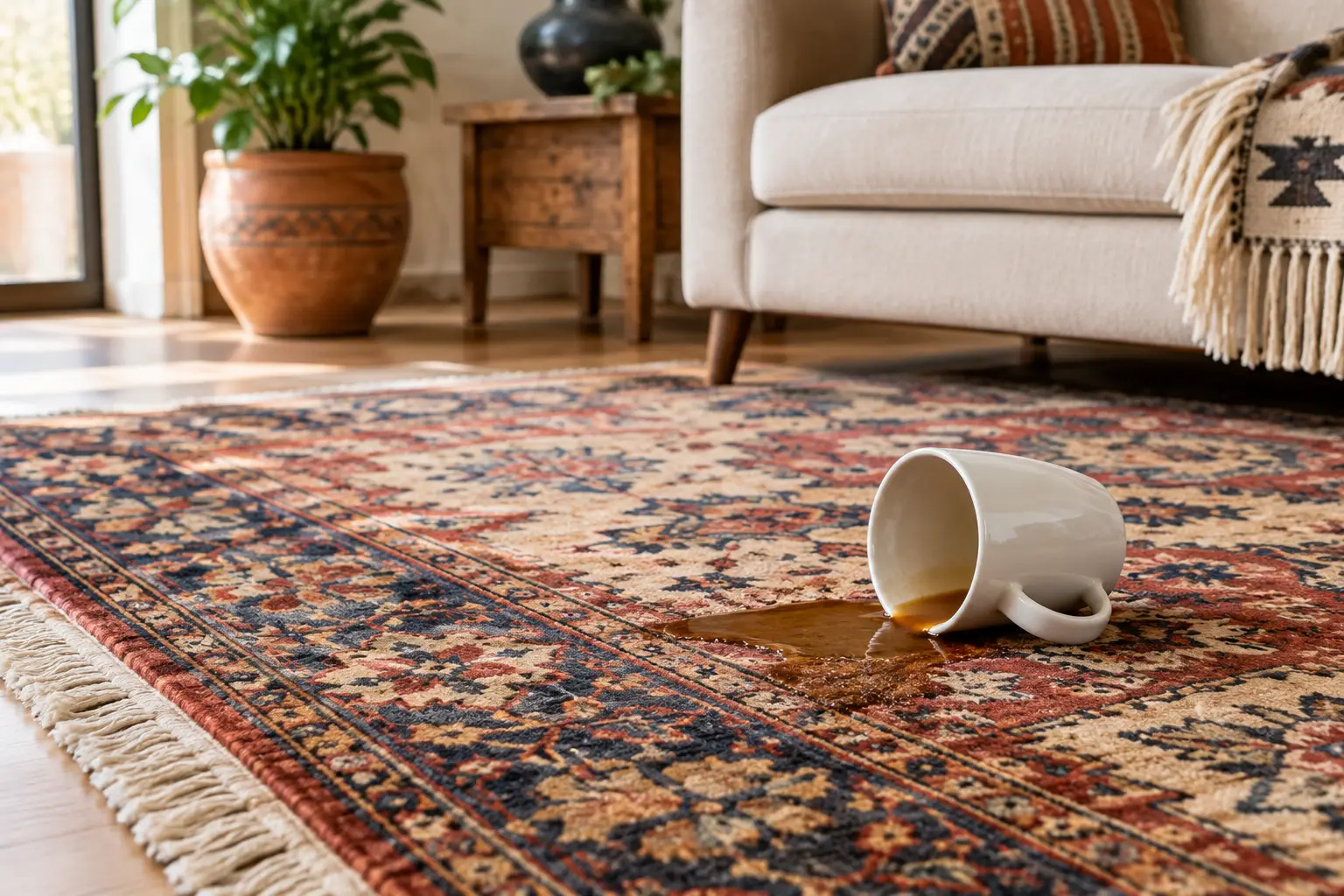
Act promptly, but keep the response simple. Blot the spill with clean white cotton towels or plain white paper towels. Press down, lift, and replace the towel as it absorbs moisture. Do not rub in circles, because rubbing can spread the stain, roughen wool fibers, and work color into neighboring areas.
For a water-based spill, lightly blot with a towel dampened in cool water only after removing as much of the spill as possible. Then blot again with dry towels. Do not soak the area, use hot water, apply a store-bought spot remover, or put a hair dryer on the textile. Heat can set some stains, and excess moisture can lead to color movement, browning, or distortion in the foundation.
Oil, wine, coffee, pet accidents, and unknown stains deserve more caution. Do not use vinegar, baking soda, dish soap, hydrogen peroxide, or powdered cleaners on a Navajo textile. A remedy that seems harmless on a synthetic household rug can leave residue, change color, or weaken natural fibers.
If the spot is still visible after blotting, or if color appears on the towel, stop. Place a clean dry towel over the area, keep pets and foot traffic away, and arrange for an inspection. The sooner a urine accident or food spill is addressed, the more options there are for treating it safely.
When does a Navajo textile need professional cleaning?
Professional care is appropriate when the textile has embedded soil, an overall dull or gray appearance, odor, pet contamination, dye concerns, moth evidence, or a spill that did not come out with careful blotting. It is also the right choice before packing away a textile for a season. Soil, skin oils, and food residue can attract insects during storage.
A specialist should inspect the weave and test dyes before deciding how to proceed. There is no single cleaning recipe for every handmade textile. Wool type, yarn condition, prior repairs, dye stability, age, and contamination all affect the safest method.
At One World Rug Care, textiles are cleaned in the shop rather than with an in-home carpet machine. Each piece is inspected and dye-tested, dusted, washed by hand in cool water when appropriate, and dried in a climate-controlled room. That process is designed to remove dry soil and residues while giving the textile the controlled handling it needs.
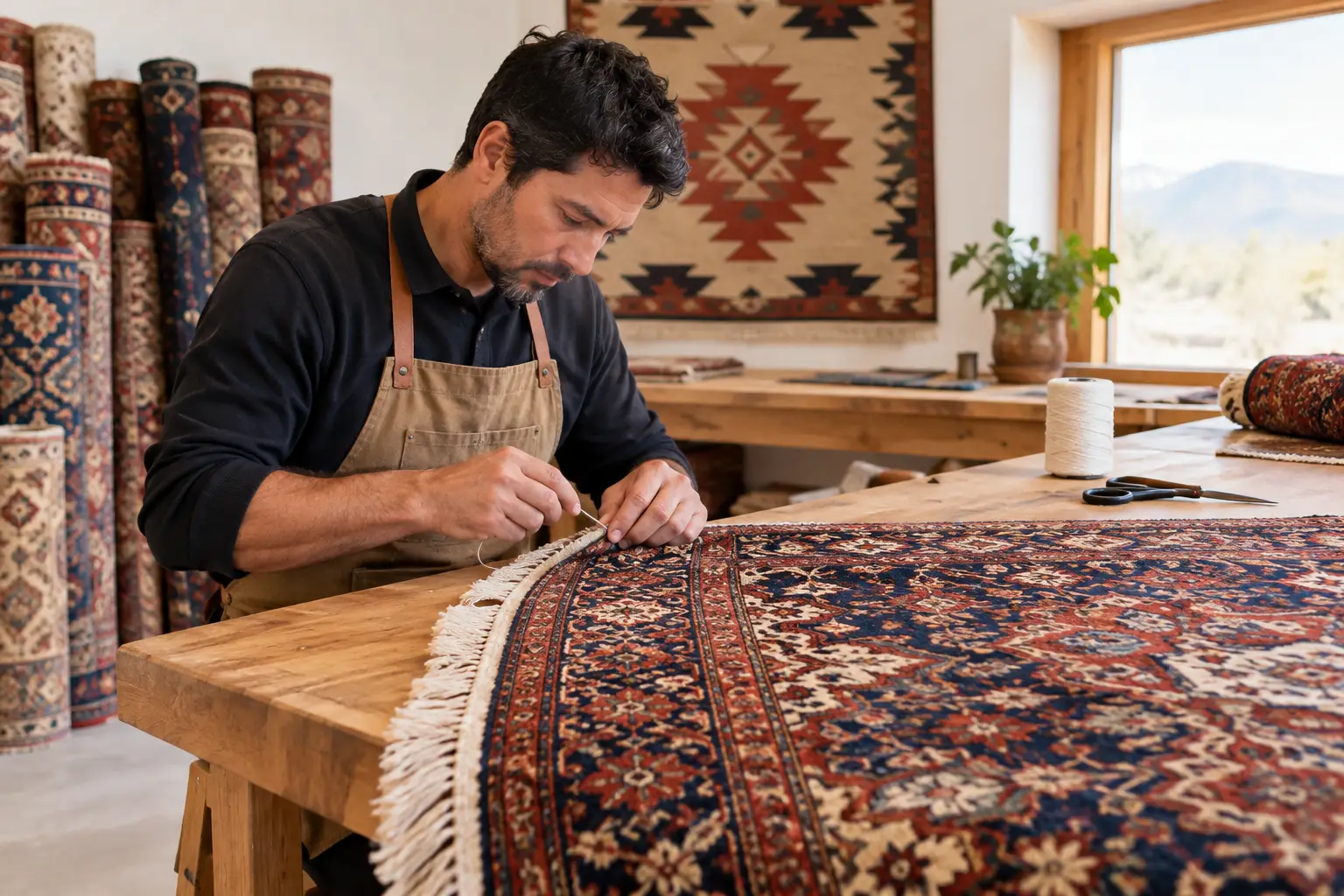
A professional should also see a textile before any repair is attempted. Loose edges, broken yarns, holes, and moth damage can worsen when a piece is vacuumed aggressively or washed at home. Repair work is most successful when the surrounding fibers are clean and stable enough to support it.
How do you protect a Navajo textile from sun, pets, and pests?
Sunlight causes gradual fading, especially near windows and glass doors. Sheers, UV-filtering window treatments, and thoughtful placement can reduce exposure. Rotating the textile helps distribute unavoidable light, but it cannot reverse fading that has already occurred.
Pets add a separate concern. Urine can travel below the surface of wool and into the foundation or rug pad. The visible spot may be small while odor-producing residue extends farther. Blot fresh accidents right away, then have the textile evaluated if odor remains or if the accident soaked through.
Moths and carpet beetles are drawn to animal-based fibers when they find quiet, undisturbed areas with soil or food residue. Check under furniture, along baseboards, and on the back of the textile. Watch for small bare patches, loose fiber dust, or tiny larvae. Do not rely on mothballs or household sprays around a valuable textile. These products can leave odors and residues without addressing the underlying condition.
For seasonal storage, make sure the textile is clean and completely dry first. Roll it rather than folding it sharply, use a breathable protective wrap, and keep it off concrete floors and away from damp areas. Check stored pieces periodically rather than leaving them untouched for years.
Can an inherited textile be used on the floor?
It depends on its condition, construction, and your household. A sturdy textile in sound condition may work well in a low-traffic room with a proper pad. A fragile, finely woven, faded, or repaired piece may be safer as a display textile or in a room where it will not receive daily wear.
Before putting an inherited textile into regular use, have it inspected. That conversation can clarify whether it needs cleaning, edge stabilization, minor repair, or a different placement. It can also help you decide whether a verbal appraisal is useful for insurance or family records.
The right care plan is usually modest and consistent: gentle vacuuming, prompt blotting, light management, a good pad, and professional cleaning when soil or contamination calls for it. Those habits protect the textile without asking it to withstand treatment meant for ordinary carpet.
Rug Care in Albuquerque and Northern New Mexico
Have a rug that needs care? One World Rug Care has been cleaning, repairing and protecting area rugs in Albuquerque since 2012. Email a few photos of your rug to admin@oneworldrugcare.com for a free estimate, call us at (505) 821-0302, or visit the shop at 7200 Jefferson St NE, Suite A, Monday to Saturday 9 to 5. Pickup and delivery is free in Albuquerque and Santa Fe on orders of $150 or more, and available in Taos, Durango, Pagosa Springs and Las Cruces.