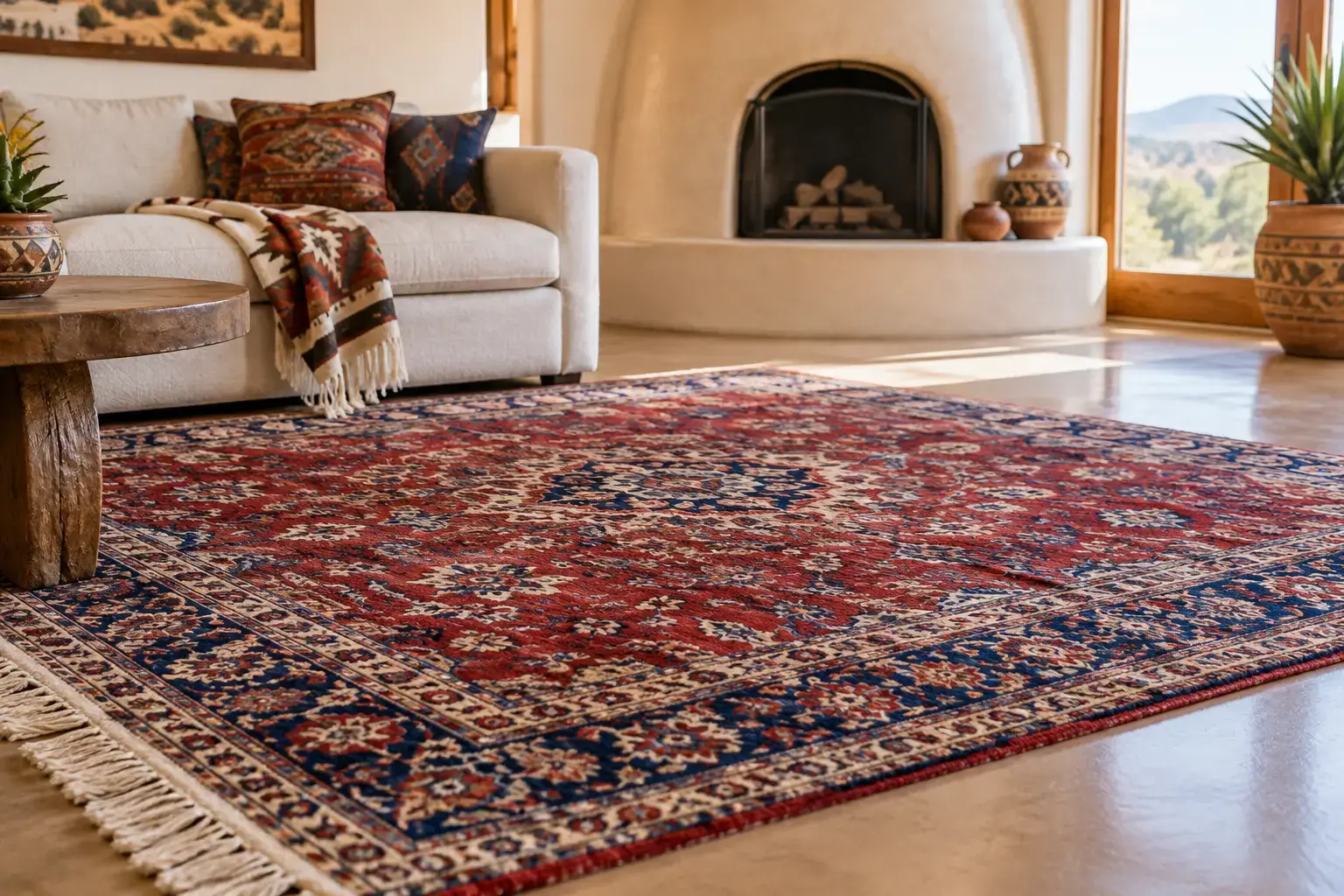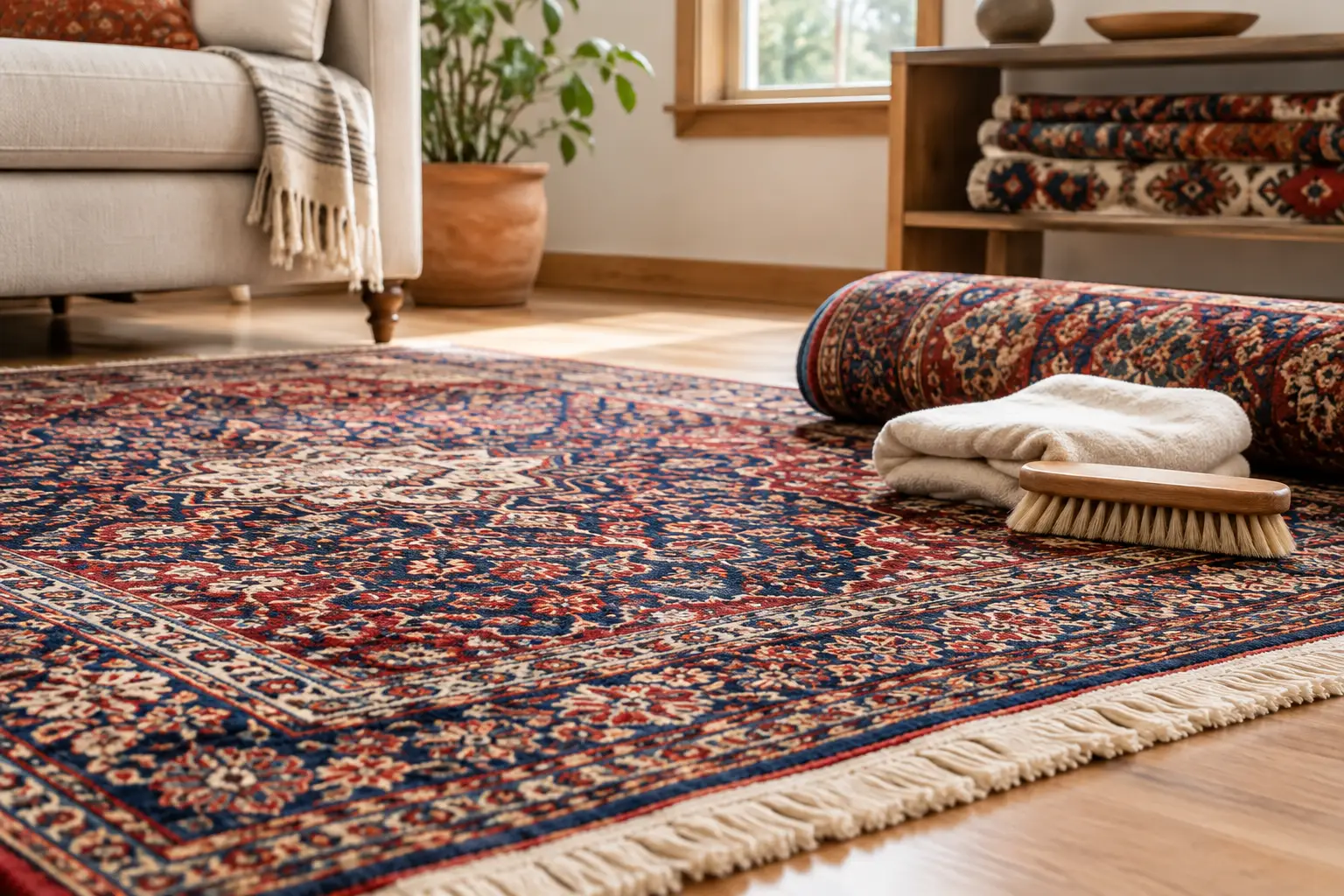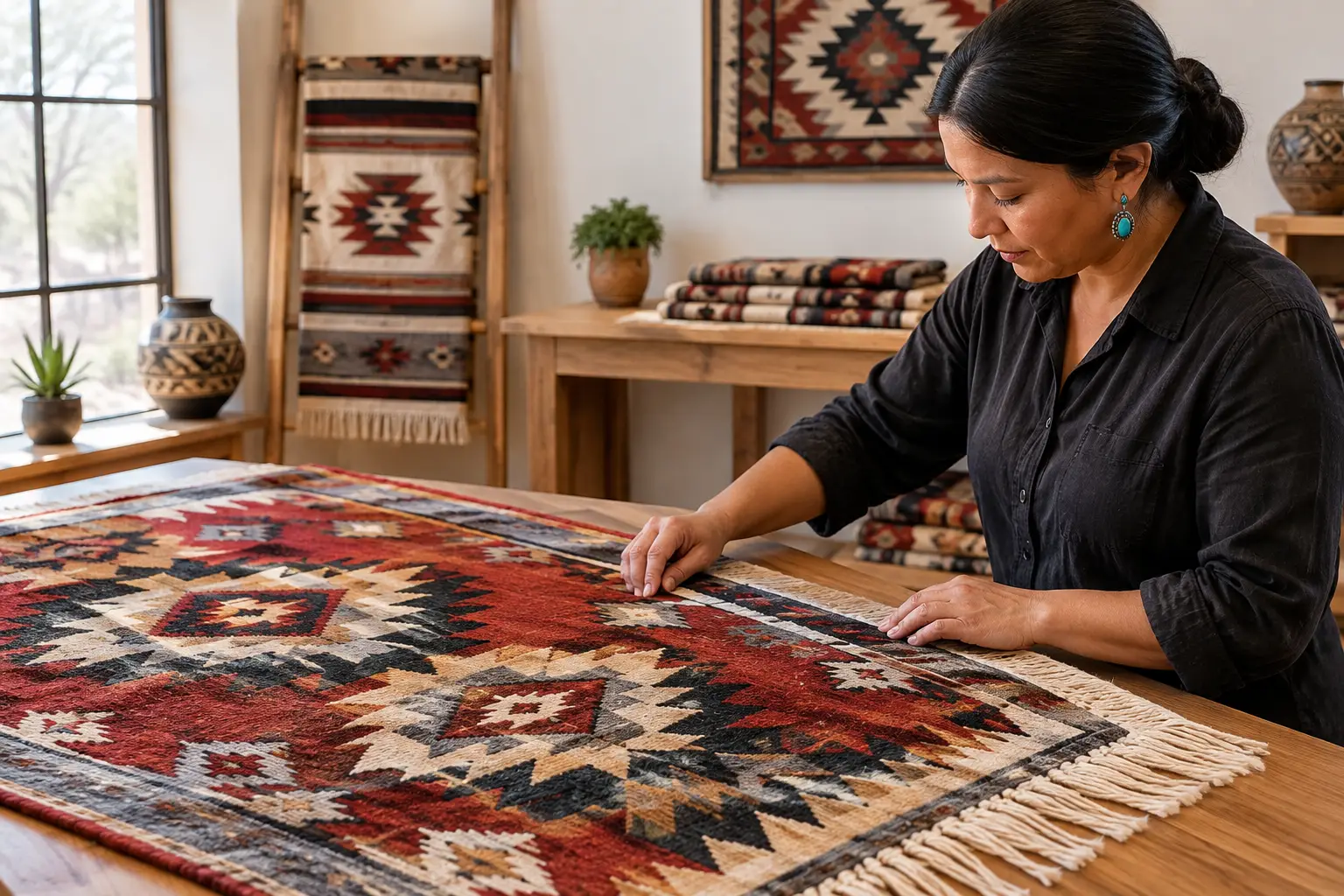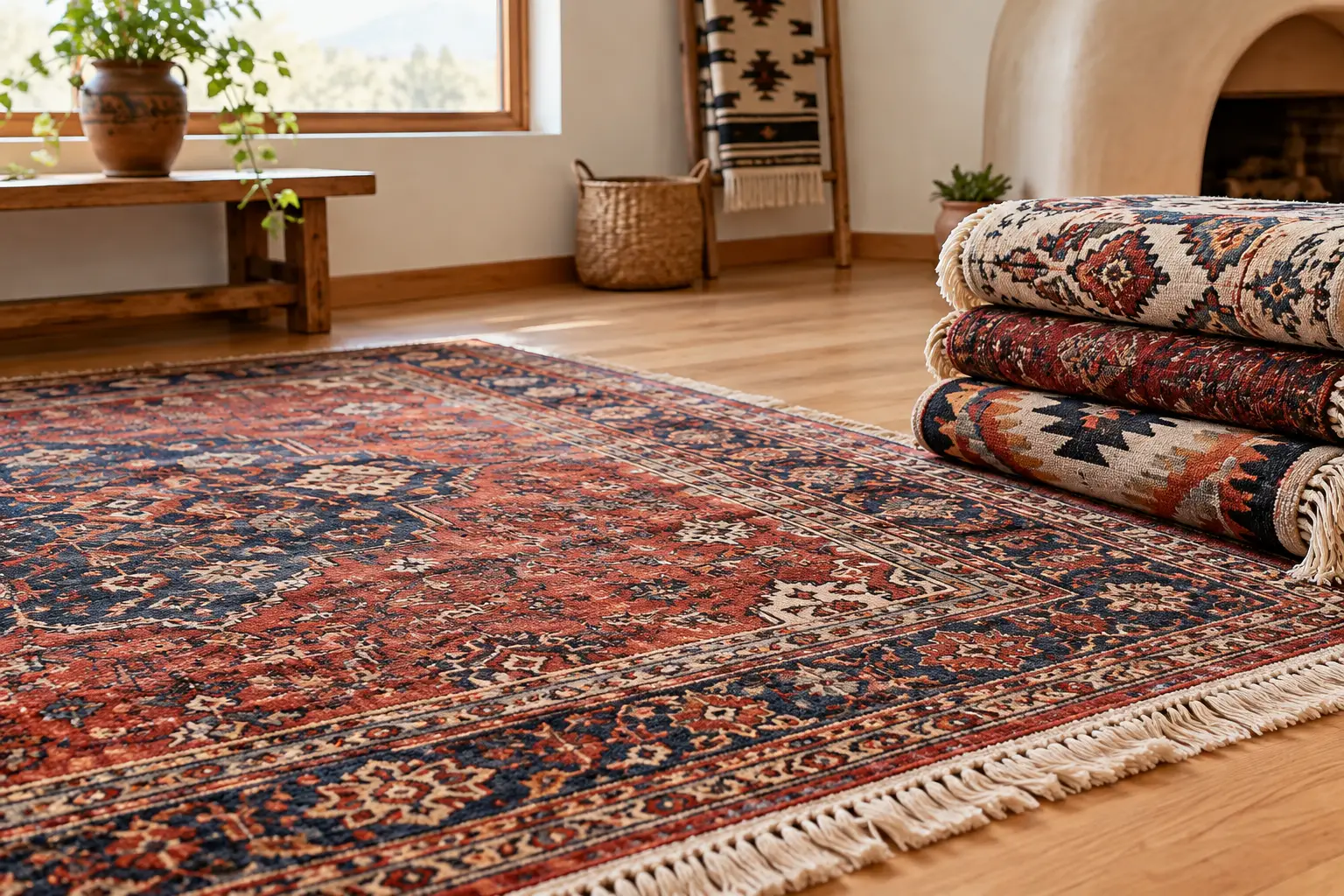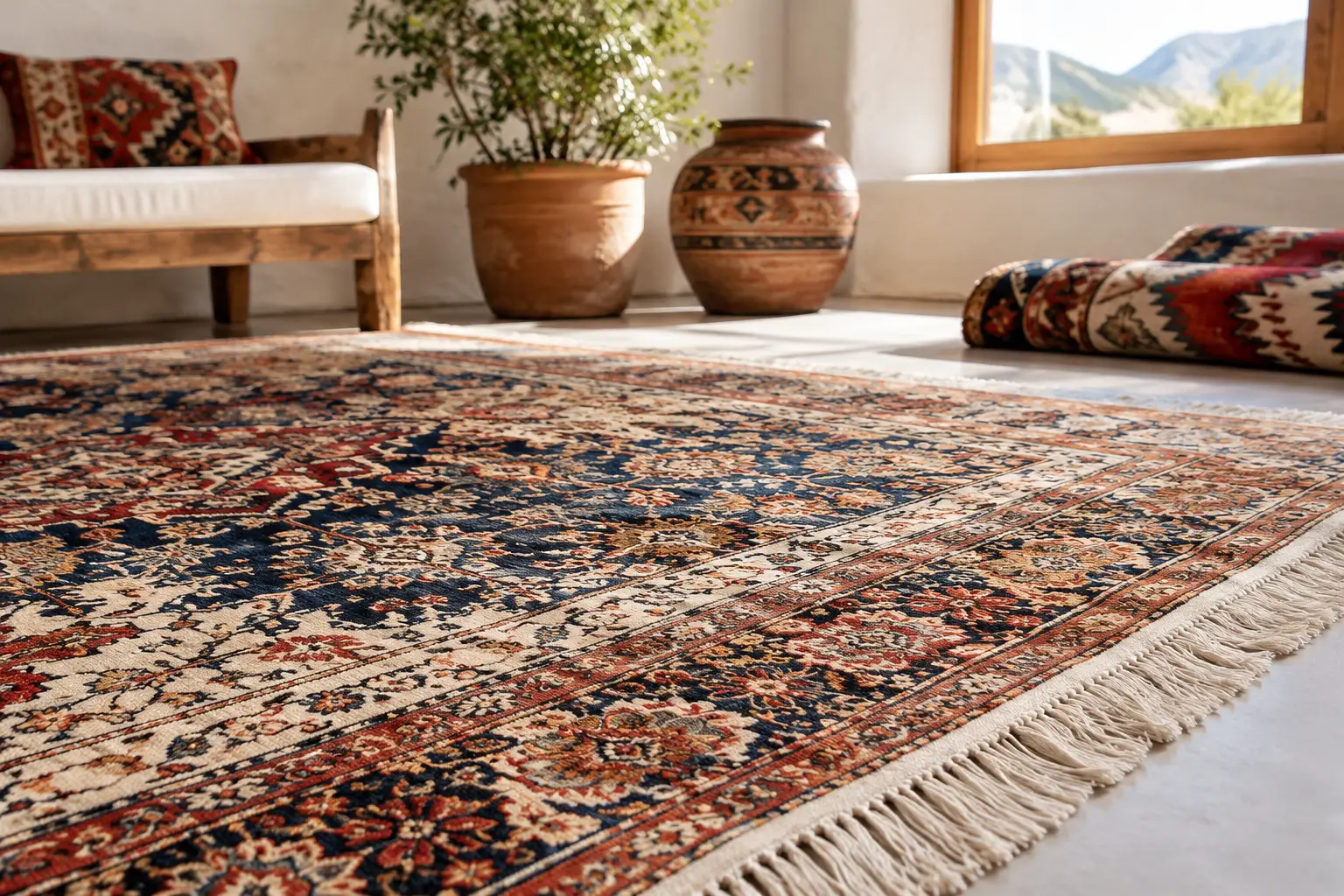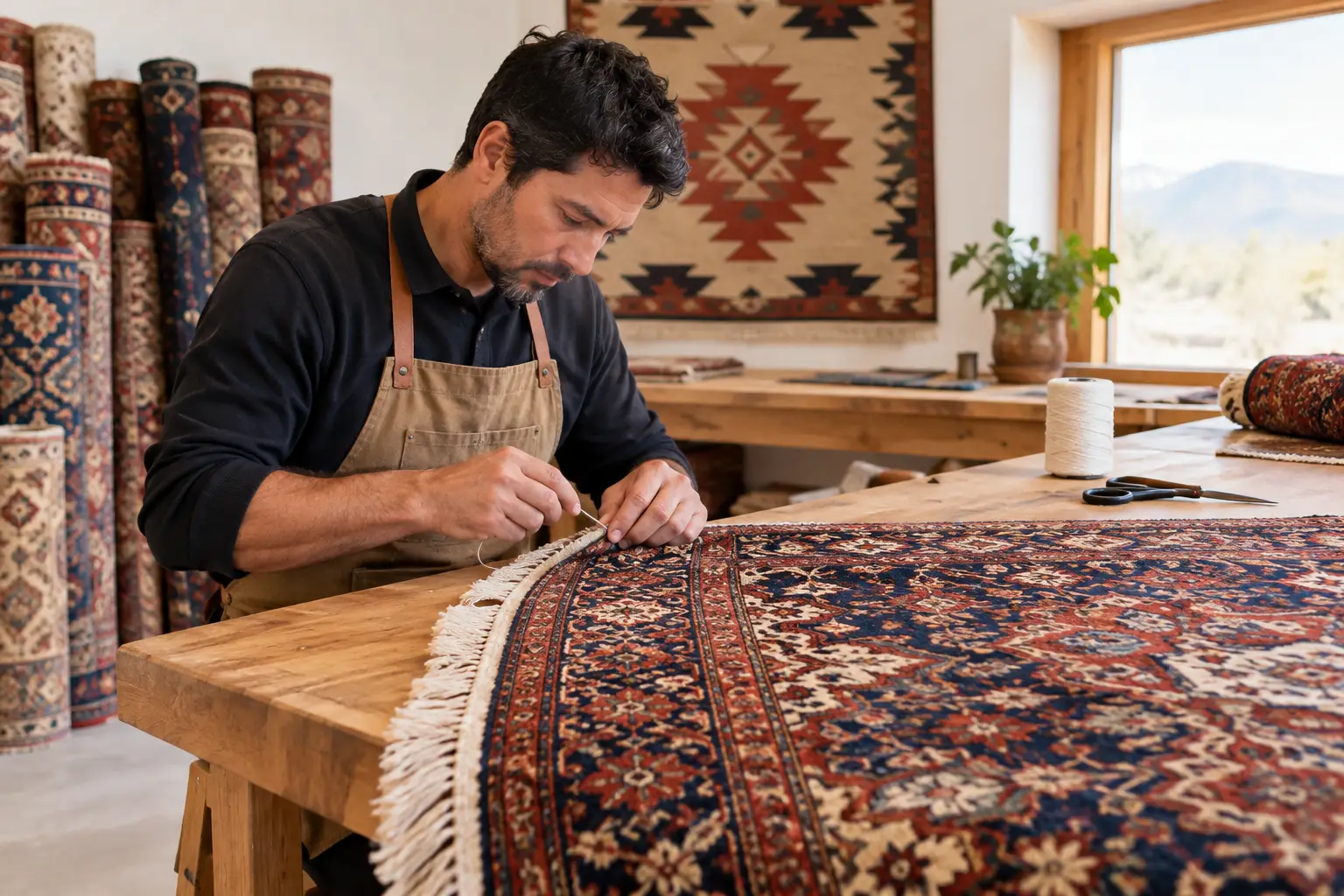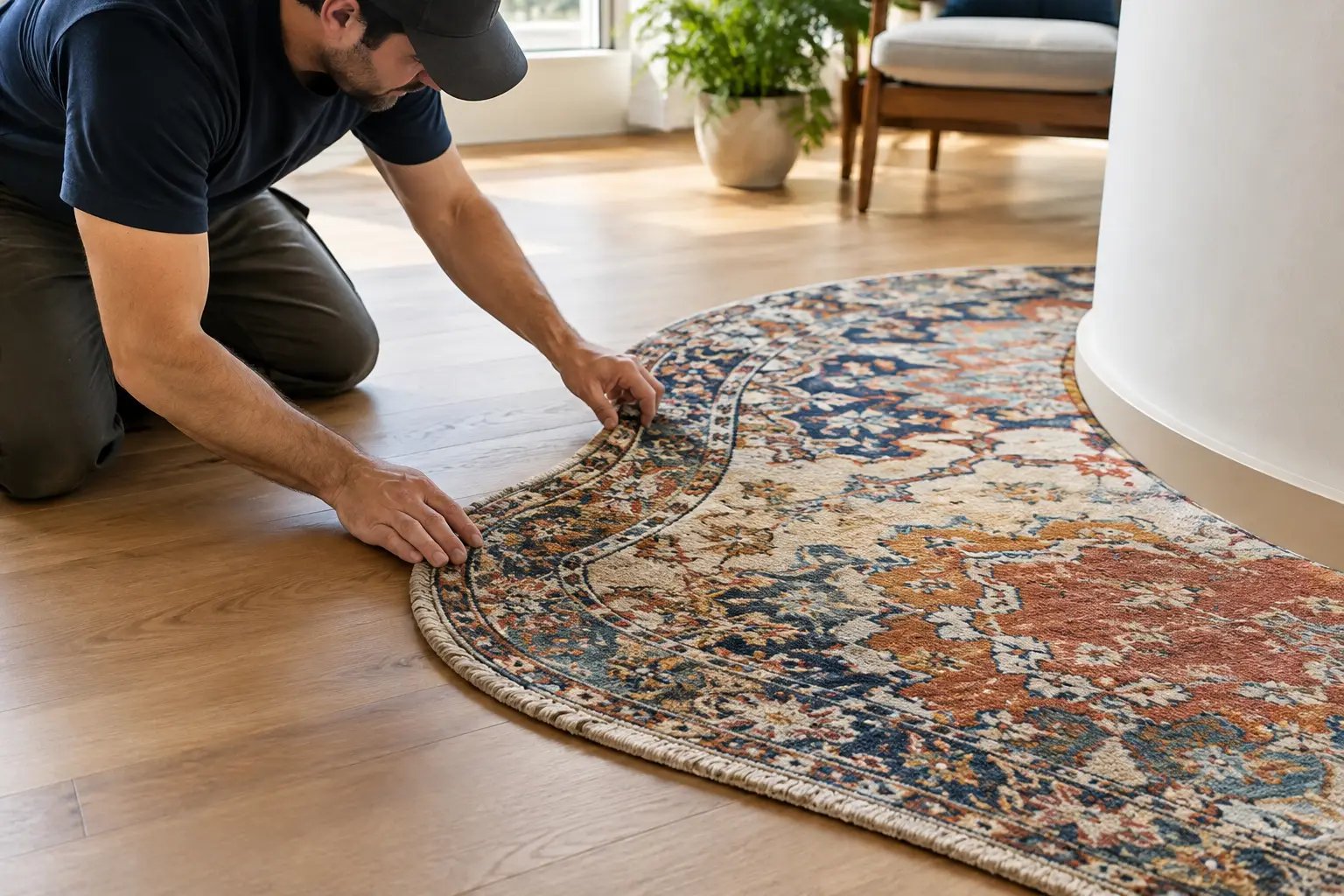
The rug washing methods that protect a rug are determined by its fibers, dyes, weave, and condition. For many handmade or delicate rugs, that means a controlled, in-plant hand wash in cool water rather than a one-size-fits-all cleaning process.
A machine-made polypropylene rug, a hand-knotted wool Persian, a silk rug, and a Navajo or Southwest textile may all look like area rugs from across the room. Under close inspection, they behave very differently around moisture, agitation, heat, and cleaning solutions. The right method removes embedded soil while respecting the materials that give a rug its value and character.
Why do rug washing methods need to change from rug to rug?
Fiber type is the starting point. Wool is naturally resilient, but it can hold a surprising amount of dry soil deep in the pile and foundation. Silk has a smoother, more delicate surface and may lose its luster or distort when handled roughly. Viscose can be especially sensitive to moisture and agitation, sometimes developing texture changes or color movement if it is cleaned like ordinary carpet.
Construction matters just as much. Hand-knotted rugs often have individual knots, cotton or wool foundations, hand-spun yarns, and fringe that is part of the rug itself. Some everyday tufted rugs use adhesive beneath the pile, which may react poorly to heavy saturation. A flatwoven Navajo or Southwest textile requires careful handling because its structure, dyes, and edges can be vulnerable to stress.
Dyes are another reason there is no universal washing formula. Older rugs, hand-dyed yarns, and rugs with red, navy, black, or deeply saturated colors deserve testing before washing begins. If color is unstable, the washing approach has to change before water reaches the full rug.
What happens before a rug is washed?
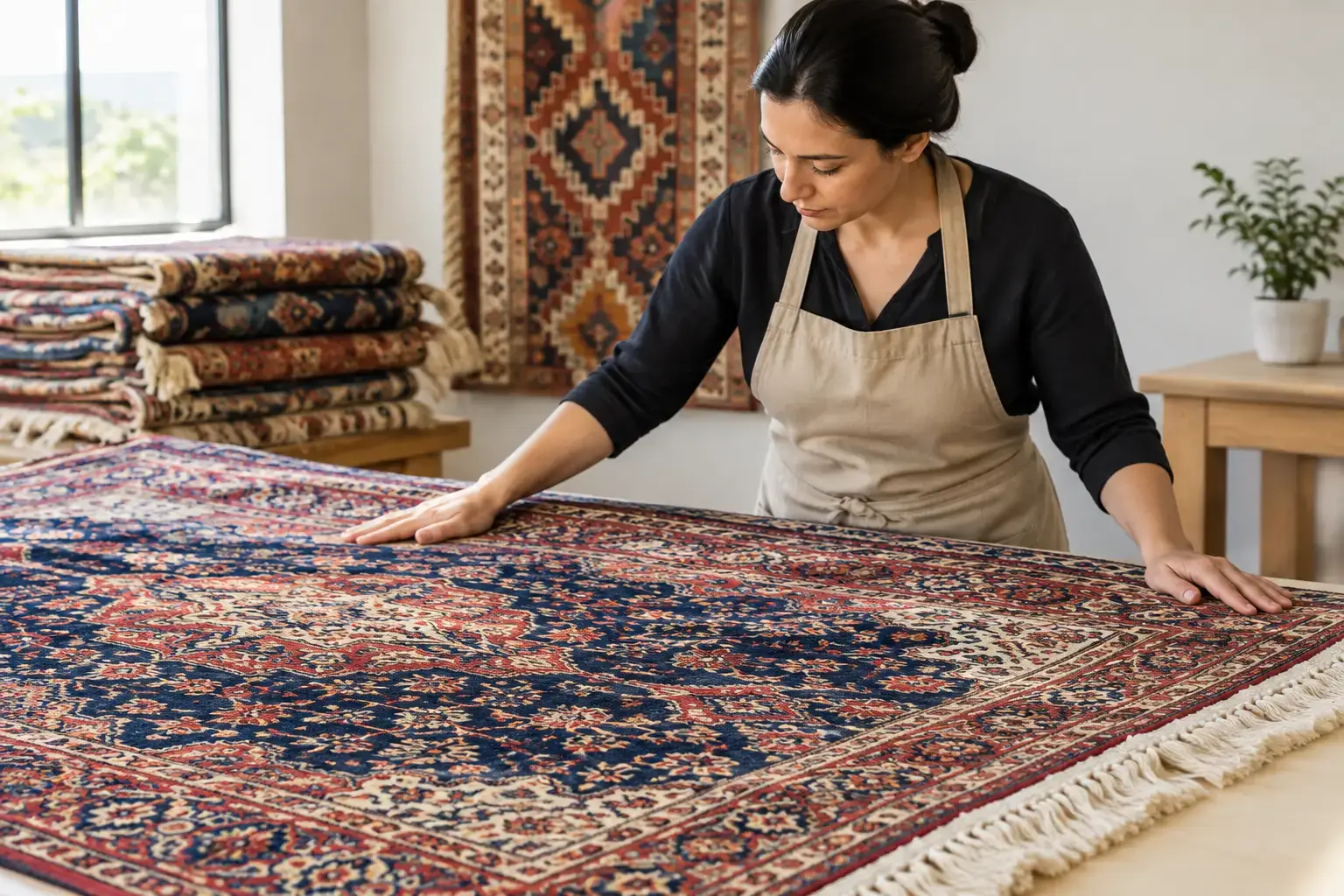
A careful wash begins with inspection, not soap. A rug specialist looks at the front and back for fiber type, construction, prior repairs, worn areas, moth activity, fringe condition, stains, and signs of dye instability. The back often tells the fuller story: it can reveal dry soil, foundation damage, old urine contamination, and repairs that are easy to miss from the face of the rug.
Dye testing is a small but essential step. Moisture is applied in a controlled area to see whether colors release or migrate. This helps determine whether the rug can be washed normally, needs a more limited process, or should receive stain and color-stability treatment before broader washing.
At One World Rug Care, rugs are cleaned in the shop so the entire process can be managed from inspection through drying. That allows the rug to be dusted, washed by hand in cool water when appropriate, and dried in a climate-controlled room instead of being left to dry in a home where airflow, humidity, and temperature can vary.
Why is dusting a separate step from washing?
A rug can look clean on the surface while holding pounds of grit, sand, pet hair, and dry particulate below the pile. In Albuquerque and throughout northern New Mexico, dry soil is a regular part of rug ownership. It gets carried in on shoes, settles through the fibers, and gradually works against the foundation whenever the rug is walked on.
Washing a rug without removing that dry soil first can turn dust into mud within the fibers. Thorough dusting before washing helps the cleaning water reach the yarns more effectively. It also reduces the abrasive material that can make wool pile look dull or wear sooner.
Vacuuming at home is still useful between professional cleanings. Vacuum the pile in the direction it naturally lies, use a gentler setting around fringe, and avoid pulling fringe through a beater bar. Vacuuming removes surface soil, but it cannot replace a dedicated dusting process for embedded grit.
Which rug washing methods suit wool, silk, and everyday rugs?
Wool rugs often respond well to a measured hand wash using cool water and fiber-appropriate cleaning solutions. The goal is to rinse away soil without overworking the yarns or causing dye movement. A hand-knotted wool rug may also need attention to its fringe, edges, and foundation, not just the visible pile.
Silk and viscose rugs call for more restraint. Their sheen and fine texture can change under too much moisture, heat, brushing, or alkalinity. These rugs may need a lower-moisture approach, limited agitation, and especially close drying control. A silk rug should not be treated as a tougher wool rug simply because both are handmade.
Synthetic rugs, including polypropylene and some polyester styles, may tolerate more moisture than natural fibers, but construction still controls the process. A rug with a glued backing, latex, or delicate binding may not tolerate the same wash used for a fully hand-knotted rug. The label can provide clues, but an inspection is more reliable than assuming the label tells the whole story.
Can pet urine and stains be treated during washing?
They can often be addressed, but pet accidents require more than treating the visible spot on top. Urine can travel through the pile, foundation, backing, and pad, then dry into crystals that reactivate with humidity. The odor may seem gone for weeks and return when a room warms up or moisture enters the air.
A proper assessment identifies whether contamination is limited to the pile or has reached deeper layers. Treatment may involve flushing affected areas, odor-focused cleaning, and careful drying. Results depend on how long the urine remained, how often the same area was used, the rug’s fibers and dyes, and whether previous products set or altered the stain.
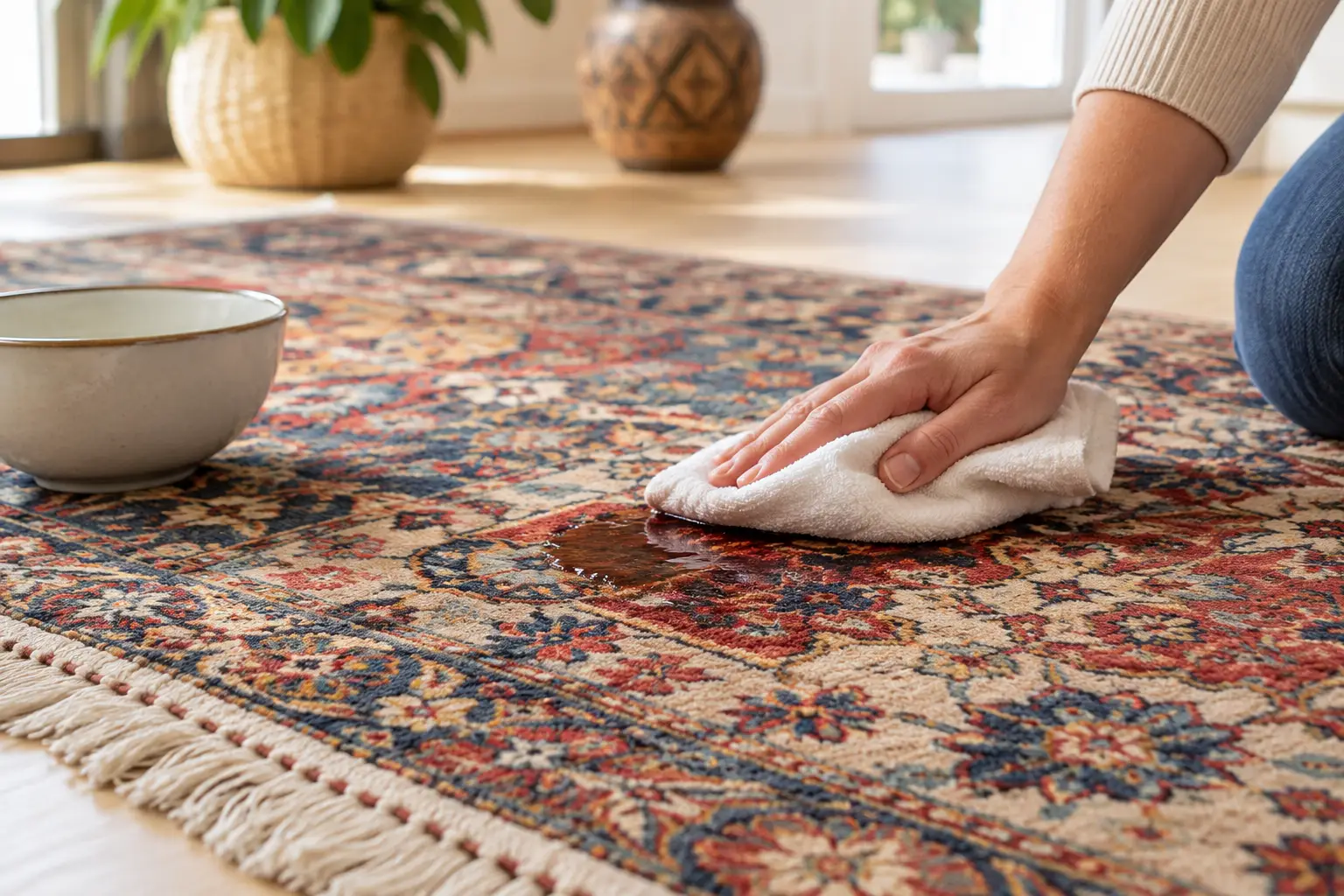
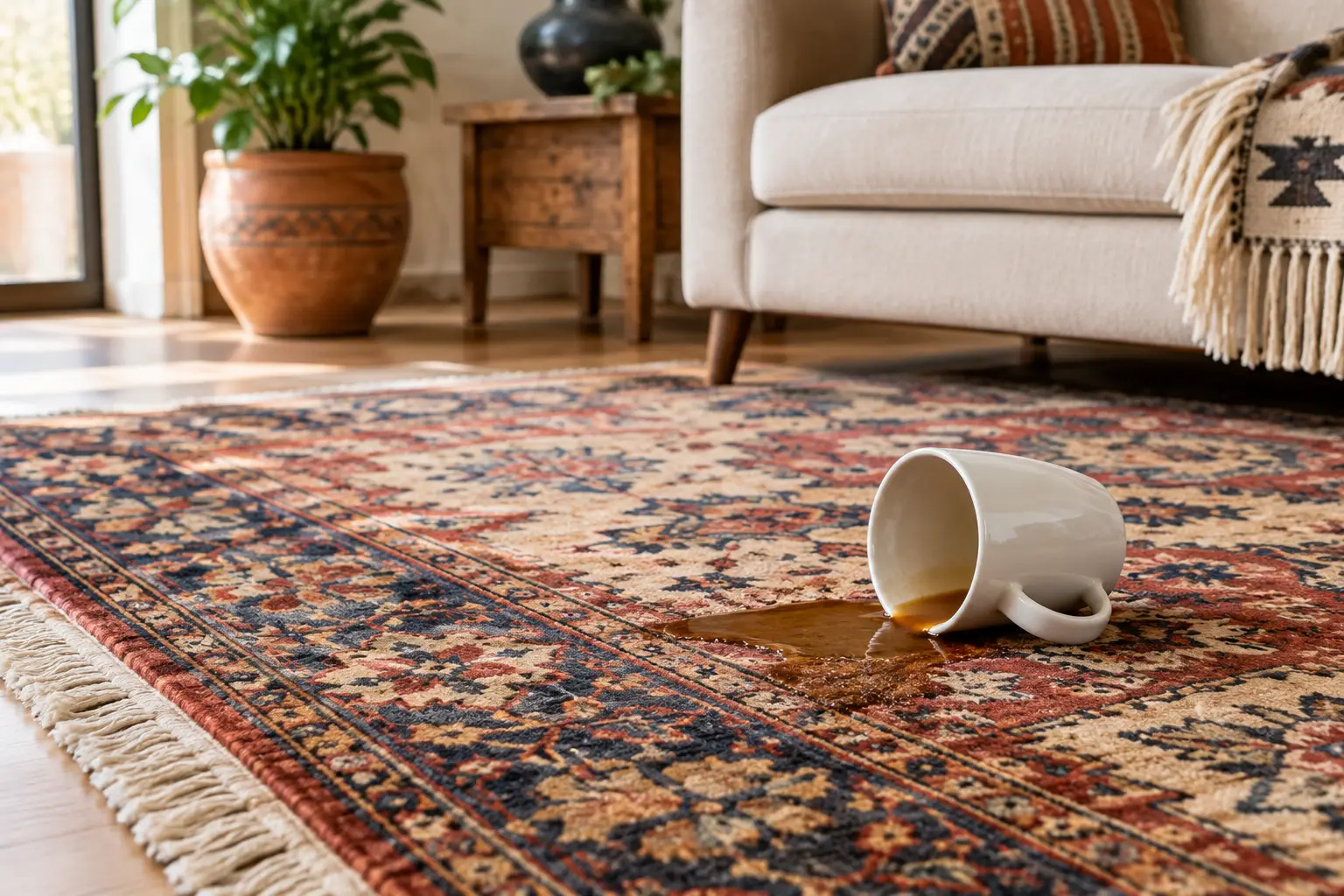
For a fresh spill, act promptly. Blot with clean white towels, working from the outside toward the center. Do not scrub, use hot water, or add a household spot cleaner without knowing the rug’s fiber and dye stability. Scrubbing can spread the spill, roughen the pile, and push liquid farther into the foundation.
What can you safely do at home between professional cleanings?
Regular care is simple and preventive. Vacuum as needed for your household, usually once a week in active rooms and less often in formal spaces. Rotate the rug about every six to 12 months if one area receives more sunlight or foot traffic than another. Use a properly sized rug pad to reduce slipping, cushion the foundation, and improve airflow underneath.
If a rug catches on a vacuum, furniture leg, or pet claw, do not pull the loose yarn or fringe. Tuck the rug out of traffic and arrange for an assessment. A small edge repair is usually easier to manage before neighboring yarns begin to unravel.
Avoid placing potted plants directly on a rug, as slow leaks can cause staining, mildew concerns, and dye changes. For sun-facing rooms, rotation and window coverings can help limit uneven fading over time. These steps do not replace washing, but they can extend the interval between cleanings.
When does a rug need professional washing rather than home cleaning?
A rug needs professional attention when it has a persistent odor, visible stain, sticky or matted pile, heavy dust, color change, insect damage, or fringe and edge wear. It is also wise to arrange an inspection after a major spill, especially on antique, silk, handmade, Navajo, or inherited rugs.
Home care is appropriate for routine vacuuming, light blotting, and careful rotation. Deep washing is different because it requires decisions about dyes, moisture level, cleaning chemistry, agitation, rinsing, and drying. A rug that stays damp too long can develop odor, distortion, or foundation concerns. A rug washed too aggressively can lose color, texture, or structure.
If you inherited a rug and do not know its age, fiber, or origin, resist the urge to test cleaners in a visible corner. Photos of the front, back, fringe, and any concern areas can help a rug specialist give an initial opinion and determine whether an in-person inspection is needed.
Rug Care in Albuquerque and Northern New Mexico
Have a rug that needs care? One World Rug Care has been cleaning, repairing and protecting area rugs in Albuquerque since 2012. Email a few photos of your rug to admin@oneworldrugcare.com for a free estimate, call us at (505) 821-0302, or visit the shop at 7200 Jefferson St NE, Suite A, Monday to Saturday 9 to 5. Pickup and delivery is free in Albuquerque and Santa Fe on orders of $150 or more, and available in Taos, Durango, Pagosa Springs and Las Cruces.