Yes, silk rugs can be cleaned, but they need a method chosen for silk’s fine fibers, delicate dyes, and handmade construction. A silk rug should be cleaned in a rug-care shop, not treated like ordinary carpet or washed with a rental machine.
Silk has a shine and detail that make it memorable underfoot, but those same qualities make it less forgiving of heat, harsh chemistry, excessive scrubbing, and poor drying. Whether a rug is entirely silk or wool with silk highlights, the right approach begins with identifying exactly what is in it and how it was made.
Why can silk rugs be cleaned only with special care?
Natural silk is a protein fiber, much like wool, but it is usually finer and more sensitive. It can weaken when it stays wet too long, lose its luster from abrasion, and develop dye movement if cleaning solutions, water temperature, or drying conditions are wrong. Many silk rugs also have short, dense pile and intricate patterns, so a small area of color loss can be quite visible.
A handmade Persian, Oriental, or antique silk rug may contain dozens of dye colors in a few square feet. Some dyes are stable; others may release color when exposed to moisture. The rug’s foundation may also be cotton, silk, or another fiber that reacts differently from the pile. There is no one cleaning formula that suits every silk rug.
Viscose creates another point of confusion. It is often marketed with words such as art silk, bamboo silk, or rayon silk. Viscose can look similar to silk but is a regenerated cellulose fiber, and it can brown, stiffen, or lose texture when mishandled. A close inspection helps determine whether a rug is natural silk, viscose, or a blend before cleaning begins.
What happens when a silk rug is professionally cleaned?
The process should be deliberate rather than rushed. At One World Rug Care, each rug is inspected before it enters the wash process. We look at fiber type, construction, fringe, edges, existing wear, stains, odor concerns, and signs of moth activity. Dye testing is performed before washing so the cleaning plan accounts for colors that may be sensitive.
Dry soil removal comes next. Rugs collect grit, sand, pet hair, and fine dust that settle below the pile. That abrasive material can wear silk fibers as people walk across the rug. A gentle surface vacuum is helpful between professional cleanings, but it does not remove all of the embedded dry soil from a dense handmade rug.
After dusting, a silk rug is hand washed using material-appropriate solutions and cool water. Cool water matters because heat can stress fibers and raise the risk of dye bleed. Stains and pet-affected areas are treated according to the fiber and dye response, not simply with a stronger cleaner.
The rug is then rinsed carefully and dried in a climate-controlled room. Proper drying is not a minor finishing step. Depending on the rug’s thickness, construction, and condition, the drying process can take a day or several days. Controlled airflow and temperature help prevent prolonged dampness, distortion, and unwanted odor.
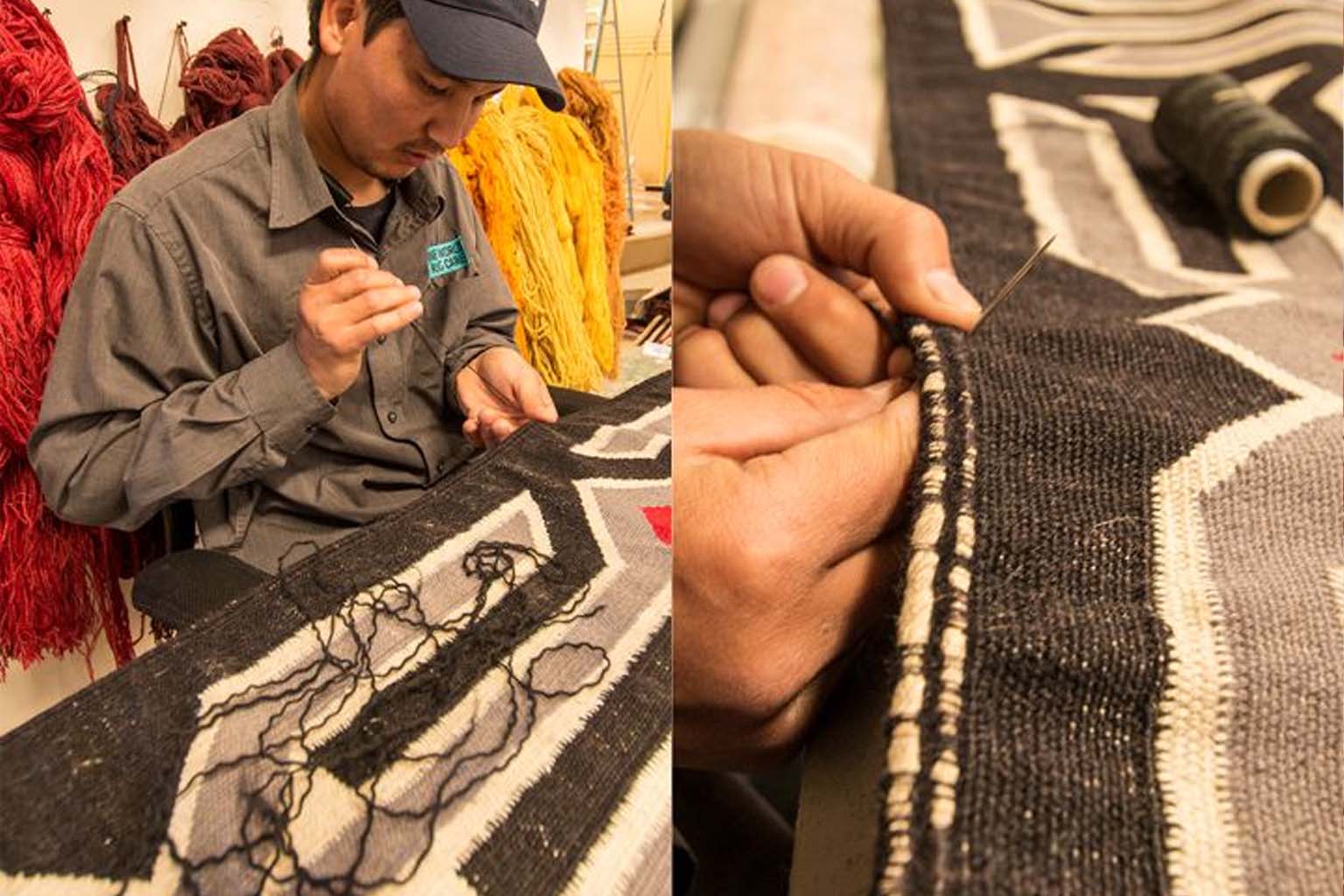
Once dry, the rug is groomed and inspected again. If it has fringe, weakened edges, or small areas of damage, those concerns can be addressed separately through repair or restoration work. Cleaning removes soil; it does not rebuild worn fibers or reverse all past fading. Honest evaluation helps an owner decide what care makes sense for the rug.
Can I clean a silk rug at home after a spill?
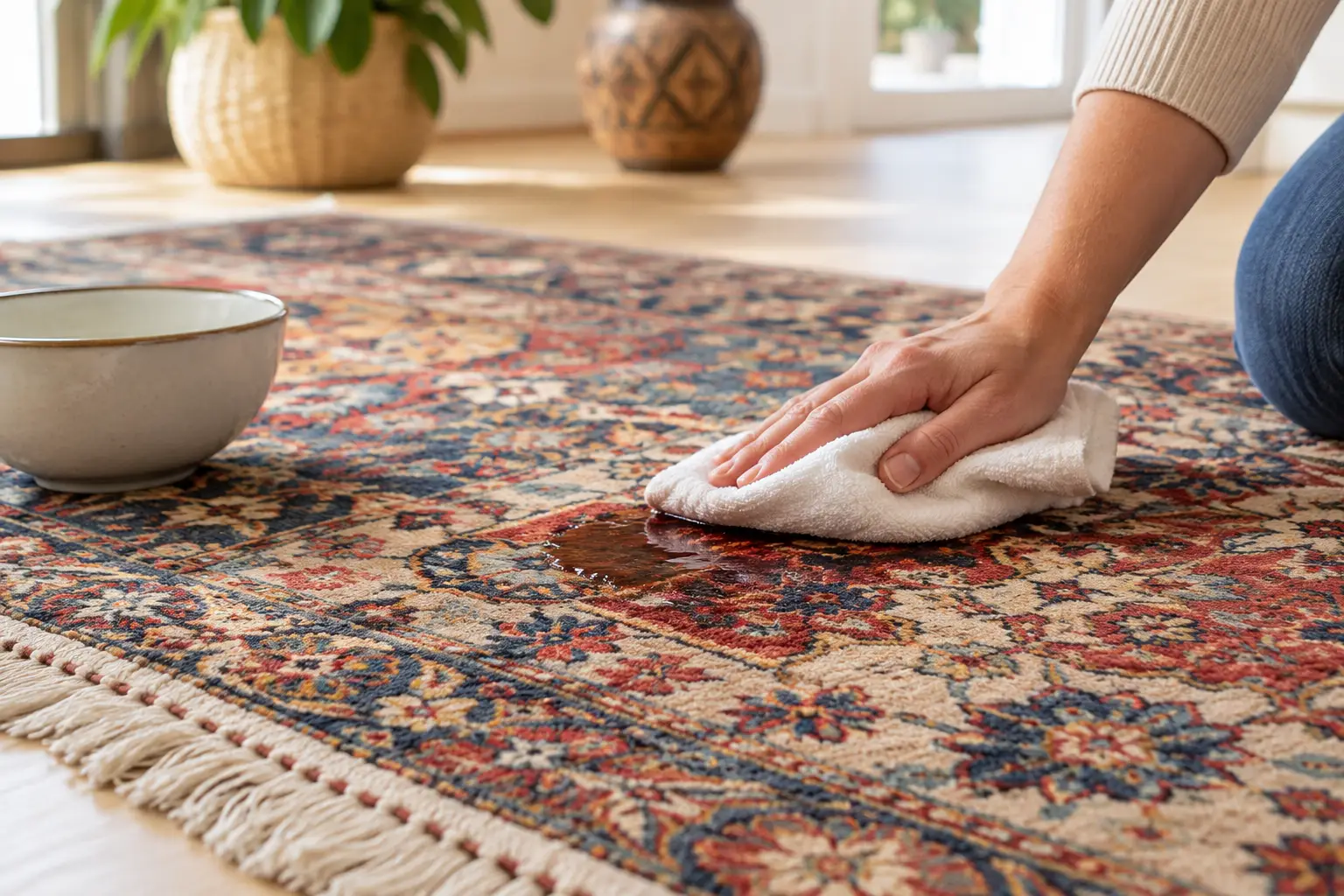
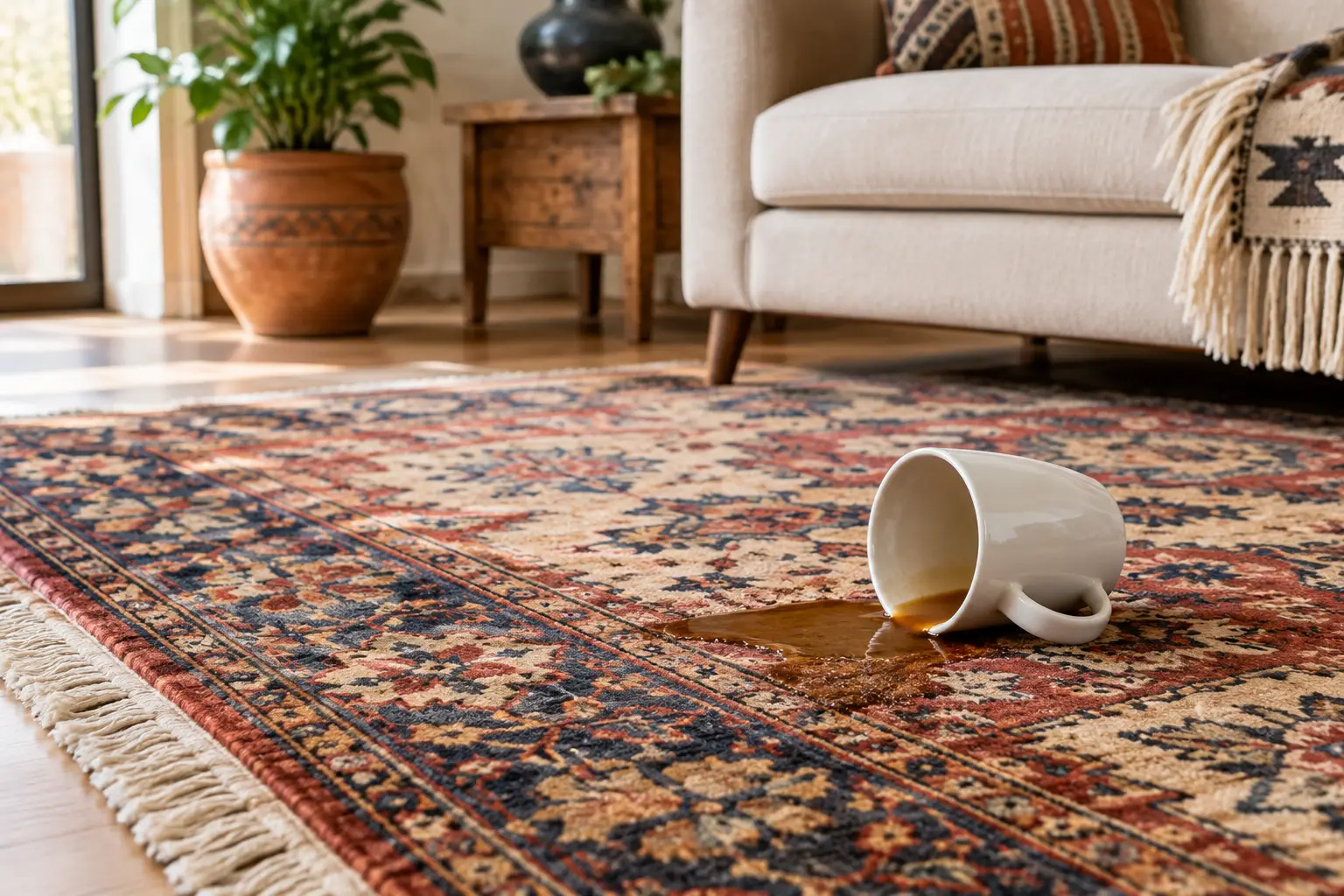
For a fresh spill, the safest home response is limited and quick. Blot the area with clean, white absorbent towels. Press straight down for 30 seconds at a time, then move to a dry section of the towel and repeat. Do not rub, scrub, brush, or saturate the spot.
Avoid household spot removers, dish soap, vinegar, baking soda, hydrogen peroxide, and steam. A product that seems harmless on a cotton towel can change the texture of silk, leave a sticky residue, or cause a color shift. This is especially true with red wine, coffee, tea, pet accidents, and brightly colored food spills.
If a spill reaches the foundation, if the spot feels stiff after drying, or if you see color on your blotting towel, stop there and arrange professional care. Trying multiple products is often what turns a manageable spill into a larger repair or color-correction issue.
Pet urine needs particular attention. Urine can travel beyond the visible spot and settle into the rug’s foundation, where odor may return during humid weather. Surface treatment may reduce the appearance but not reach all affected material. A full in-plant assessment gives the rug a better chance of receiving the treatment it needs without unnecessary exposure to moisture.
How often should a silk rug be cleaned?
Most silk rugs benefit from professional cleaning before visible soil becomes heavy. For a rug in a low-traffic formal room, that may mean every three to five years. A silk rug in an entry, living room, or home with pets and children may need attention sooner, often every one to three years depending on use.
Look beyond obvious stains. A rug that feels less soft, looks dull from one direction, shows dark traffic lanes, or releases dust when gently flexed may be holding soil. Silk can hide embedded grit until the pile begins to look worn, which is why waiting for a rug to appear dirty is not always the best measure.
Between cleanings, vacuum gently with suction only when possible. Turn off an aggressive beater bar and avoid pulling across fringe. Rotate the rug about every six months if sunlight or foot traffic reaches one side more than the other. A quality rug pad can reduce sliding, cushion the pile, and limit wear from the floor beneath.
When does a silk rug need repair as well as cleaning?
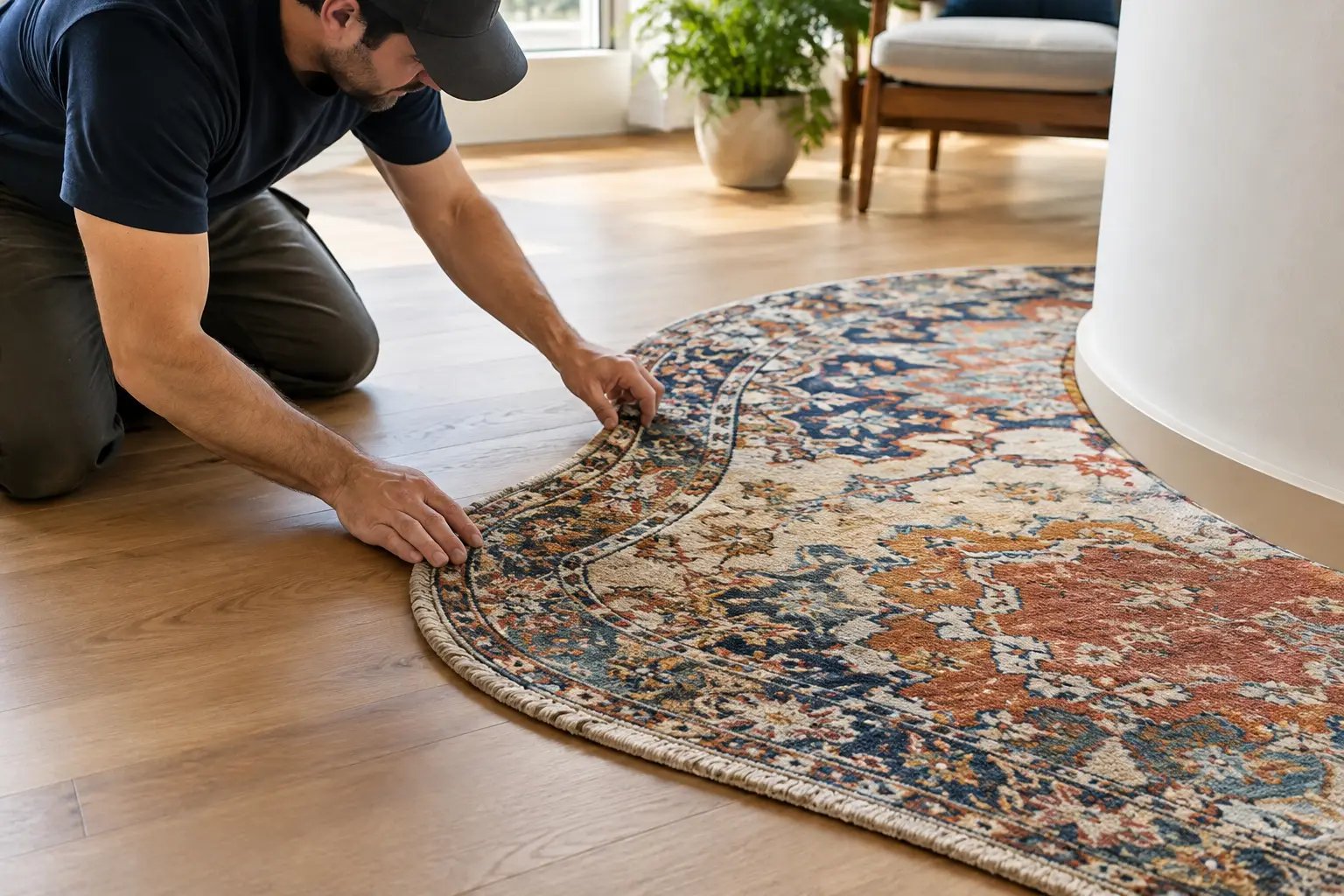
Cleaning and repair often work together, particularly with older rugs. Fringe is part of the rug’s structure on many handmade pieces, not an accessory that can be cut off without consequence. Loose fringe, unraveling ends, and weak side binding should be examined before routine vacuuming or cleaning pulls the damage farther into the rug.
Moth activity is another reason to have a rug inspected. Moths are drawn to natural fibers and may leave thin, irregular areas where pile has been eaten away. Cleaning can remove soil and help address the conditions that support pests, while repair can stabilize damaged areas where appropriate.
Sun fading, dye bleed from a previous cleaning, and worn silk pile all require realistic expectations. Color correction and restoration may be possible in some cases, but the right recommendation depends on the rug’s materials, age, and present condition. An inherited or collectible rug deserves an assessment before anyone attempts a cosmetic fix.
How should I prepare a silk rug for professional care?
Take a few clear smartphone photos showing the whole rug, its fringe and edges, and any stain, odor area, or damage. Photos help a specialist give an initial estimate and advise on pickup. If an accident has just happened, mention what caused it and when it occurred. That information can affect the treatment approach.
Do not roll a wet silk rug tightly or place plastic over a damp area. Keep pets and foot traffic away from the affected section until it can be evaluated. For a large or delicate rug, avoid dragging it across hard flooring or folding it sharply. Silk rugs are often lighter than thick wool rugs, but their construction can still be vulnerable at the edges and fringe.
Rug Care in Albuquerque and Northern New Mexico
For silk rugs, careful testing, hand washing, and controlled drying protect more than their surface appearance. They help preserve the detail and character that made the rug worth keeping.
Have a rug that needs care? One World Rug Care has been cleaning, repairing and protecting area rugs in Albuquerque since 2012. Email a few photos of your rug to admin@oneworldrugcare.com for a free estimate, call us at (505) 821-0302, or visit the shop at 7200 Jefferson St NE, Suite A, Monday to Saturday 9 to 5. Pickup and delivery is free in Albuquerque and Santa Fe on orders of $150 or more, and available in Taos, Durango, Pagosa Springs and Las Cruces.