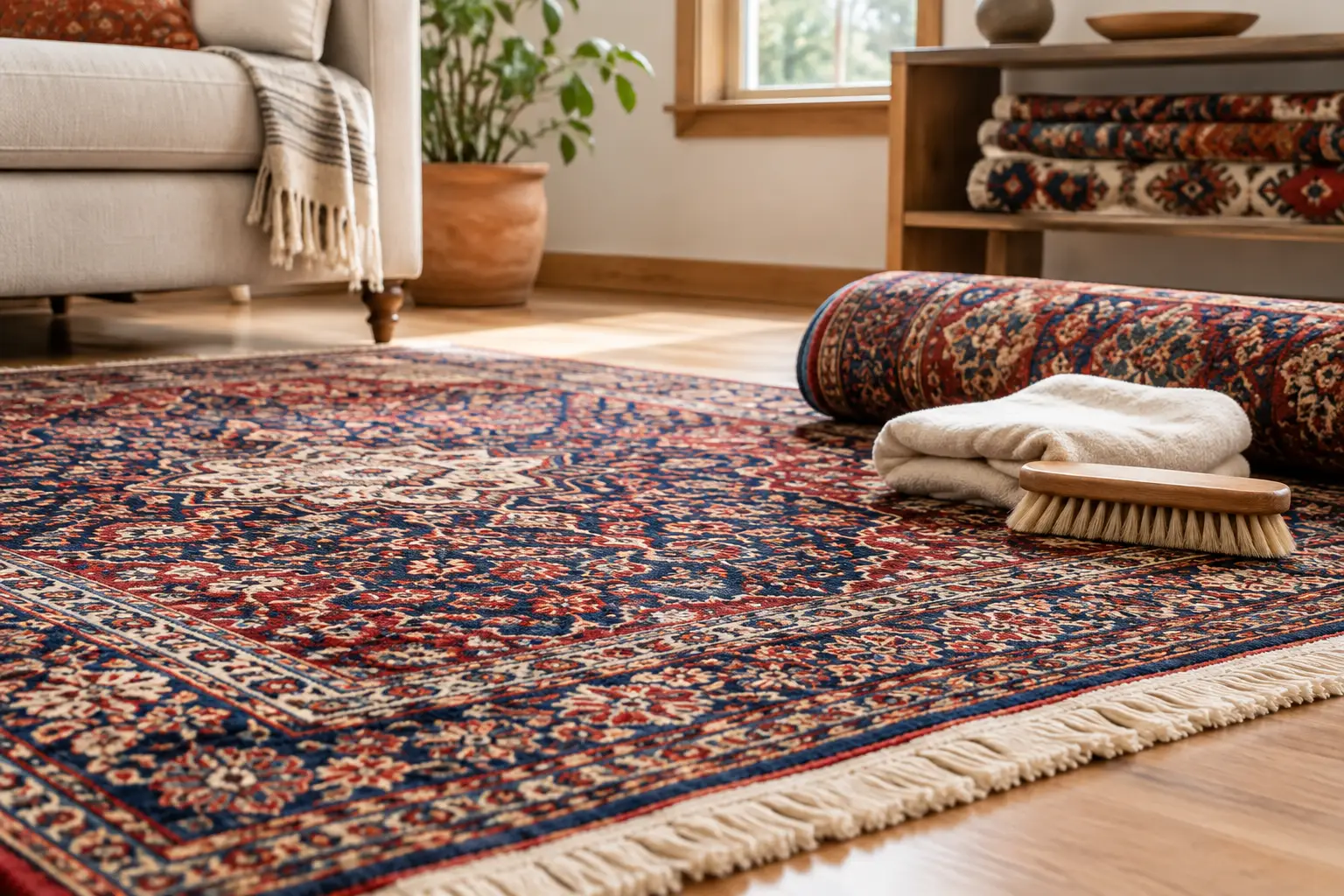
A Persian rug care guide starts with gentle, regular habits: vacuum carefully, blot spills promptly, use a proper pad, and arrange professional washing before soil works deep into the foundation. Persian rugs can serve a household for decades, but wool, silk, fringe, and hand-dyed color need different care than ordinary floor coverings.
A hand-knotted rug was made knot by knot, often with natural fibers and dyes that respond differently to moisture, friction, sunlight, and household traffic. The goal is not to keep it untouched. It is to prevent everyday wear from becoming permanent damage.
How often should a Persian rug be vacuumed?
Most Persian wool rugs benefit from vacuuming once a week in active rooms and every two to four weeks in quieter spaces. In homes with pets, children, or an exterior door nearby, light vacuuming twice a week may be sensible. Fine dust does not always show on the surface, but it settles between the knots and acts like abrasive grit as people walk across the rug.
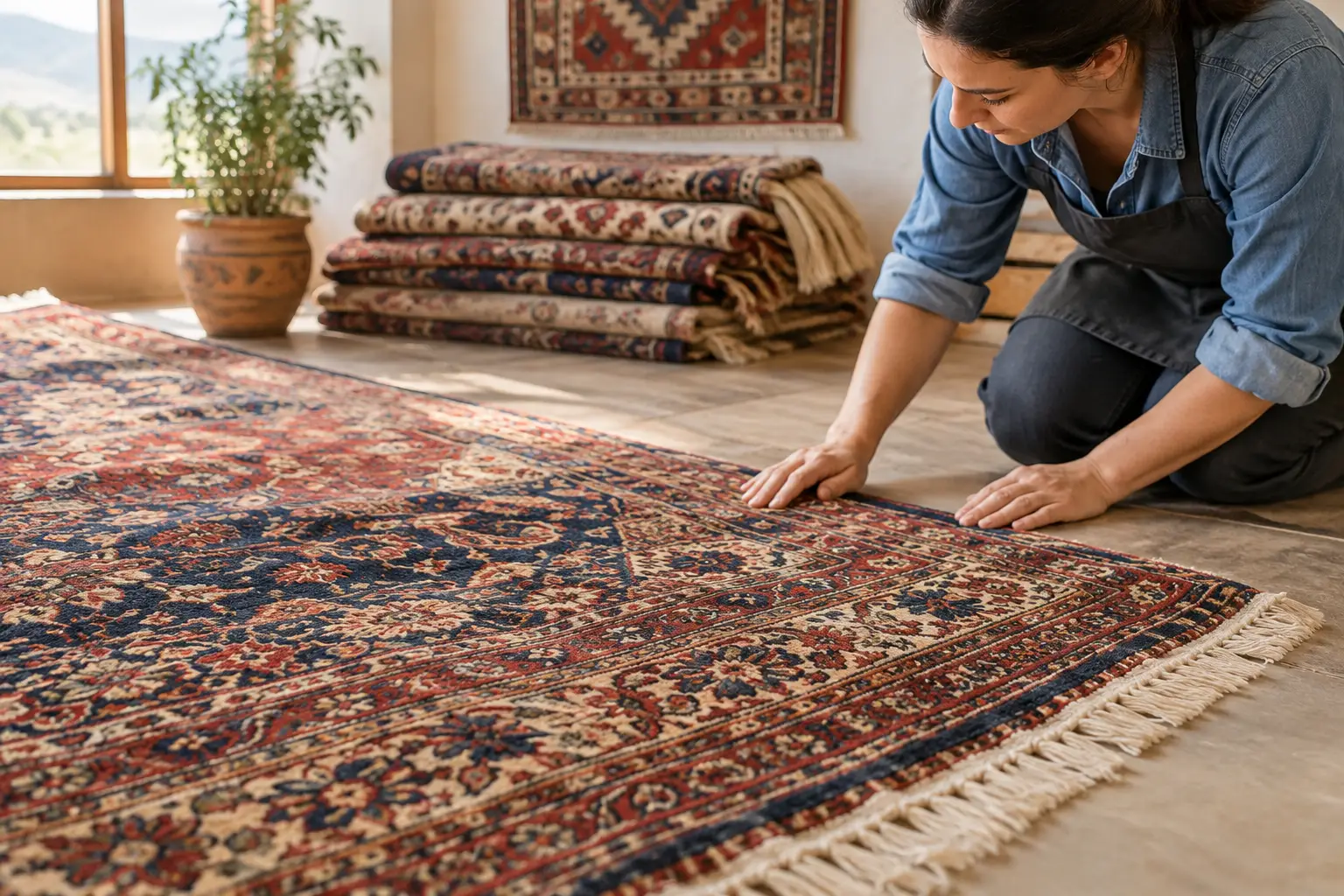
Use a vacuum with adjustable suction and turn off the beater bar whenever possible. Make slow passes in the direction of the pile, then change direction for a second pass if the rug is sturdy enough. Avoid repeatedly vacuuming the fringe, as rotating brushes can pull, split, and unravel it. For fringe, use a low-suction upholstery tool or gently sweep loose debris away by hand.
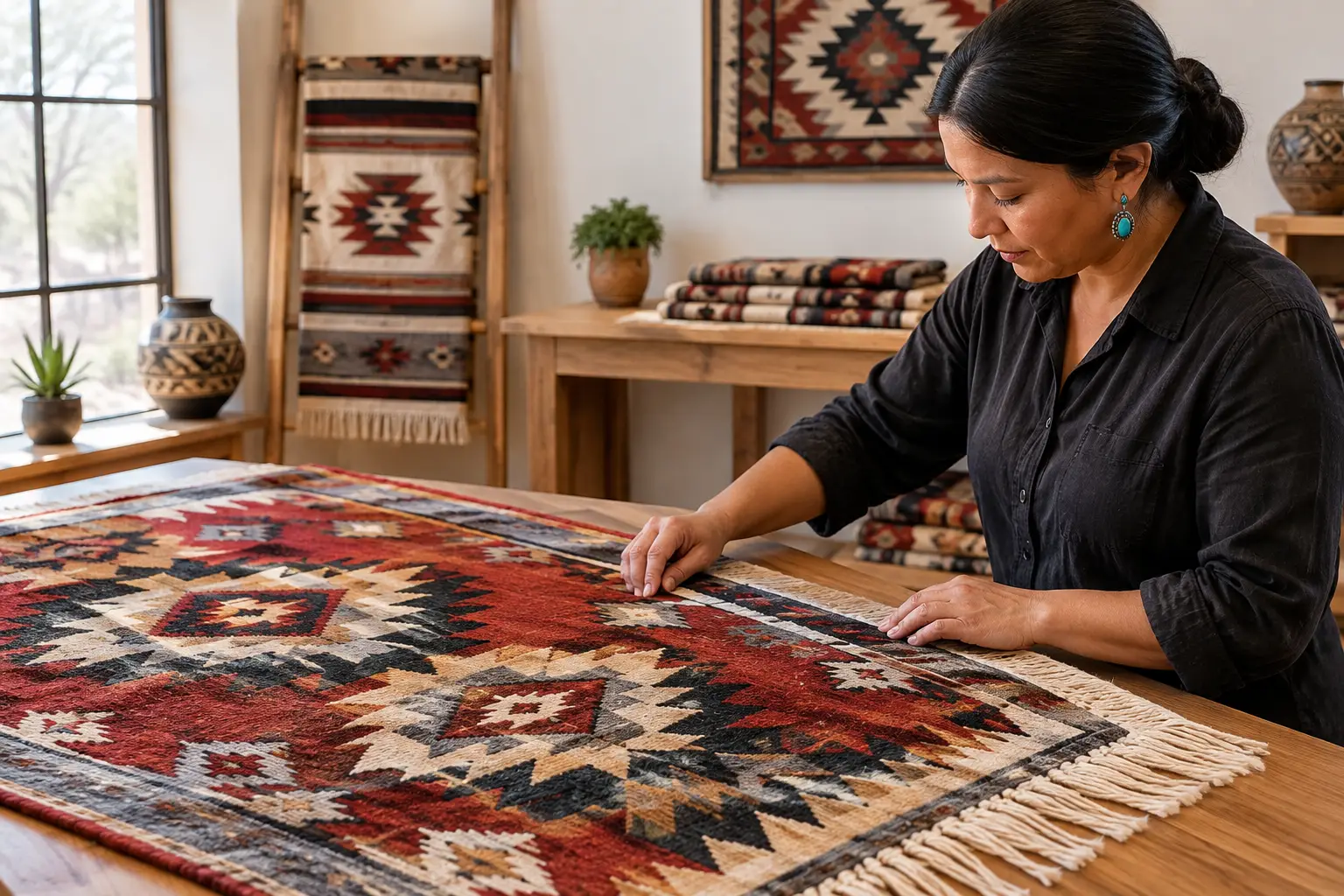
Do not vacuum a delicate silk, viscose, antique, loosely woven, or visibly fragile rug without first getting advice from a rug specialist. These pieces can snag or distort more easily than a durable wool rug. A Navajo or Southwest textile also deserves individual assessment because its structure is different from a pile rug.
What should you do when something spills on a Persian rug?
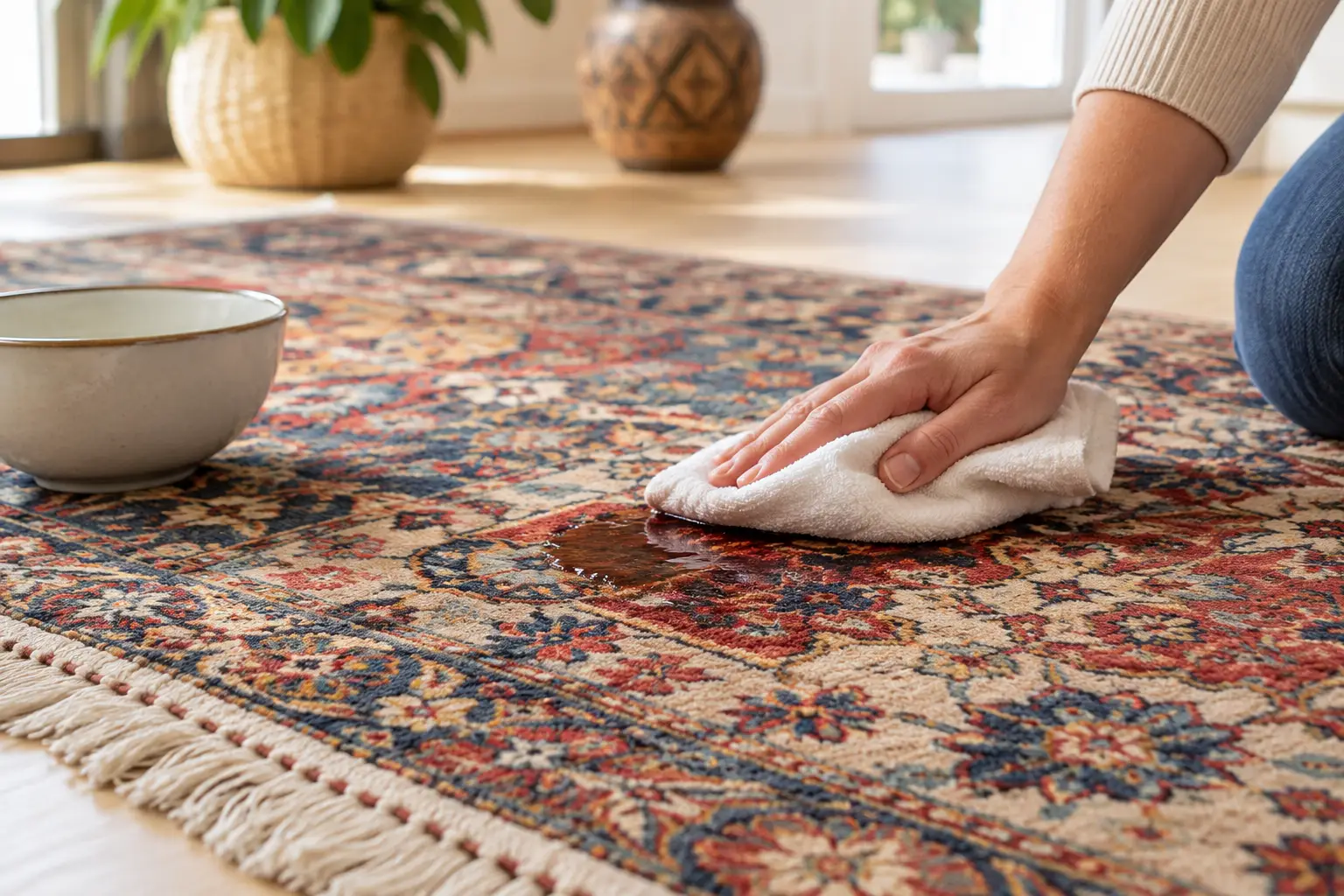
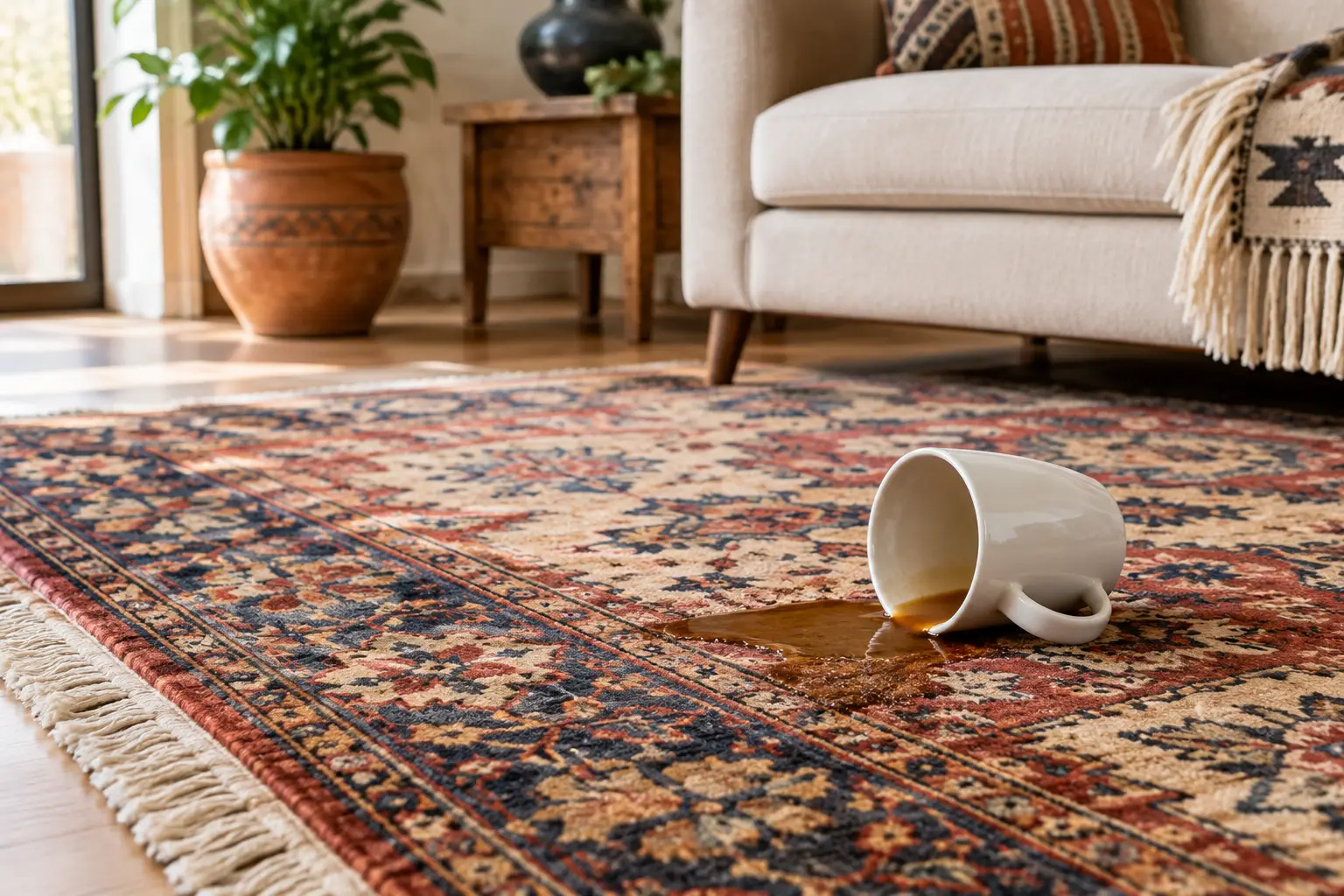
Act quickly, but do not scrub. Place clean white cotton towels or plain white paper towels over the spill and press down firmly for 20 to 30 seconds. Replace the towels and repeat until they no longer pick up moisture. Work from the outside edge toward the center so the spill does not spread.
Plain water is usually safer than a household spot remover, but even water should be used sparingly. Too much moisture can drive a stain deeper, leave a water ring, or cause dyes to migrate. Avoid dish soap, vinegar, baking soda, oxygen cleaners, powdered products, and rental cleaning machines. A product that seems harmless on a synthetic carpet can alter wool texture, strip color, or leave a sticky residue in a handmade rug.
If the spill contains red wine, coffee, cooking oil, ink, a colored drink, or anything acidic, photograph the affected area before doing more than blotting. Keep the rug flat and allow air circulation around it. Do not fold a damp rug or place furniture over the wet area.
Why does pet urine need different treatment?
Pet urine often travels farther than the visible spot. It can pass through the pile, settle in the cotton or wool foundation, reach the rug pad, and sometimes affect the floor beneath. Once it dries, odor may become more noticeable in warm weather or when humidity changes.
Home deodorizing sprays can perfume the surface without removing urine deposits below it. They may also leave residue that attracts more soil. For a recent accident, blot as much moisture as possible, place a clean towel over the area, and weigh it down briefly with a flat object. Then arrange an assessment, especially if the rug is hand-knotted, antique, silk, or has a recurring odor.
A proper urine treatment is handled in the shop after inspection and dye testing. The rug may need controlled flushing and washing that reaches the foundation, followed by careful drying. The right approach depends on the fiber, construction, size of the affected area, and whether the dyes are stable.
How do you protect Persian rugs from sun and furniture wear?
Sunlight is one of the quieter sources of rug damage in New Mexico homes. Strong light can fade reds, blues, and darker border colors long before the change is obvious. Use window coverings during the brightest hours, especially for rugs placed near south- or west-facing glass. Rotating the rug every six months helps spread light exposure and foot traffic more evenly.
Furniture also creates concentrated pressure. Use broad, smooth furniture cups under heavy legs when appropriate, rather than small hard feet that press into the pile. Rearrange occasionally if the room allows it. A rug pad provides another layer of support, helping the rug lie flat, reducing shifting, and cushioning the foundation against repeated impact.
Choose a pad made for the flooring beneath it and trim it slightly smaller than the rug so it does not show. Old pads can crumble, discolor flooring, or stick to the back of a rug. This is an easy detail to overlook, but it affects both safety and long-term wear.
When does a Persian rug need professional washing?
Most household vacuuming removes surface debris, not the dust and grit held below the pile. A Persian rug in regular use commonly needs professional washing every two to five years. The shorter end of that range fits busy households, pet homes, and rugs near entries. A lightly used rug in a formal room may go longer, provided it is inspected periodically.
Signs that it is time include dull color, a gray or sandy feel at the base of the pile, a stale odor, dark traffic lanes, sticky residue after an old spill, or a rug that feels heavier than it once did. Moth activity is another reason to act promptly. Look for small bare areas, loose fibers, or damage in places hidden under furniture and along edges.
Professional rug washing is not the same as cleaning a wall-to-wall carpet. At One World Rug Care, each rug is inspected and dye-tested before it is dusted, washed by hand in cool water using methods suited to its materials, and dried in a climate-controlled room. That process allows the cleaner to address the whole textile, including the foundation and fringe, rather than treating only the visible surface.
Can you repair fringe and worn edges before they get worse?
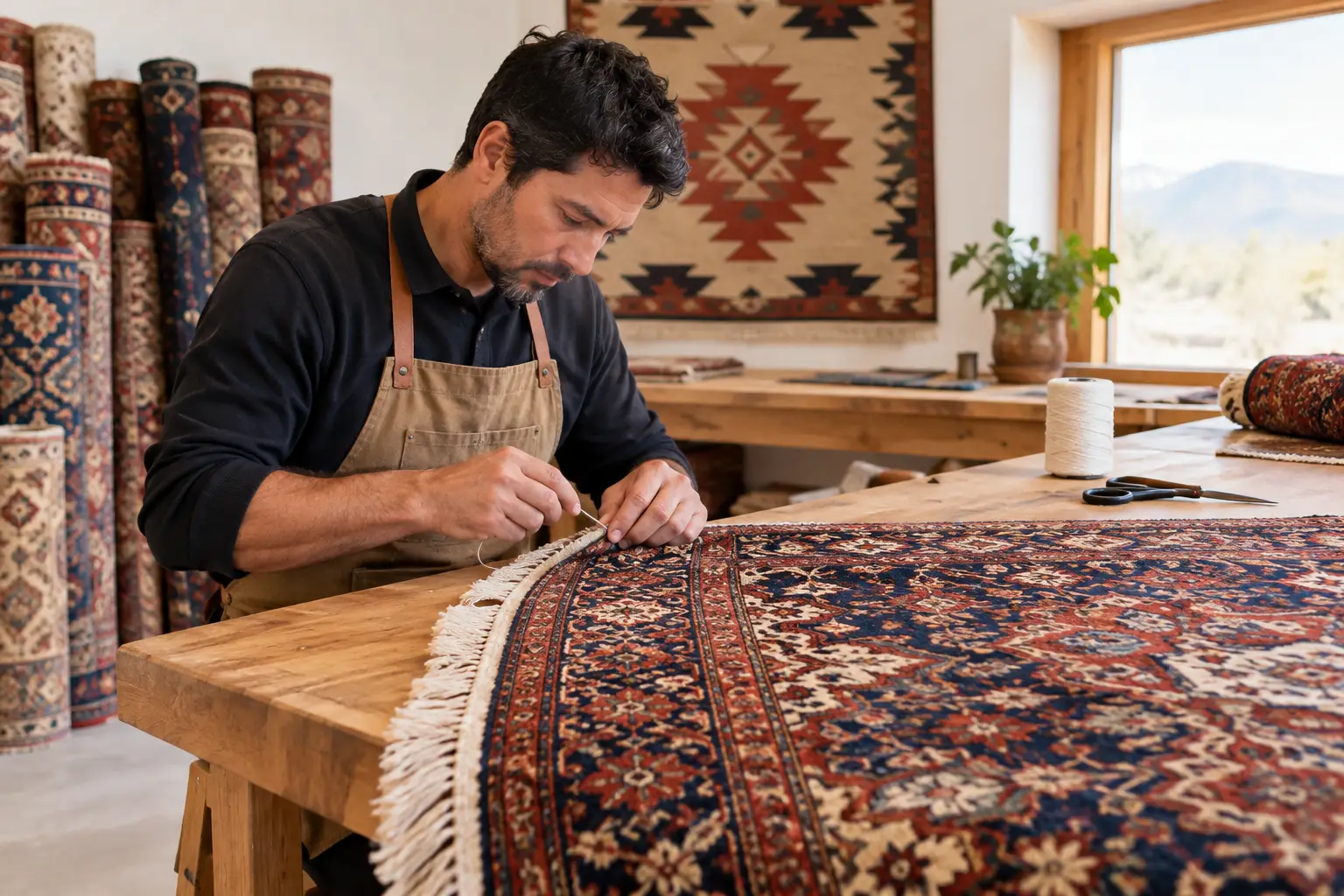
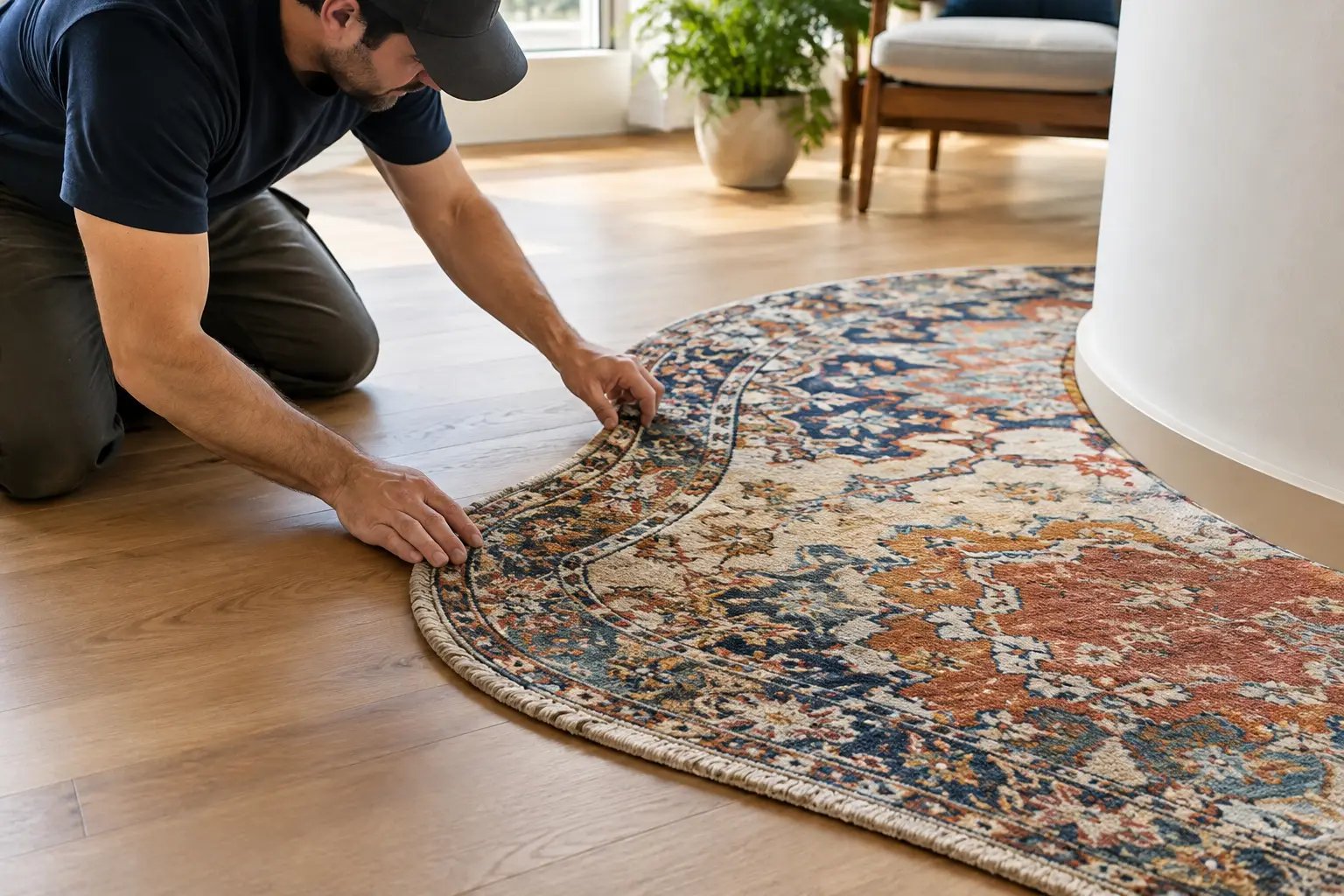
Yes, and early repair is usually more conservative than waiting. Fringe is often the exposed end of the rug’s foundation, not a decorative trim. When it shortens or unravels, the knots at the end of the rug can eventually loosen. Likewise, worn side edges can allow rows of knots to release over time.
Check the ends and sides when you rotate the rug. A few loose threads do not always mean an emergency, but missing fringe, curling edges, exposed foundation, holes, or a line of loosened knots should be evaluated. Do not cut fringe short to make it look even, and do not glue it down. Those quick fixes can make later repair more difficult.
Color loss also deserves a professional opinion. Sun fading, dye migration, and old cleaning attempts can look similar at first glance, yet they require very different decisions. A careful inspection can help you decide whether cleaning, repair, color correction, or simply thoughtful placement is the sensible next step.
What should you do before moving or storing a Persian rug?
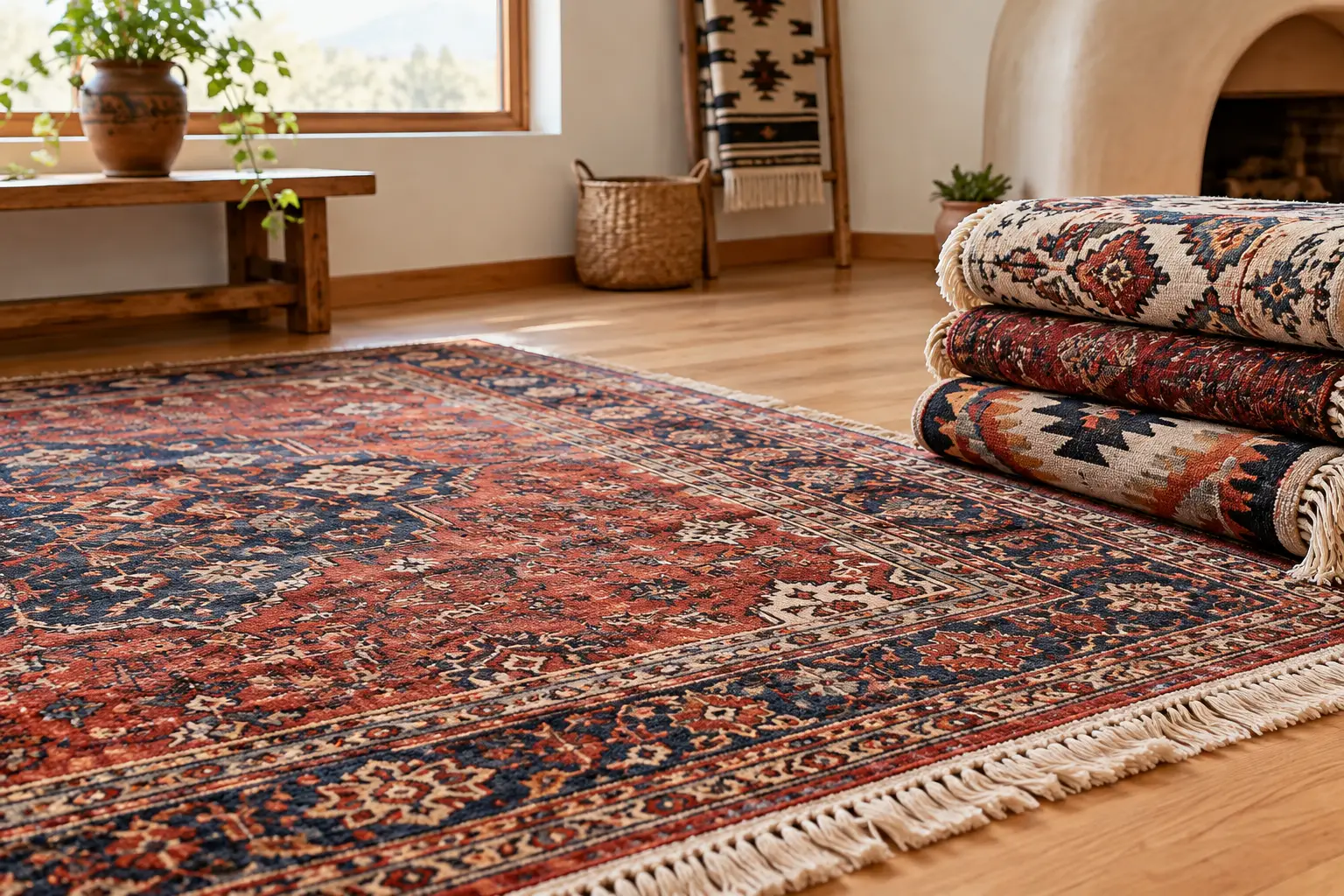
Vacuum both sides gently if the rug is sturdy, then make sure it is completely dry before moving it. Roll it with the pile facing inward and avoid folding, which can create hard creases in older rugs. Keep it away from damp garages, unconditioned sheds, and direct concrete floors.
For longer storage, have the rug professionally cleaned first. Dirt, food residue, and pet-related contamination can attract moths and become harder to correct over time. A clean rug should be wrapped in breathable materials and checked periodically. If you find insect activity or musty odor, do not leave it sealed up and hope it will improve.
A Persian rug can handle real life when its care matches its construction. Regular attention protects the character that made you choose it in the first place.
Rug Care in Albuquerque and Northern New Mexico
Have a rug that needs care? One World Rug Care has been cleaning, repairing and protecting area rugs in Albuquerque since 2012. Email a few photos of your rug to admin@oneworldrugcare.com for a free estimate, call us at (505) 821-0302, or visit the shop at 7200 Jefferson St NE, Suite A, Monday to Saturday 9 to 5. Pickup and delivery is free in Albuquerque and Santa Fe on orders of $150 or more, and available in Taos, Durango, Pagosa Springs and Las Cruces.