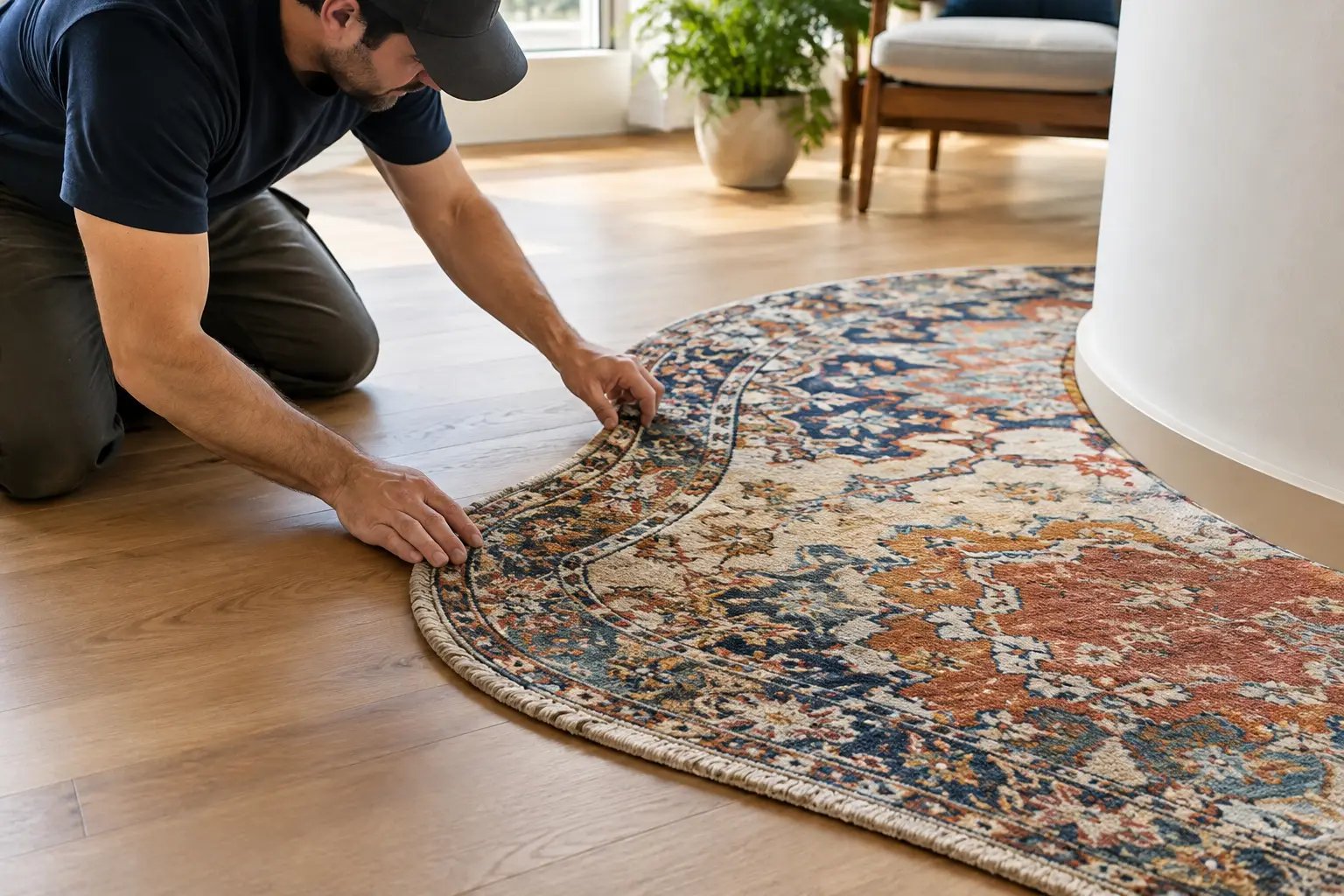
Custom shaped rug installation works by measuring the finished floor area carefully, creating the right outline, and finishing the rug edges so they stay stable in use. It is a good choice when a standard rectangle leaves too much exposed floor, blocks a doorway, or ignores the character of the room.
A rug can do more than cover a floor. In a curved entry, beneath a rounded dining table, around a hearth, or in an office with built-in cabinetry, its shape can make the space feel settled rather than improvised. The work needs to respect the rug’s construction, however. A good-looking outline is only part of the job. The material, binding, pad, traffic pattern, and how the rug will be cleaned later all matter.
When does custom shaped rug installation make sense?
Custom shaped rug installation makes the most sense when the room has a feature that a standard-size rug cannot accommodate. Common examples include curved walls, bay windows, angled fireplaces, kitchen islands, built-in desks, reception counters, and stair landings. It can also help when a homeowner wants a rug to follow the arc of a dining table or leave a consistent border of visible flooring around the room.
A shaped rug is not always the answer. If a room changes often, such as a rental, a flexible rectangular rug may be easier to move and reuse. In a historic home with uneven walls, trying to follow every slight variation can make the rug look irregular once furniture is in place. Usually, the goal is a shape that feels intentional from the main viewing angles, not a tracing of every inch of wall.
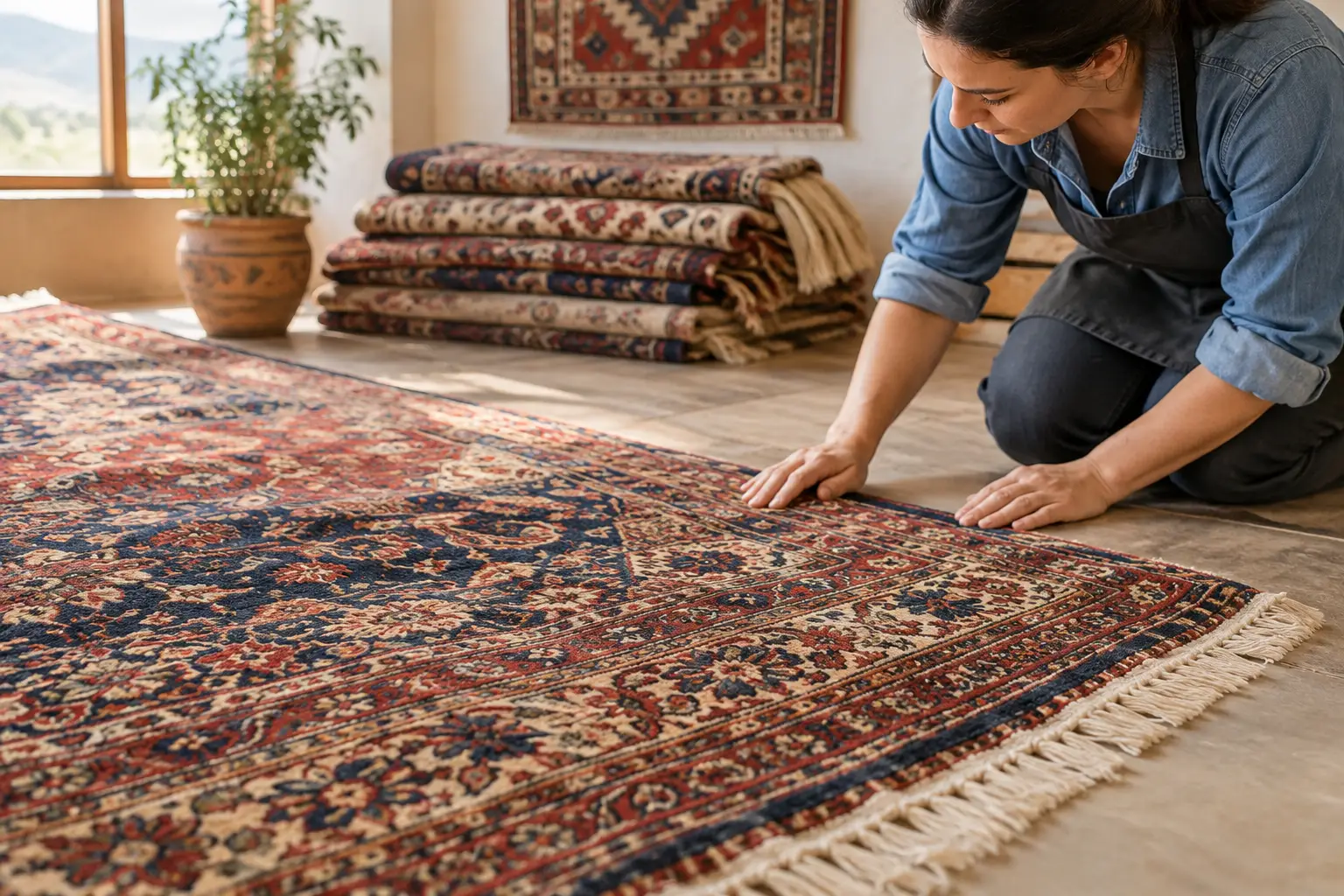
For handmade, antique, Persian, Oriental, Navajo, and other collectible rugs, cutting to fit is a separate question. Altering an original handwoven rug can affect its value, construction, and future use. In many cases, it is wiser to create a custom companion rug for the space or choose a pad and placement strategy that lets the original remain intact.
What should be measured before a rug is made or fitted?
Measurements begin with the usable floor area, not simply the room dimensions. Doors need clearance to swing freely. Floor registers, transition strips, hearths, cabinet toe-kicks, and furniture legs all change where a rug can safely sit. For a dining room, measure with chairs pulled back as they would be during a meal. A rug that looks generous under the table can become frustrating if chair legs catch the edge every time someone stands.
For an unusual shape, a full-size paper template is often more reliable than a string of measurements alone. The template should identify the room orientation, door locations, fixed features, and the direction of any curve. A curve that appears symmetrical can be slightly different from one side to the other, especially in older homes.
Leave practical clearance around the rug. The right amount depends on the room and furniture arrangement, but the edge should not create a narrow walking strip that invites tripping. In a hallway or entry, pay particular attention to door movement and the path people naturally take with groceries, pets, or laundry baskets.
Which materials hold a custom shape well?
Wool is a practical choice for many shaped rugs because it has natural resilience and can perform well under furniture and normal household traffic. It also accepts a well-finished edge when the proper binding or serging method is selected. Everyday synthetic rugs can be useful in active spaces, but their backing and edge construction should be evaluated before any reshaping or binding work is planned.
Silk and viscose require more caution. Both can show pressure marks, shading changes, and wear more readily than wool. A complicated contour in a high-traffic location may add vulnerable edge length where feet, vacuum heads, and chair legs repeatedly pass. Fine handmade textiles may have fringe or hand-finished selvages that should not be treated like an ordinary cut edge.
The right choice also depends on the room. A low-profile rug may be helpful where doors pass over it. A den or bedroom may allow for more texture and pile. An entry with pets and frequent foot traffic benefits from a material and finish that can be maintained without aggressive home cleaning.
How is a shaped rug edge finished?
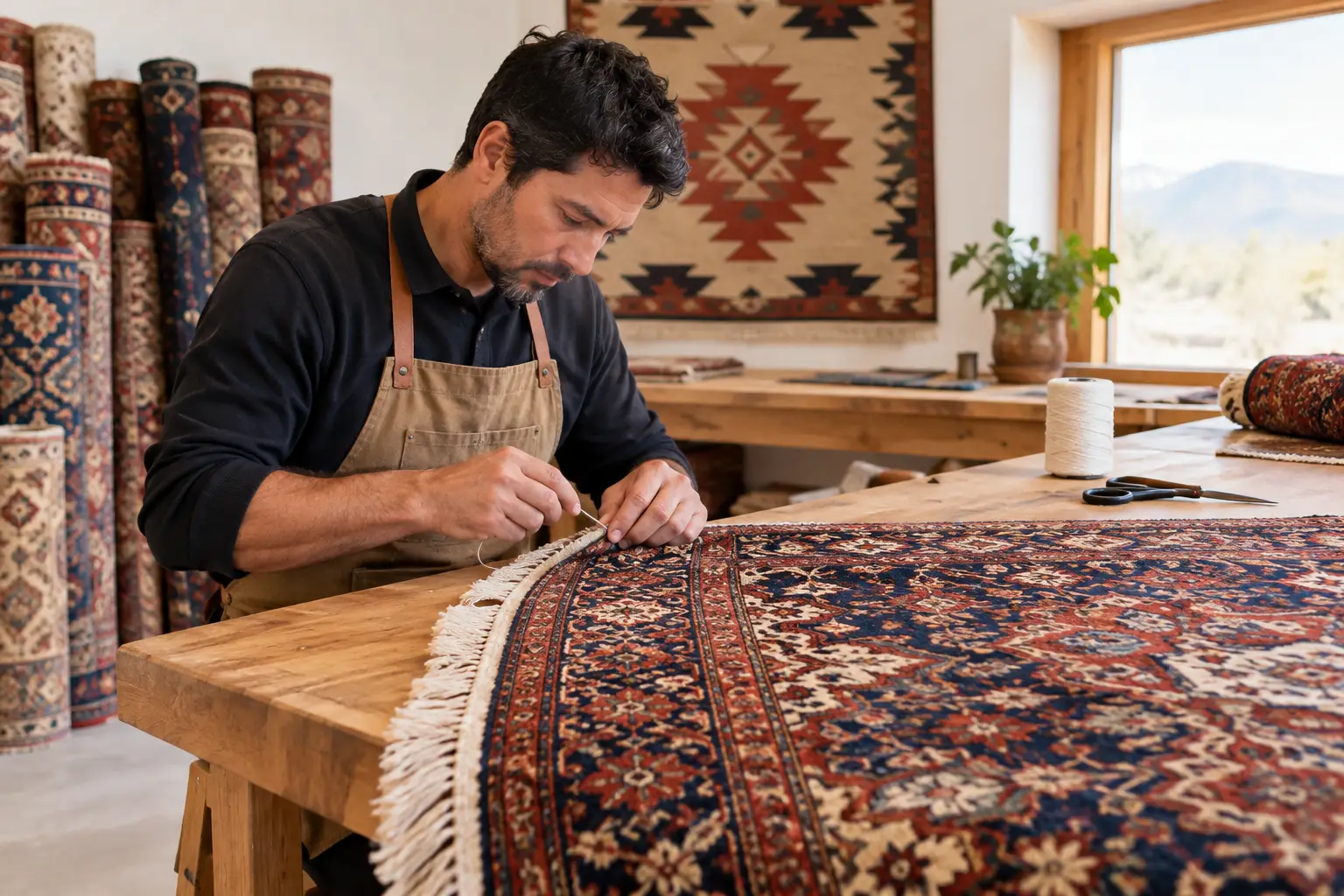
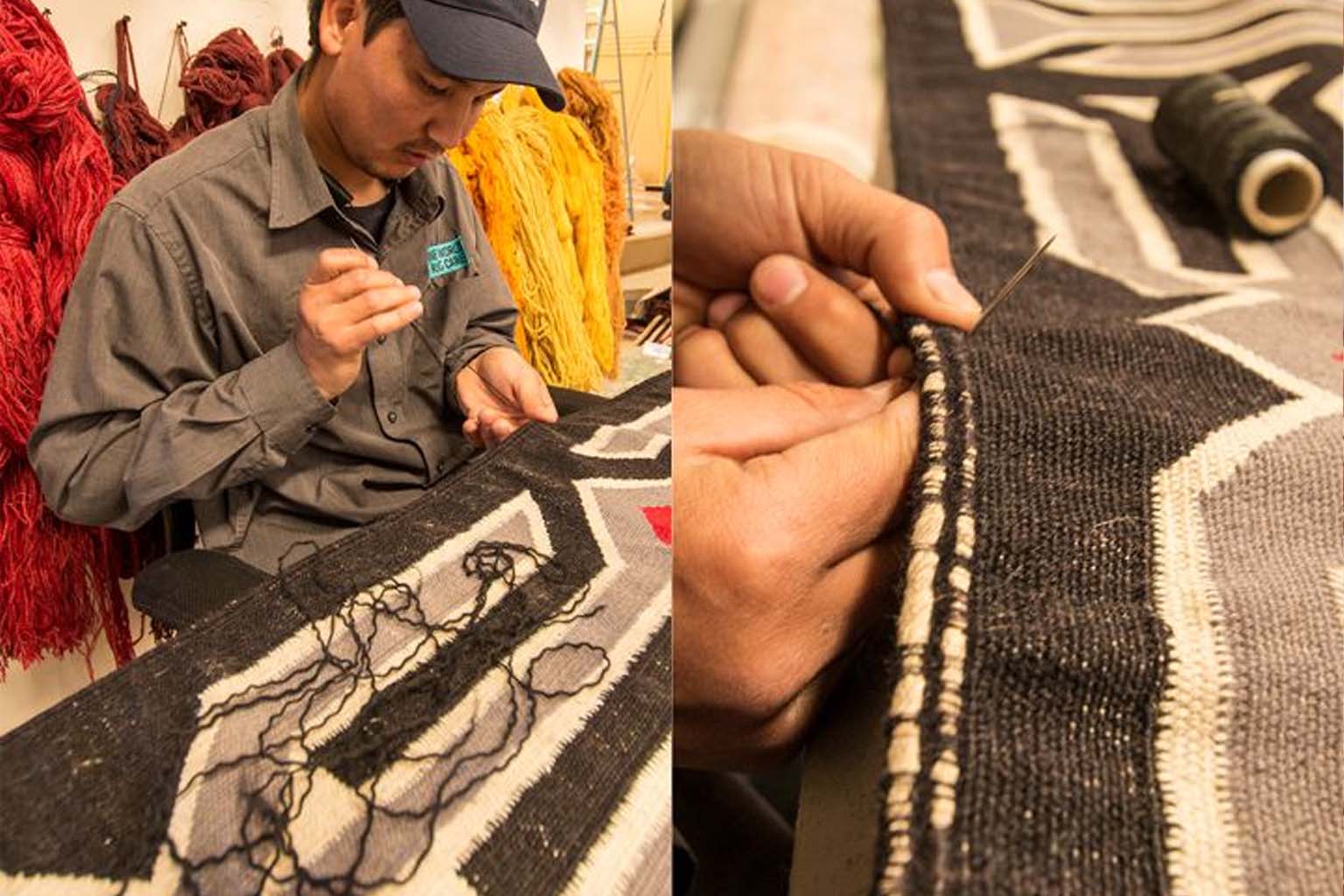
After the outline is confirmed, the edge needs a finish that prevents unraveling and supports the rug’s intended use. Binding covers the raw edge with a coordinated fabric tape. Serging wraps yarn around the edge for a more rounded, tailored look. Some rugs need a hand-finished approach because of their weave, pile, or existing border.
The finish should suit both the rug and the curve. Tight inside corners, sweeping arcs, and pointed angles do not behave the same way. A wide binding may look handsome on a large wool rug but feel bulky around a small, detailed curve. Conversely, an edge treatment that is too light for a busy commercial walkway may wear before the rug itself does.
This is also where a professional inspection is useful. If an existing rug has weakened backing, separated layers, moth damage, or worn edges, reshaping it may not be appropriate until those conditions are addressed. A rug can look sound from above while the underside tells a different story.
Why does the rug pad matter after installation?
A properly selected rug pad keeps a custom shape from becoming a custom hazard. It helps reduce movement, cushions the pile, and supports the edge so it does not curl or buckle under daily use. The pad should be cut slightly smaller than the finished rug, generally leaving the rug edge supported without allowing the pad to show.
Not every pad works on every floor. Hardwood, tile, laminate, stone, and concrete have different needs, and some materials can react poorly with certain pad backings. A thin pad may be appropriate near a door, while a den may benefit from more cushioning. For a rug with a curved or angled perimeter, the pad should follow the final shape rather than forcing the rug to bridge over a rectangular pad.
Do not stack pads to create extra softness. Stacked materials can shift, bunch, and raise the edge. If a rug moves after installation, avoid using tape, glue, or household adhesive directly on the rug. Adhesives can leave residue, affect fibers, and complicate future cleaning or repair.
What can you do to keep a shaped rug looking right?
Vacuum regularly, using a setting appropriate for the rug’s pile and construction. Take extra care near bound edges and fringe. If a vacuum pulls at an edge, stop using that attachment on the perimeter rather than repeatedly catching the same area. Rotate the rug periodically when sunlight or traffic is stronger on one side.
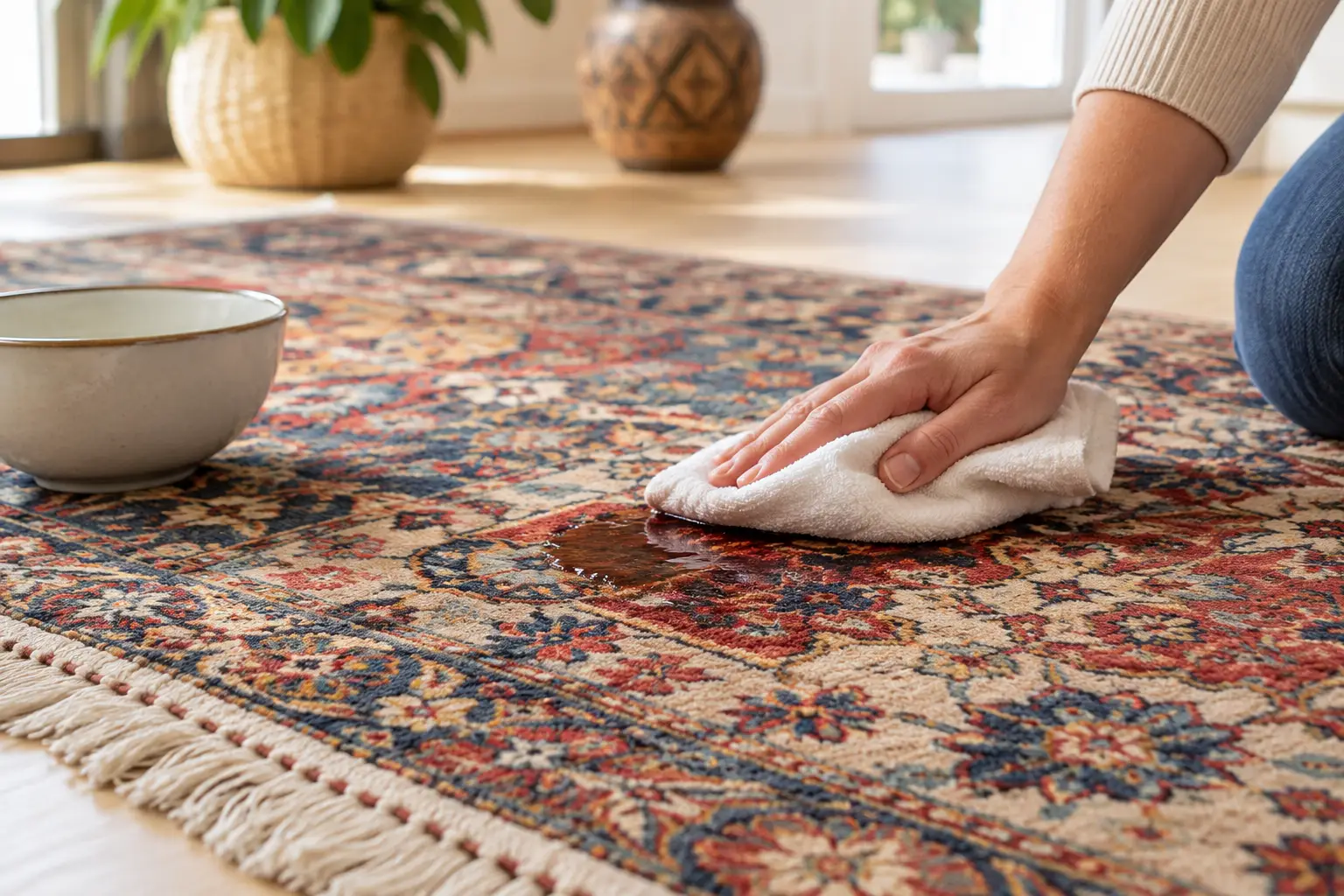
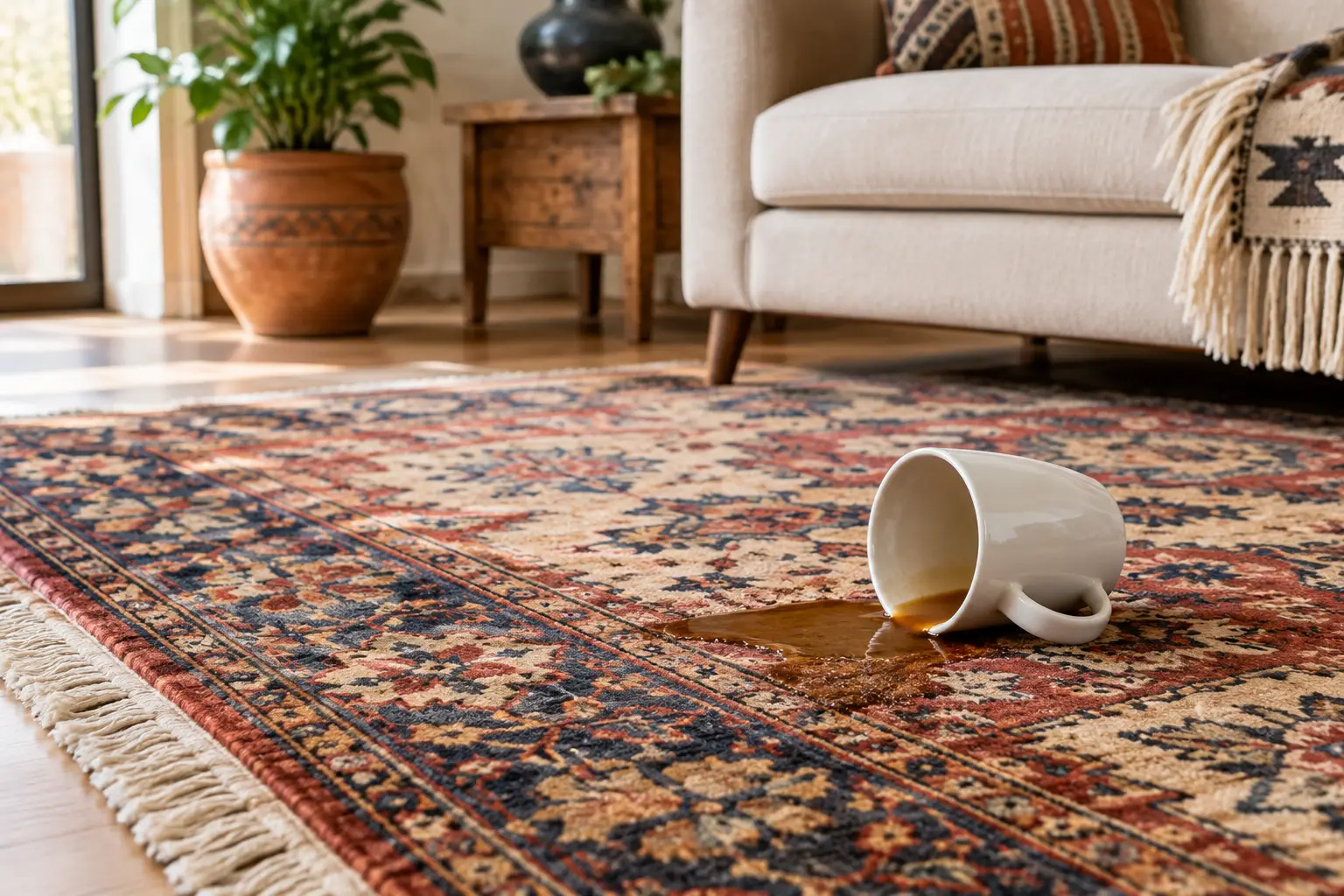
For a fresh spill, blot promptly with a clean white cloth. Do not scrub, saturate the rug, or apply a store-bought spot treatment without knowing how the dye and fiber will react. This is especially important for wool, silk, viscose, and handmade rugs. Pet accidents should be addressed quickly because urine can travel through the pile and backing into the pad and floor beneath.
A custom outline can make a rug harder to replace, which is one reason regular professional care is worthwhile. Rugs brought to the shop can be inspected, dye-tested, dusted, washed by hand in cool water with a material-specific method, and dried in a climate-controlled room. Cleaning also gives a specialist a chance to check for early edge wear, color loss, moth activity, and damage that may be hidden under furniture.
Rug Care in Albuquerque and Northern New Mexico
Whether your rug needs a new shape, a properly fitted pad, or careful cleaning before installation, it deserves handling that accounts for its fibers and construction.
Have a rug that needs care? One World Rug Care has been cleaning, repairing and protecting area rugs in Albuquerque since 2012. Email a few photos of your rug to admin@oneworldrugcare.com for a free estimate, call us at (505) 821-0302, or visit the shop at 7200 Jefferson St NE, Suite A, Monday to Saturday 9 to 5. Pickup and delivery is free in Albuquerque and Santa Fe on orders of $150 or more, and available in Taos, Durango, Pagosa Springs and Las Cruces.