Do not clean, sell, donate, or put an inherited rug into storage until you know what it is, how it was made, and what condition it is in. This inherited rug decision checklist helps you make that call without accidentally reducing its value or causing avoidable damage.
A rug may carry a family story, but its practical future depends on details that are easy to miss: wool versus silk, hand-knotting versus machine construction, color stability, hidden pet contamination, and wear at the edges. A rug that looks merely dusty may need careful washing. Another that looks worn may still have years of useful life with edge repair and a proper pad.
What should I do first with an inherited rug?
Start by moving the rug to a clean, dry area away from direct sun, pets, and heavy foot traffic. Do not fold it tightly, place it in a plastic bag, or leave it rolled in a garage, shed, or damp basement. Heat, moisture, and poor airflow can encourage mildew, attract moths, and set old odors deeper into the fibers.
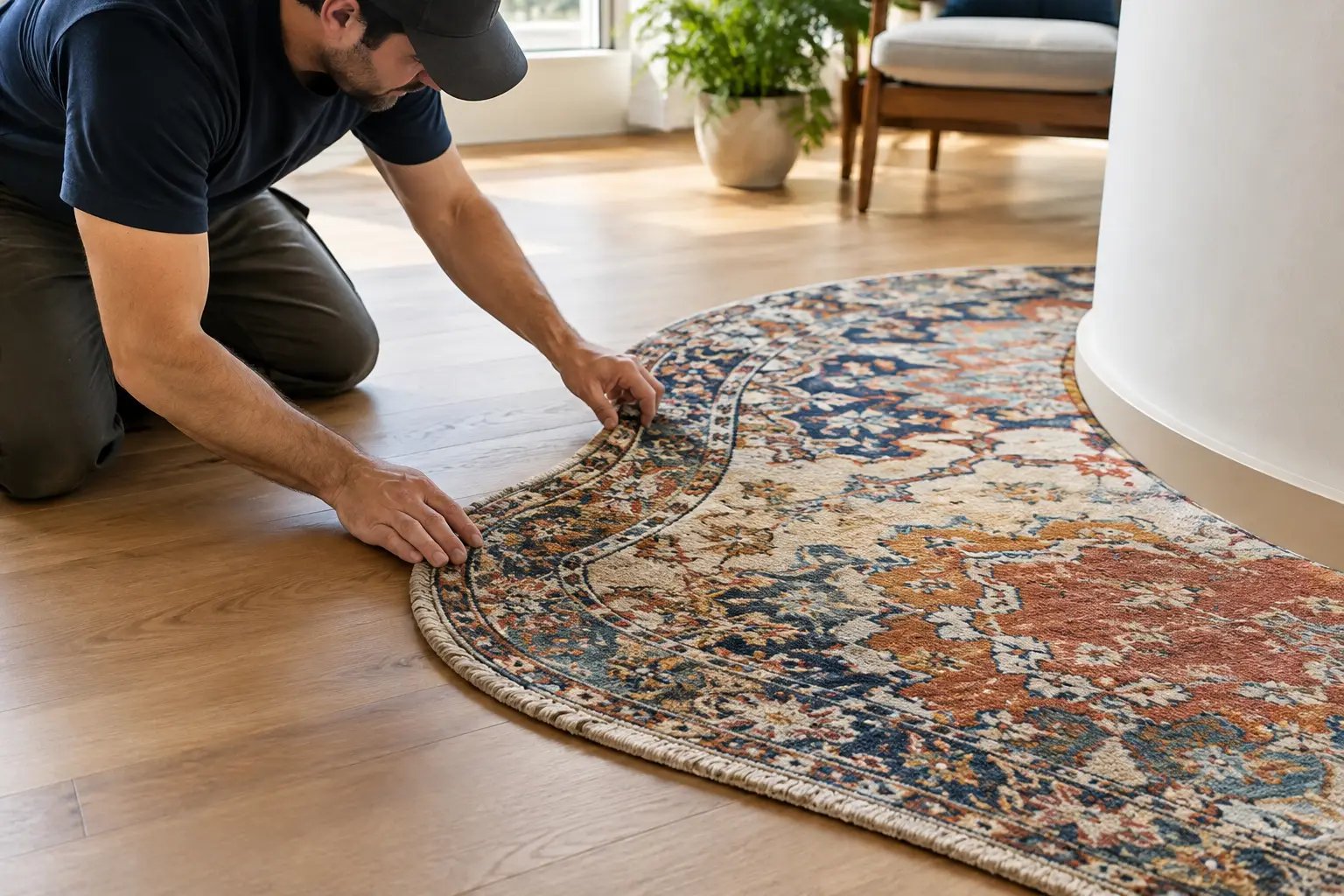
Take clear photos before doing anything else. Photograph the full rug, the front and back, all four corners, fringe or end finishes, labels, and close-ups of stains, holes, faded areas, or worn pile. These photos are useful if family members need to discuss the rug’s future, and they give a rug specialist a starting point for a preliminary estimate.
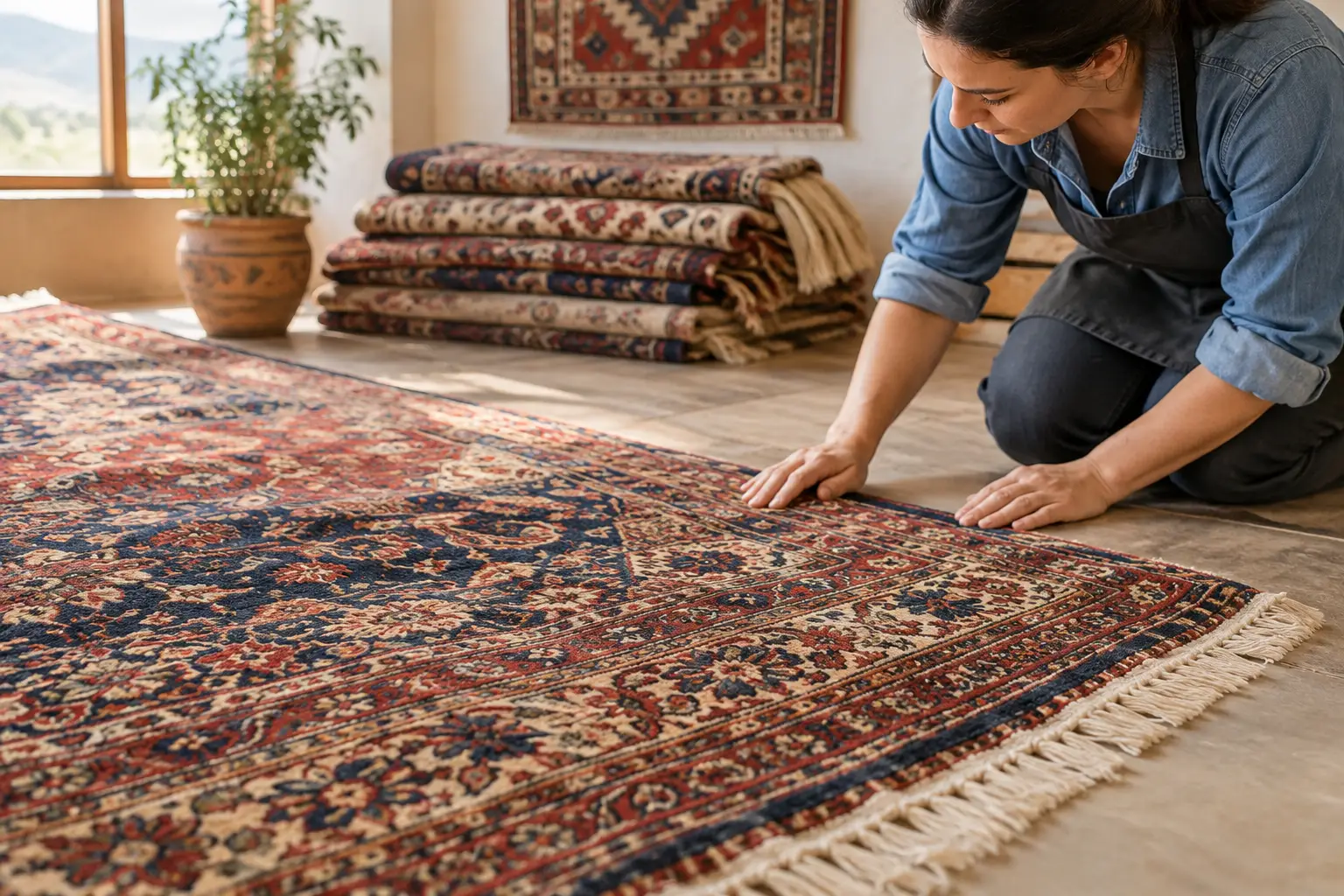
Then give the rug a gentle visual inspection. Look for a maker’s label, country-of-origin label, handwritten notes, or a previous appraisal tucked into a family file. Keep paperwork with the rug, even if it seems outdated. An old receipt may identify the rug’s origin, age, materials, or past repair work.
Avoid vacuuming fragile fringe, pulling loose yarns, or trying a small cleaning test with soap. Some dyes can bleed when exposed to moisture, especially in handmade wool rugs and certain red, blue, or dark-color areas. Silk, viscose, antique rugs, and Navajo or Southwest textiles require particular restraint because ordinary household products and scrubbing can permanently change texture or color.
How can I tell what kind of rug I inherited?
Turn the rug over and study the back. A handmade rug usually shows individual knots or a clear woven structure on the reverse, with slight irregularities that reflect handwork. A machine-made rug often has a uniform backing, may use glued layers, and can have fringe sewn onto the ends rather than formed from the rug’s foundation threads.
Fiber matters as much as construction. Wool is resilient and common in Persian, Oriental, Navajo, and many Southwest rugs. Cotton may appear in the foundation, fringe, or warp threads. Silk rugs can have a fine sheen and detailed patterning but are more sensitive to abrasion and moisture. Viscose can resemble silk, yet it is usually less forgiving when wet and may develop texture changes if cleaned improperly.
Do not rely on a burn test, household chemical test, or online photo comparison. Those methods can damage fibers or lead to a false identification. A trained inspection can distinguish between wool, cotton, silk, viscose, synthetic fibers, and blends while also checking whether dyes are stable enough for washing.
A Navajo textile deserves special attention. Its value may rest in handwoven construction, condition, provenance, and the integrity of its original edges and yarns. Do not assume it should be used on the floor simply because it resembles an area rug. Some textiles are better displayed, preserved, or stored with appropriate support after an informed evaluation.
Is the rug worth cleaning, repairing, or appraising?
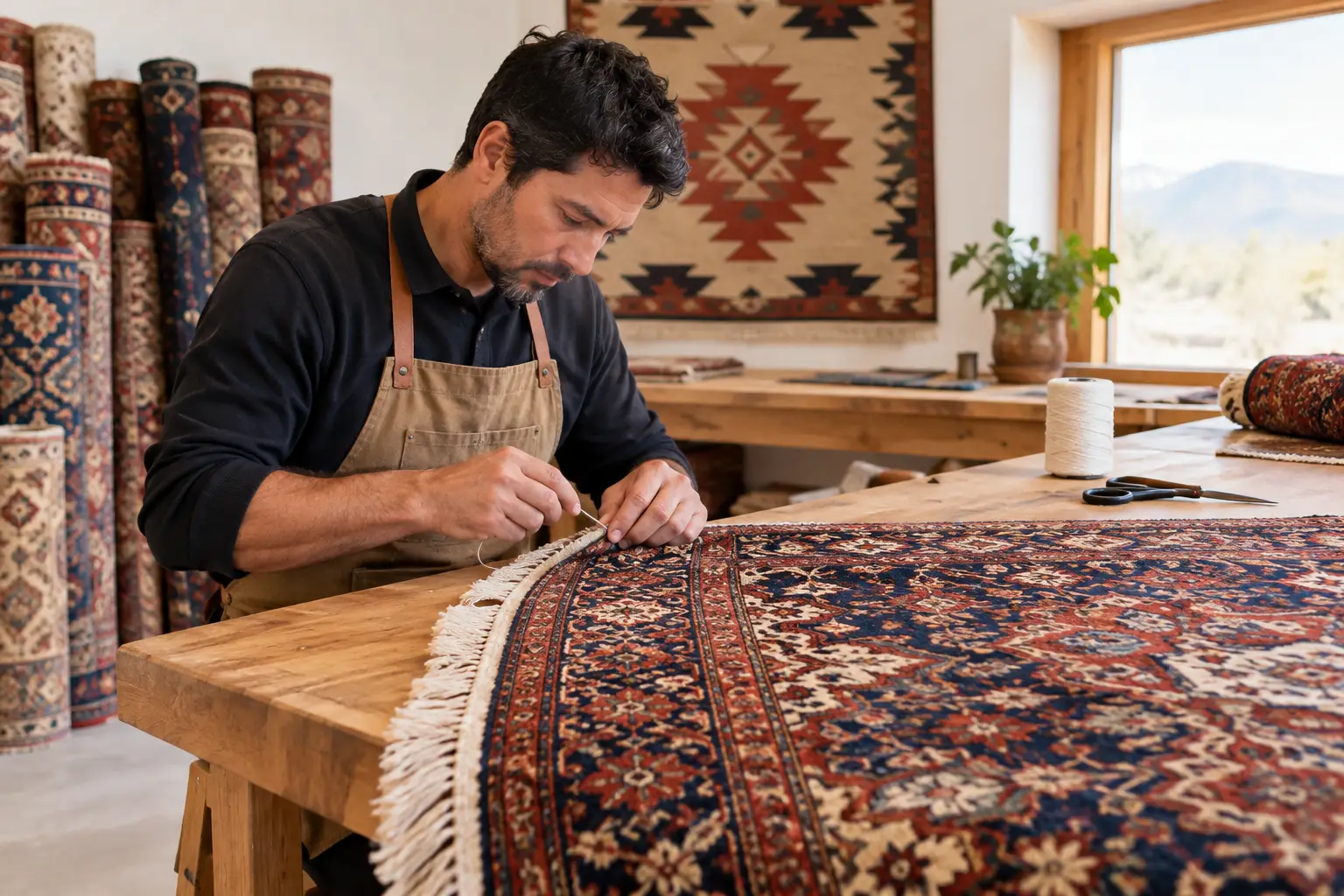
A rug does not have to be rare or antique to be worth caring for. First consider whether it is structurally sound enough for the role you want it to serve. If the pile is low but even, the rug may still work beautifully in a low-traffic room. If it has loose edges, broken fringe, tears, or exposed foundation threads, repair may be needed before regular use causes the damage to spread.
Pay close attention to these signs:
- A powdery or sandy residue deep in the pile can indicate embedded soil, which slowly abrades fibers as people walk on it.
- A sharp, sour, or lingering odor may point to pet urine, moisture exposure, or contamination beneath the surface.
- Small bare patches, loose wool, or irregular holes can be moth damage, particularly if the rug has been stored for a long time.
- Stiff sections, brown discoloration, or uneven texture may reflect an old spill or an unsuccessful home cleaning attempt.
Cleaning is often the right first step because dirt can hide color, pattern, and condition. But a professional should inspect the rug before washing, not after. At One World Rug Care, rugs are inspected and dye-tested, dusted, washed by hand in cool water using material-specific methods, then dried in a climate-controlled room. That process allows a specialist to evaluate what the rug can safely tolerate rather than treating every rug like household carpet.
If you are deciding whether to keep, sell, donate, or insure a rug, ask for a verbal appraisal after it has been inspected. A verbal appraisal can help establish a realistic direction, but it is not the same as a formal written valuation for insurance or estate purposes. Condition, construction, fiber, age, size, provenance, and local demand all affect value. Sentimental value is real, but it does not always match resale value, and that is useful to know before making a hurried decision.
Can I use the inherited rug in my home right away?
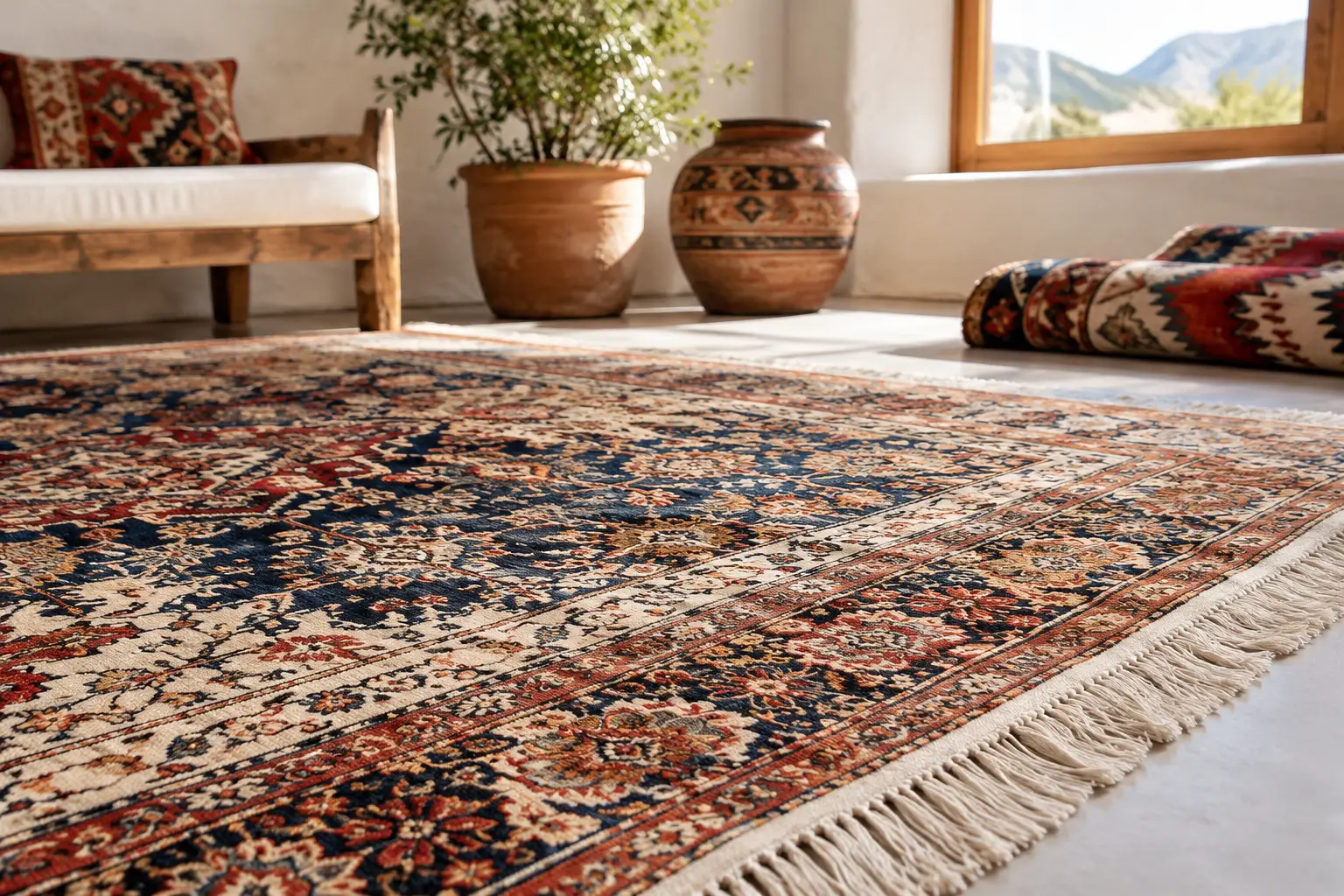
It depends on condition and placement. A clean, stable wool rug may be ready for a living room, bedroom, or dining room after inspection and any needed washing. A delicate silk, viscose, antique, or finely woven textile may be safer in a low-traffic room, away from direct sun and energetic pets. Rugs with active edge damage should not be placed where chairs, vacuum cleaners, or foot traffic can catch loose threads.
Use a rug pad that fits the rug and the floor beneath it. A proper pad reduces slipping, cushions foot traffic, and helps prevent abrasion from grit trapped underneath. Old rubbery pads can break down, stick to flooring, or leave residue. A pad that is too small allows rug edges to bend and wear; one that shows beyond the rug creates a trip hazard.
For the first few weeks, check the rug every few days. Look underneath for color transfer, insect activity, or particles shedding from a damaged backing. Rotate a rug about every six months if sunlight or traffic falls unevenly across it. Vacuum gently on the pile side, usually once a week in an active room, and keep the vacuum head away from fringe and unstable edges.
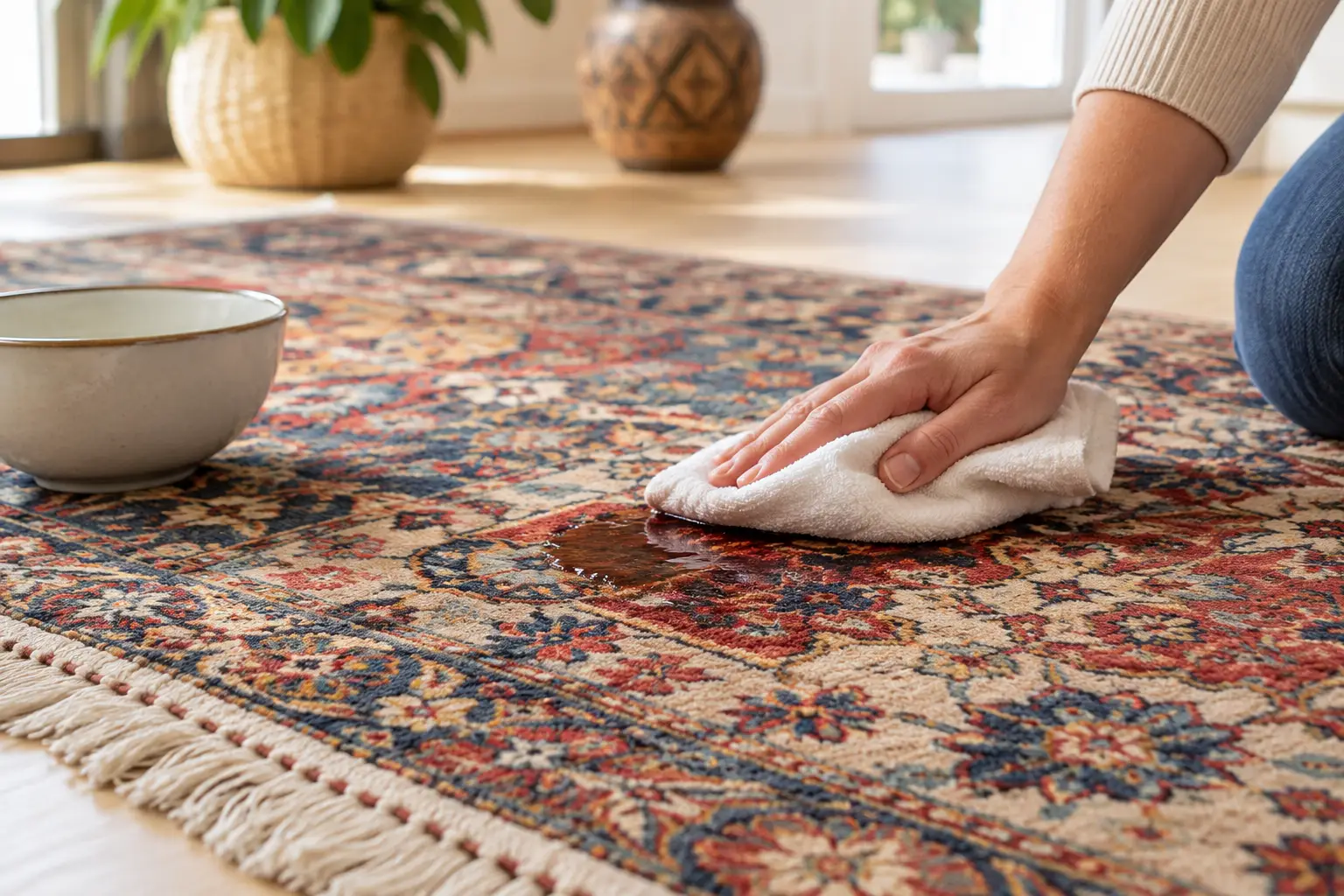
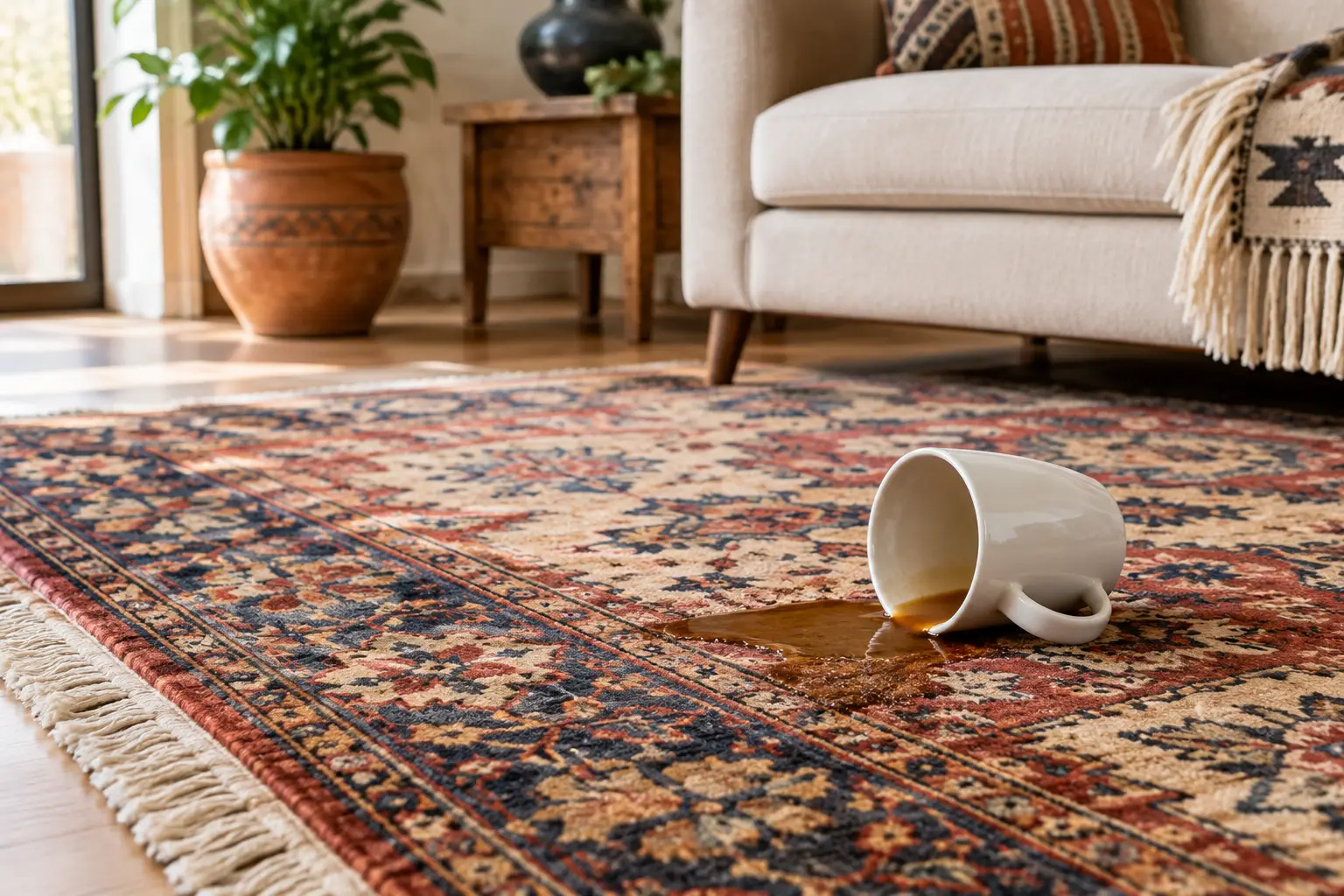
When a spill happens, blot promptly with a clean white towel. Do not rub, use hot water, or apply store-bought spot removers to an unknown fiber. If a pet accident reaches the foundation, surface blotting may reduce immediate moisture, but it cannot fully remove contamination that has traveled through the rug. Pet urine and odor treatment often requires controlled washing in a shop setting.
When should I keep, sell, donate, or store it?
Keep the rug when it suits your home, has family meaning, or has enough construction and condition to justify care. A repaired rug can still be a practical household piece, especially when damage is limited to fringe, binding, or a small worn area. Repair does not need to make a rug look brand new. The goal is often to stabilize the structure and preserve its honest character.
Consider selling when the rug has value but does not fit your space, style, or ability to maintain it. Have it inspected first. Cleaning can make a rug easier to assess and present, but not every rug needs restoration before sale. Extensive restoration may not make financial sense for a common machine-made rug, while a handmade rug with sound structure may benefit from careful cleaning and minor stabilization.
Donation can be a thoughtful choice for a clean, usable rug that no longer has a place in your household. Be candid about condition, odors, stains, and needed repair so the next owner can make an informed decision.
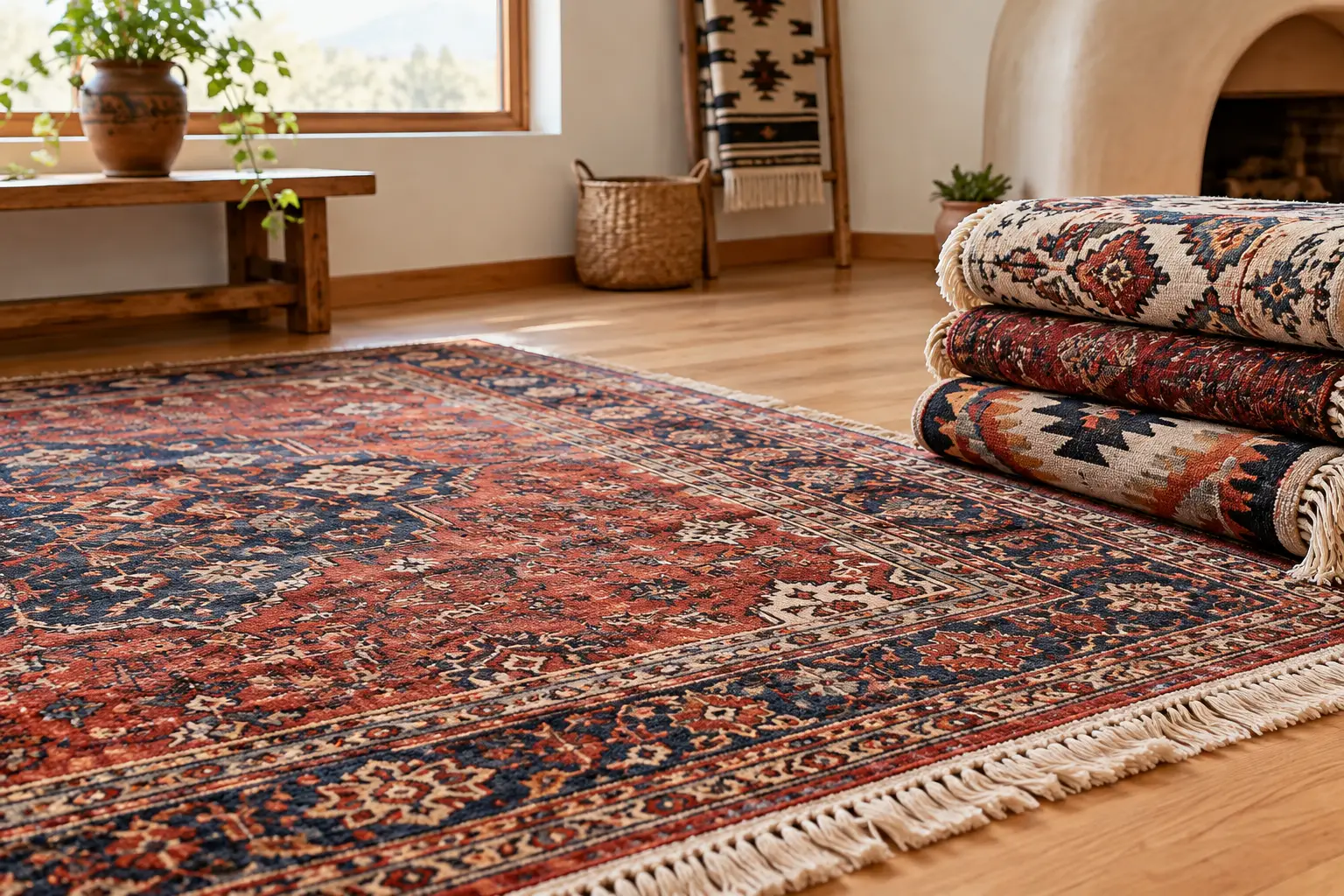
Store a rug only after it is clean and completely dry. Roll it rather than folding it, with the pile facing inward when practical. Use breathable wrapping and keep it in a climate-controlled indoor area, elevated from the floor. Check it at least twice a year for moth activity, moisture, or pest damage. If the rug has a musty smell, active moth damage, or past pet accidents, do not store it untreated.
Rug Care in Albuquerque and Northern New Mexico
An inherited rug can be used, preserved, passed along, or repaired with care once you know its material, condition, and story.
Have a rug that needs care? One World Rug Care has been cleaning, repairing and protecting area rugs in Albuquerque since 2012. Email a few photos of your rug to admin@oneworldrugcare.com for a free estimate, call us at (505) 821-0302, or visit the shop at 7200 Jefferson St NE, Suite A, Monday to Saturday 9 to 5. Pickup and delivery is free in Albuquerque and Santa Fe on orders of $150 or more, and available in Taos, Durango, Pagosa Springs and Las Cruces.