Rug color bleeding repair can often stabilize migrated dye and improve how a rug looks, but the result depends on the fiber, the dyes, and how long the colors have been moving. The safest first move is to stop adding moisture, blot gently, and have the rug assessed before a small color transfer becomes a larger restoration project.
A red field turning pink near a cream border, blue fringe taking on a gray cast, or dark motifs feathering into lighter areas can be upsetting – especially on an inherited Persian rug, a Navajo textile, or a rug chosen for a carefully designed room. Color bleeding is not always permanent, but it is rarely a problem to experiment with at home.
Why do rug colors bleed?
Color bleeding happens when unstable or loosened dye moves from one yarn into another with moisture. The moisture may come from a spill, pet urine, a wet shoe, a plant leak, an improperly cleaned rug, or excessive humidity after the rug has been soaked. Heat, strong detergents, and slow drying can make the movement worse.
Handmade rugs deserve particular caution because they may contain several types of dye and fiber in one piece. A wool Oriental or Persian rug may have colorfast areas beside a fugitive red, navy, or black dye. Antique rugs can be more vulnerable because dyes and fibers change over decades of use, sunlight, and prior cleaning. Silk and viscose rugs can react differently than wool, sometimes showing distortion, texture changes, or color movement with very little moisture.
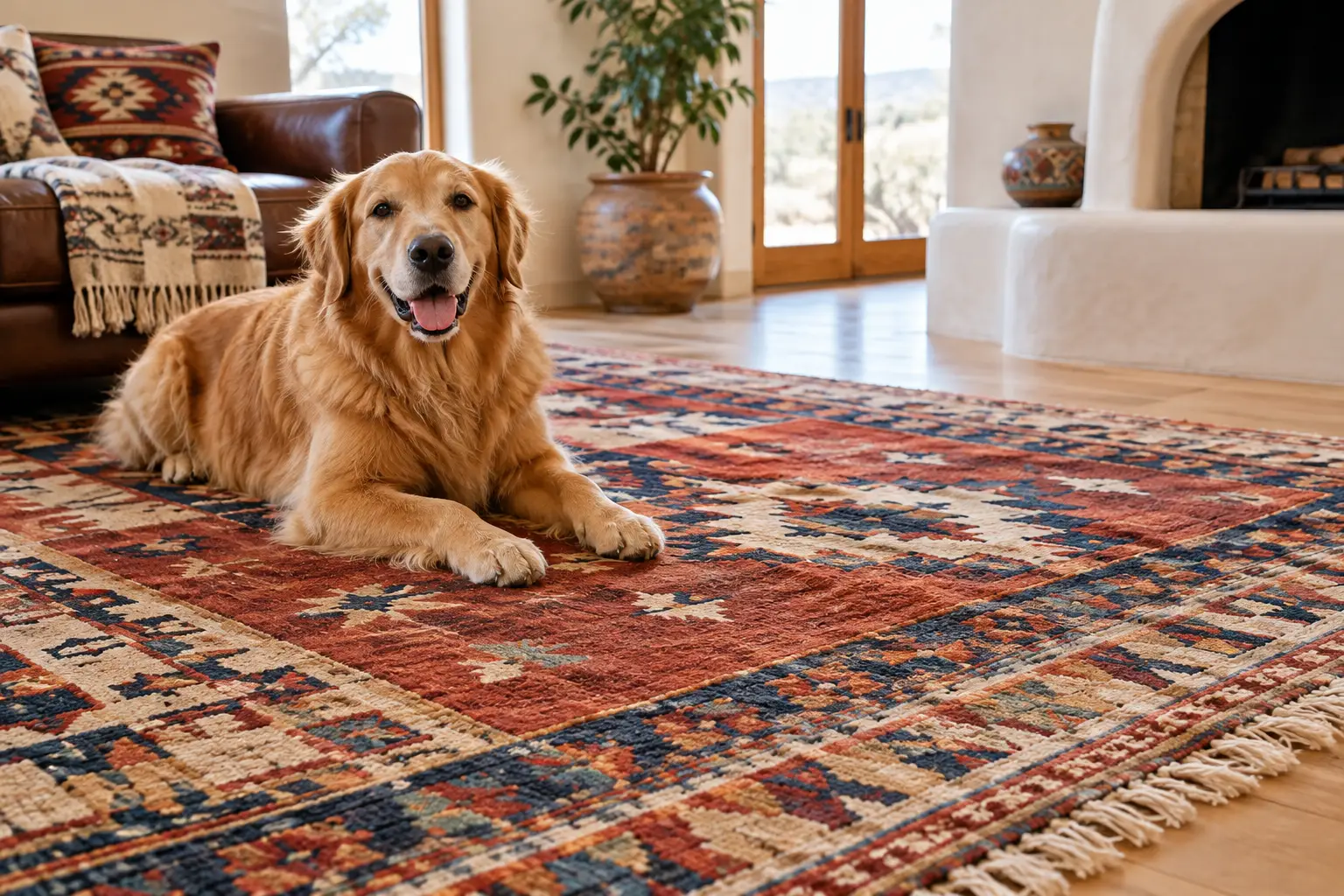
Pet accidents add another layer. Urine introduces moisture, salts, and pH changes that can affect dyes while leaving an odor source deep in the foundation. A rug may look fine immediately after an accident, then show a yellowed area, dye movement, or stiff fibers after it dries.
What should I do when rug colors start to run?
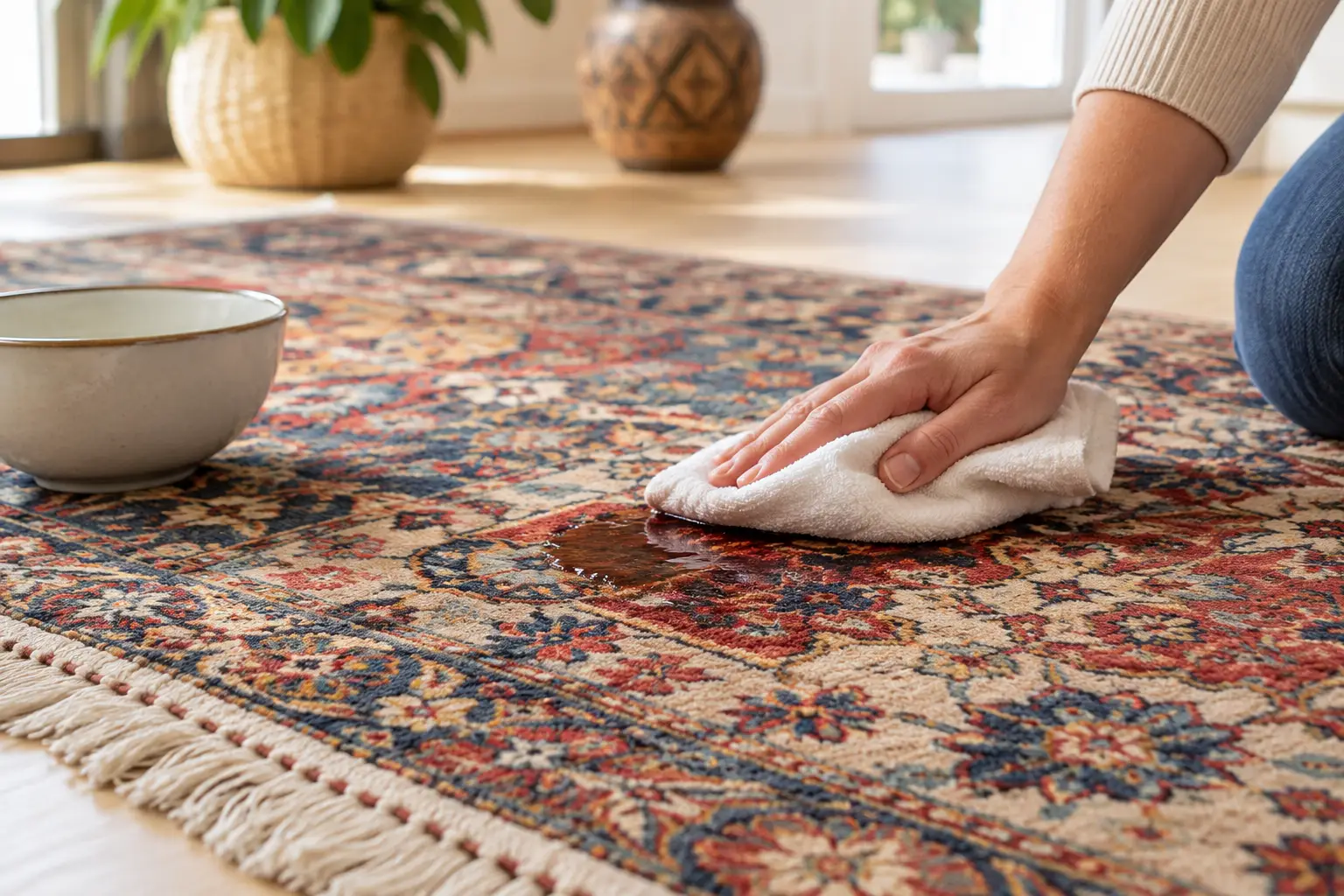
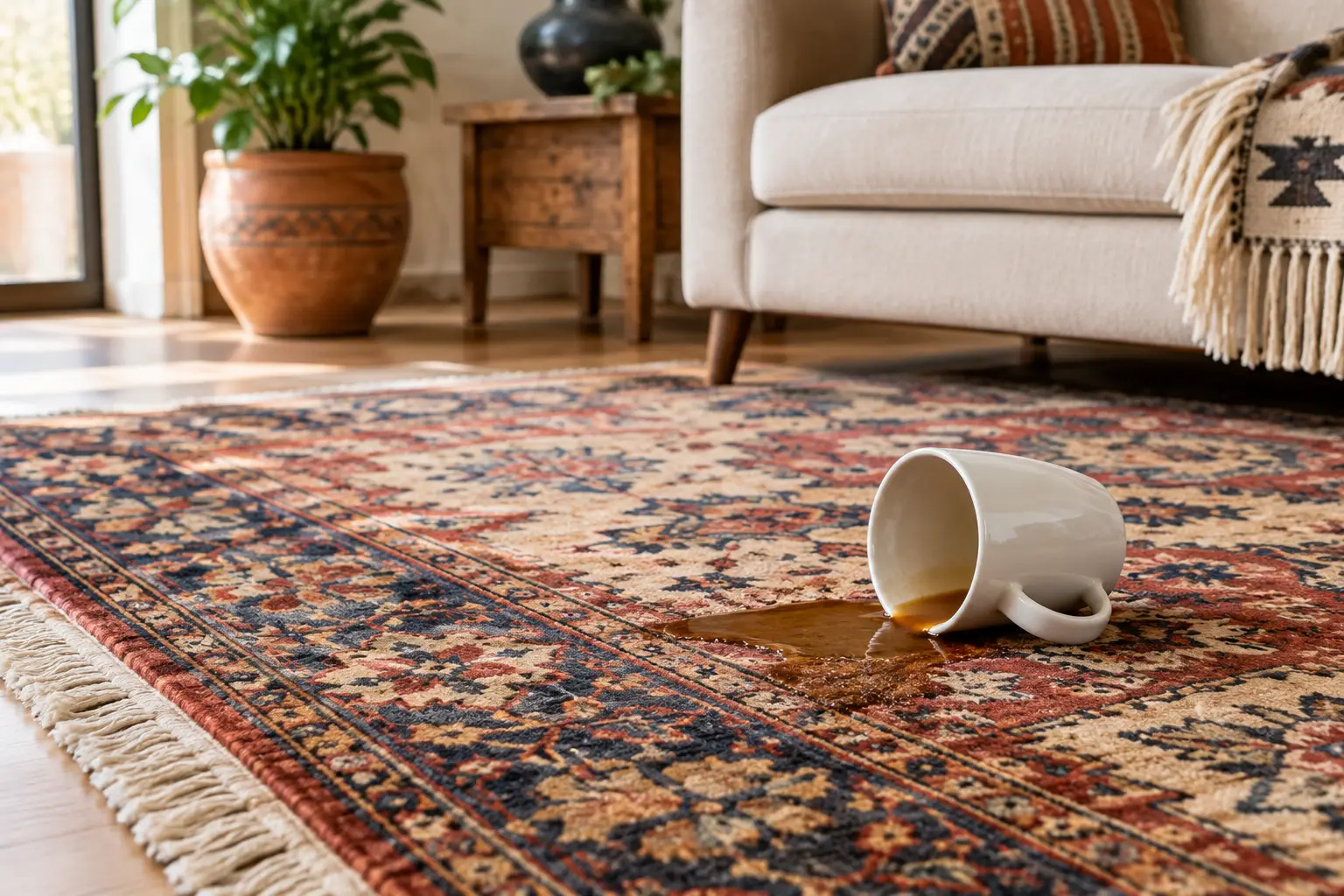
Act promptly, but keep the response simple. If a spill is still wet, place clean white towels over the area and press down to absorb moisture. Replace the towels as they become damp. Do not rub, scrub, brush, or use a hair dryer. Rubbing can push migrating dye farther into surrounding yarns, while heat can set a problem that might otherwise be corrected.
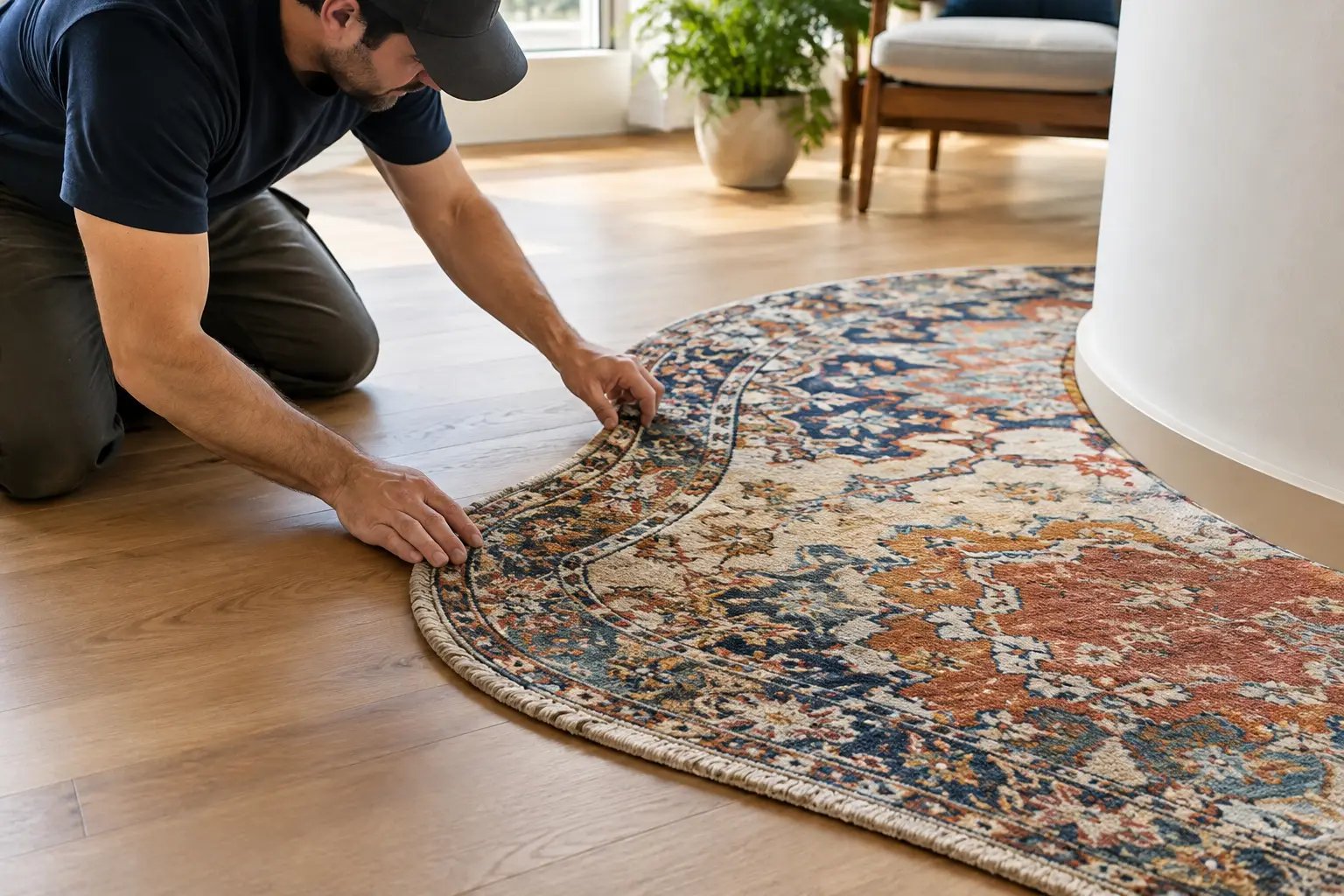
Keep the rug flat if possible. Do not fold a damp rug with the affected area inside, stack furniture on it, or roll it up. Those actions hold moisture against the fibers and transfer color from one surface to another. If the rug is small enough to move without folding, place it in a dry area away from direct sun and let it air out while you arrange an assessment.
Avoid household spot removers, dish soap, vinegar, baking soda, oxygen cleaners, and rental cleaning machines. A product that seems mild on upholstery or wall-to-wall carpet may alter pH, leave residue, or cause colors to release from rug yarns. Water alone can also be risky when a rug has already begun to bleed.
Take a few clear photos before the appearance changes. Include one photo of the whole rug, a close view of the affected area, and the back if the color has traveled through the foundation. Note when the incident happened, what contacted the rug, and whether anyone has already applied a cleaning product. Those details help a rug specialist choose a safer course of action.
Can color bleeding be repaired after the rug is dry?
Sometimes, yes. Drying does not automatically mean the damage is permanent, but it can make correction more involved. As dyes dry in their new location, they may bond more firmly to adjacent fibers. A recent spill addressed the same day generally offers more options than a stain that has sat through several wet-and-dry cycles.
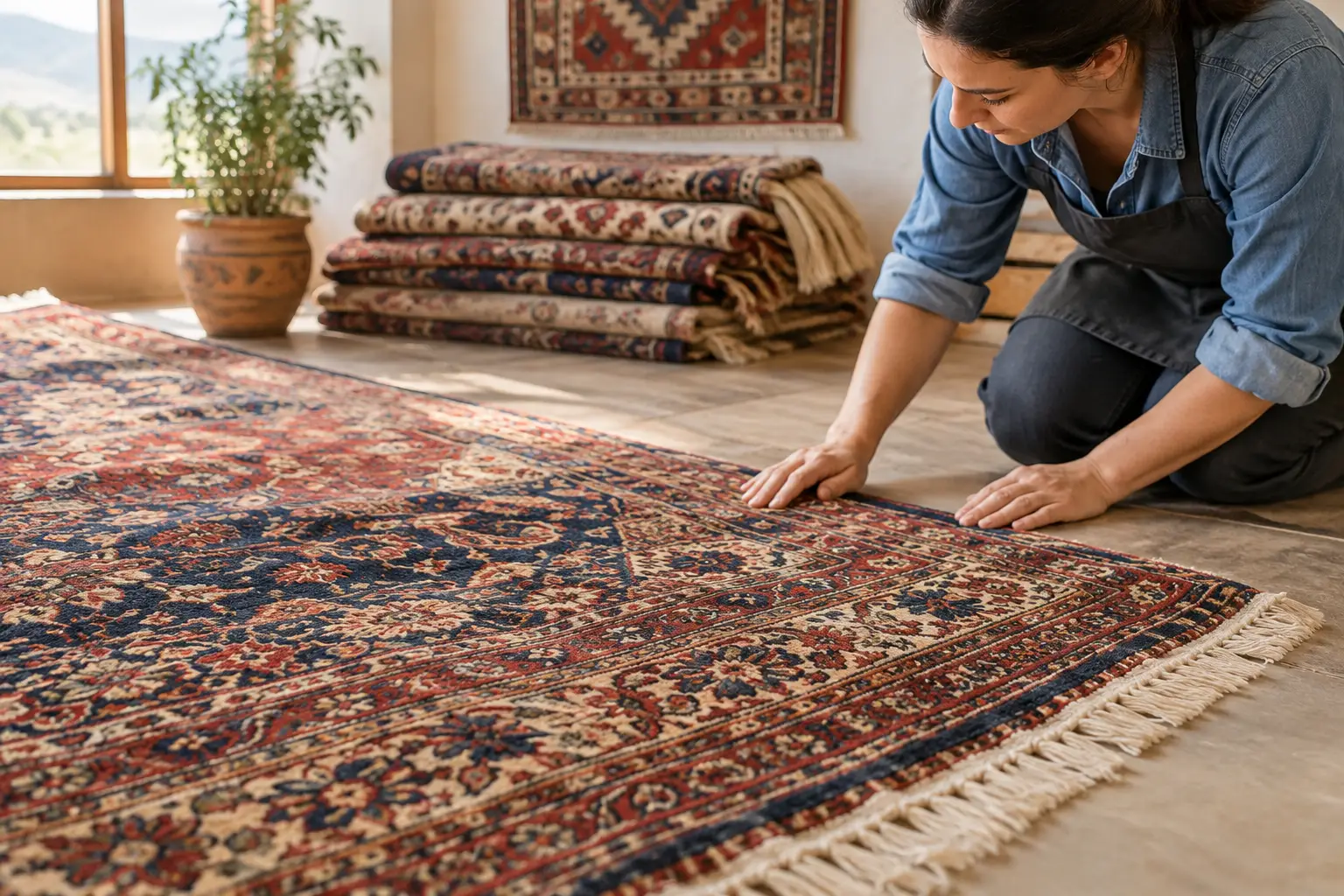
The goal of rug color bleeding repair is not simply to make the rug wet again. First, the fibers, construction, dyes, and extent of migration need to be evaluated. The technician must determine whether the color is loose surface dye, transferred dye from a neighboring area, staining from a spill, or fading that only resembles bleeding.
A professional may use controlled dye-stability testing before washing. Depending on the rug, treatment can involve carefully managing moisture, pH, temperature, and drying time to release or stabilize unwanted color transfer without disturbing stable colors. Some rugs also need color correction after cleaning when dye loss, sun fading, or prior damage has left an uneven appearance.
There are limits. Dye that has heavily migrated into cream wool, silk, cotton fringe, or a pale cotton foundation may not return completely to its original appearance. A responsible restoration plan explains that possibility upfront. The right decision may be to stabilize the colors and improve the contrast rather than pursue aggressive treatment that risks further loss.
How does fiber type affect rug color bleeding repair?
Fiber tells us a great deal about how a rug should be handled. Wool is resilient and often responds well to careful washing, but it can hold a large amount of moisture and requires thorough, controlled drying. Cotton foundations and fringe are highly absorbent, making them common places for bleeding colors to collect. If red or dark dye has reached cotton fringe, treatment must be especially measured.
Silk rugs need a more conservative approach. Their fine fibers, sheen, and detailed pile can be affected by excess water, friction, or unsuitable cleaning chemistry. Viscose is also sensitive when wet. It may brown, stiffen, or lose texture, and it should not be treated like wool simply because it looks similar on the floor.
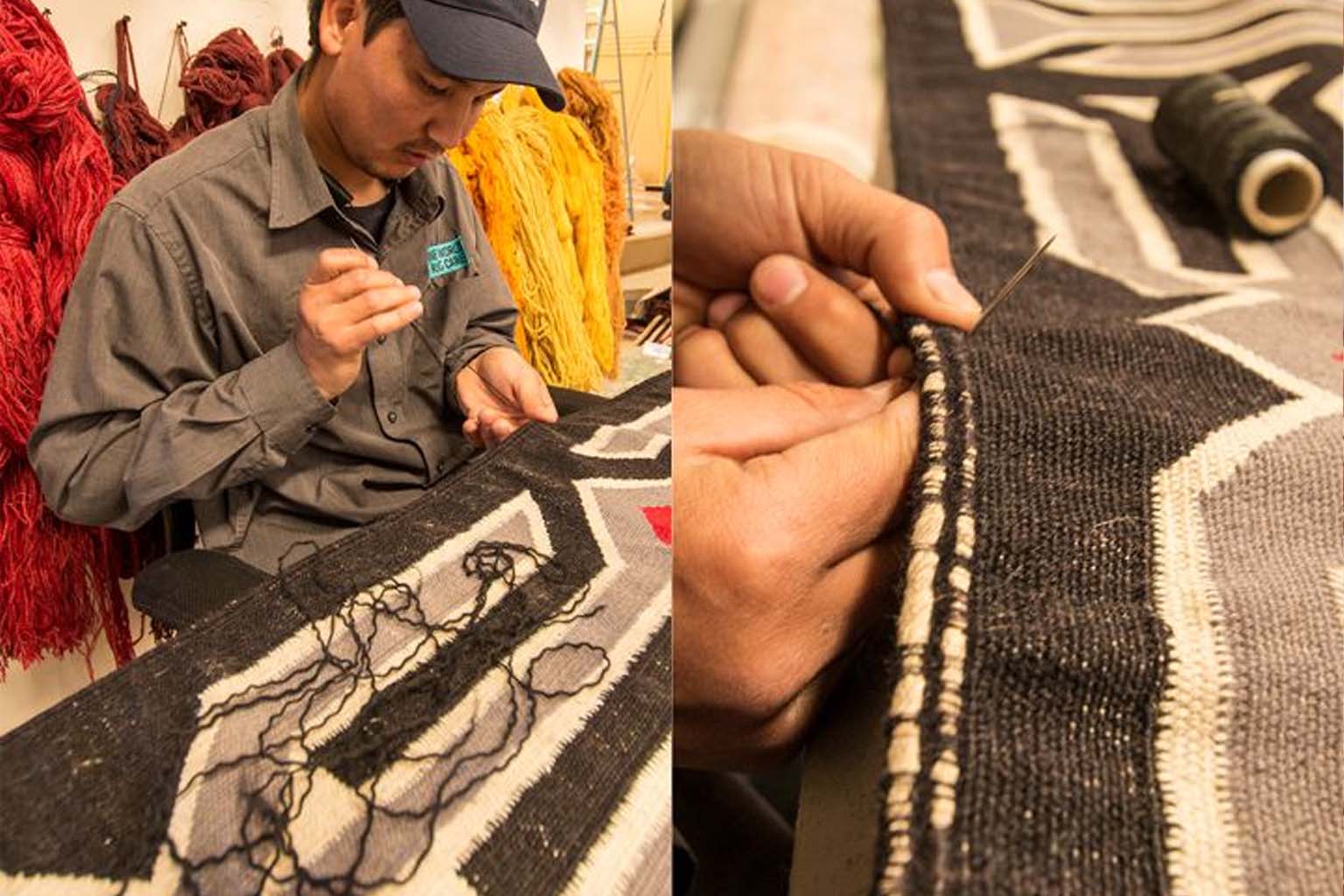
Navajo and Southwest textiles require close attention to weave structure, color placement, and condition. These pieces can have delicate fibers, historic repairs, or areas weakened by light exposure. They should be evaluated as textiles rather than handled as ordinary household rugs.
Machine-made rugs vary widely. Some use solution-dyed synthetic fibers that resist bleeding well; others have printed color, latex adhesives, jute backing, or combinations of materials that react poorly to saturation. The rug’s label is useful, but inspection and testing are more reliable than assumptions.
Why is in-shop treatment safer than cleaning a bleeding rug at home?
A bleeding rug needs more than surface extraction. It needs a controlled process and enough time to dry correctly. In-home cleaning methods can leave moisture, cleaning residue, and odor contaminants in the rug’s pile and foundation, while a color problem may continue developing as the rug dries over the next 12 to 24 hours.
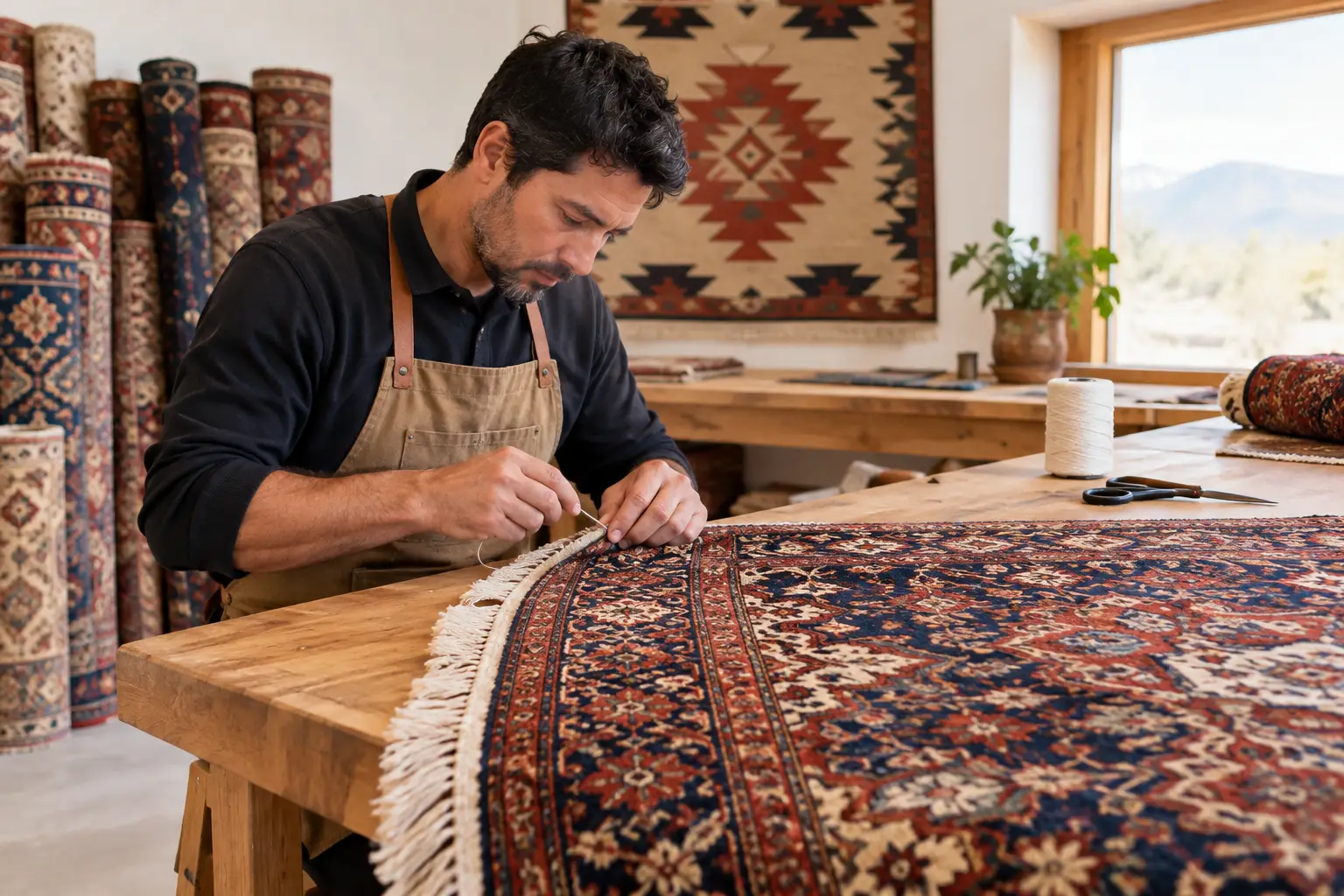
At One World Rug Care, each rug is inspected and dye-tested before its cleaning method is chosen. Rugs are dusted to remove embedded dry soil, washed by hand in cool water when that is appropriate for the material, and dried in a climate-controlled room. That process gives the team a chance to monitor color behavior rather than treating every rug with one method.
For color migration caused by urine or a spill, the entire rug may need attention, not just the visible spot. Contaminants can spread below the pile, and a line between wet and dry areas can create a tide mark. Bringing the rug to the shop also allows for careful handling of fringe, edges, worn pile, and prior repairs that could be damaged by heavy equipment or rushed drying.
When should I call about a rug with bleeding colors?
Call as soon as you see color movement, particularly if the rug is handmade, antique, silk, viscose, or has a light background. The same is true after a pet accident, a plumbing leak, or an attempted cleaning that left colors dull, streaked, or uneven. A phone photo estimate can help determine whether the rug should be picked up promptly.
Even if the bleeding happened months ago, an evaluation is worthwhile. Old color transfer may be less responsive, yet cleaning can still remove soil and residues that obscure the pattern, while stabilization or selective color correction may improve the rug’s balance. A rug does not have to look perfect to remain beautiful, useful, and worth preserving.
Rug Care in Albuquerque and Northern New Mexico
If colors have moved, getting the rug dry and professionally assessed early gives the fibers the best chance for careful treatment.
Have a rug that needs care? One World Rug Care has been cleaning, repairing and protecting area rugs in Albuquerque since 2012. Email a few photos of your rug to admin@oneworldrugcare.com for a free estimate, call us at (505) 821-0302, or visit the shop at 7200 Jefferson St NE, Suite A, Monday to Saturday 9 to 5. Pickup and delivery is free in Albuquerque and Santa Fe on orders of $150 or more, and available in Taos, Durango, Pagosa Springs and Las Cruces.