Professional rug fringe repair makes sense when fringe is thinning, detached, tangled beyond gentle combing, or allowing the rug’s woven ends to loosen. Fringe is not merely decorative on many handmade rugs - it is part of the rug’s foundation, so damage deserves attention before it moves into the body of the piece.
A few missing strands at the end of an everyday machine-made rug may be mostly cosmetic. On a hand-knotted Persian, Oriental, antique, or silk rug, however, the fringe often consists of the warp threads that run the full length of the rug. Once those threads begin to pull out or unravel, postponing repair can turn a contained edge issue into a more involved restoration.
What does rug fringe actually do?
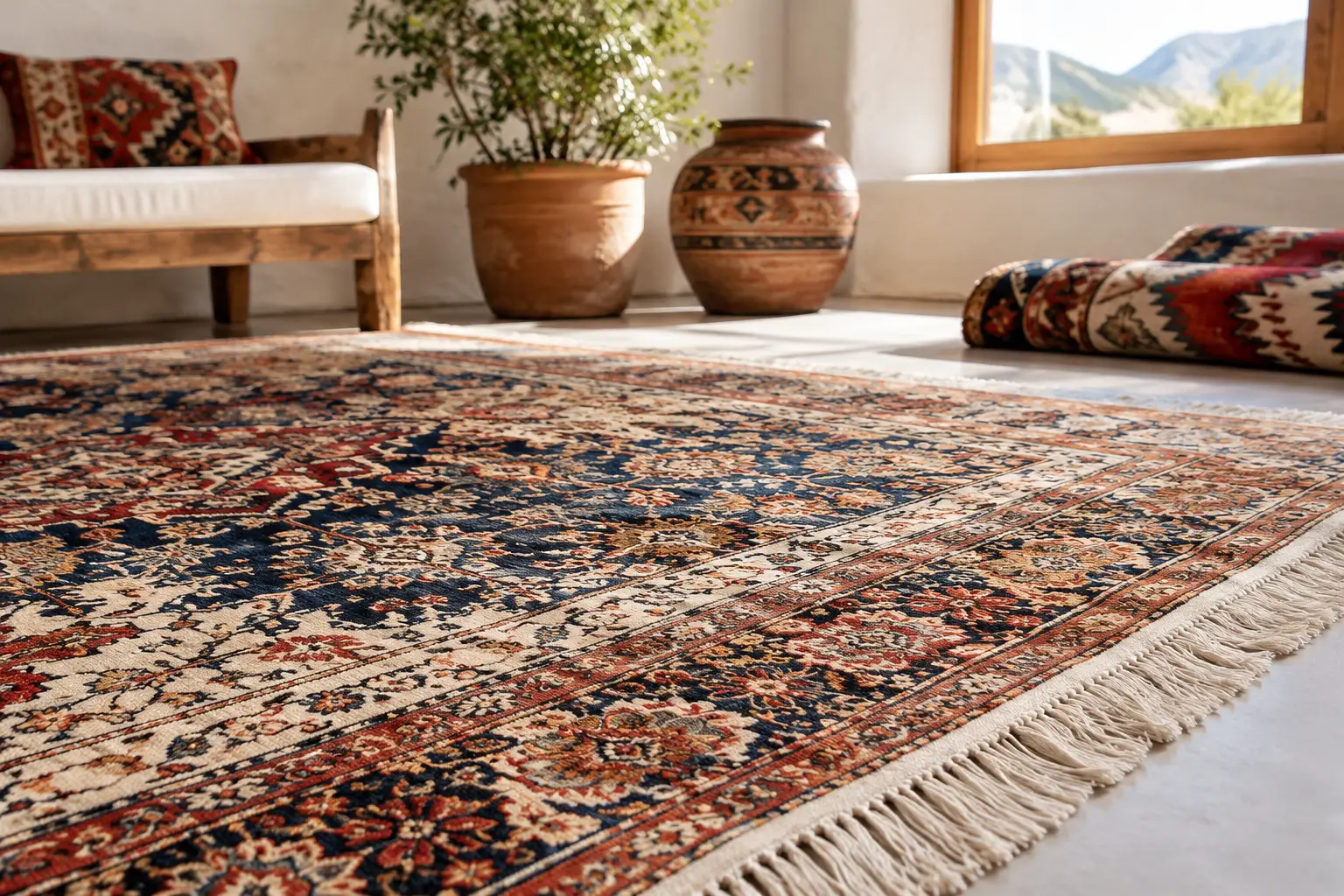
On many handwoven rugs, fringe is the visible continuation of the warp - the lengthwise foundation threads held in place by the knots and end finish. The fringe may be tied, braided, wrapped, or secured with a narrow band of stitching, depending on the rug’s construction and origin. It helps keep the end of the weave stable.
That construction is why cutting fringe off is rarely a good casual fix. Trimming can make a fringe look neater for a short time, but it may remove length needed to secure a proper end finish. If the fringe is already sparse, short, or separating from the rug, a specialist needs to examine the underlying warps before deciding whether repair, replacement, or stabilization is appropriate.
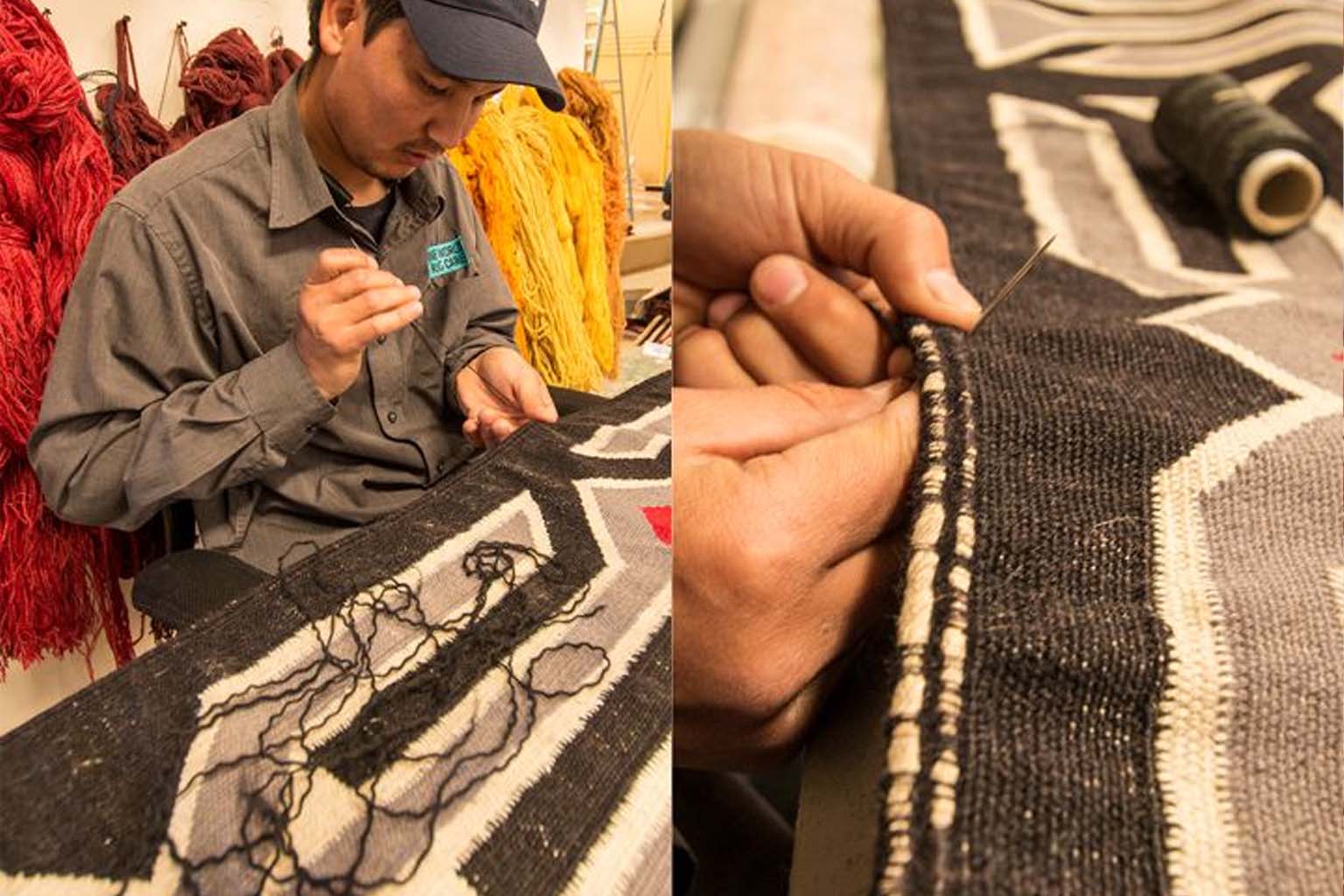
Not every textile has fringe in the same sense. Navajo and Southwest rugs often have carefully finished ends or selvages rather than the long loose fringe seen on some Oriental rugs. Those edges require their own approach, with close attention to the original weave, fiber, and finish.
When is professional rug fringe repair needed?
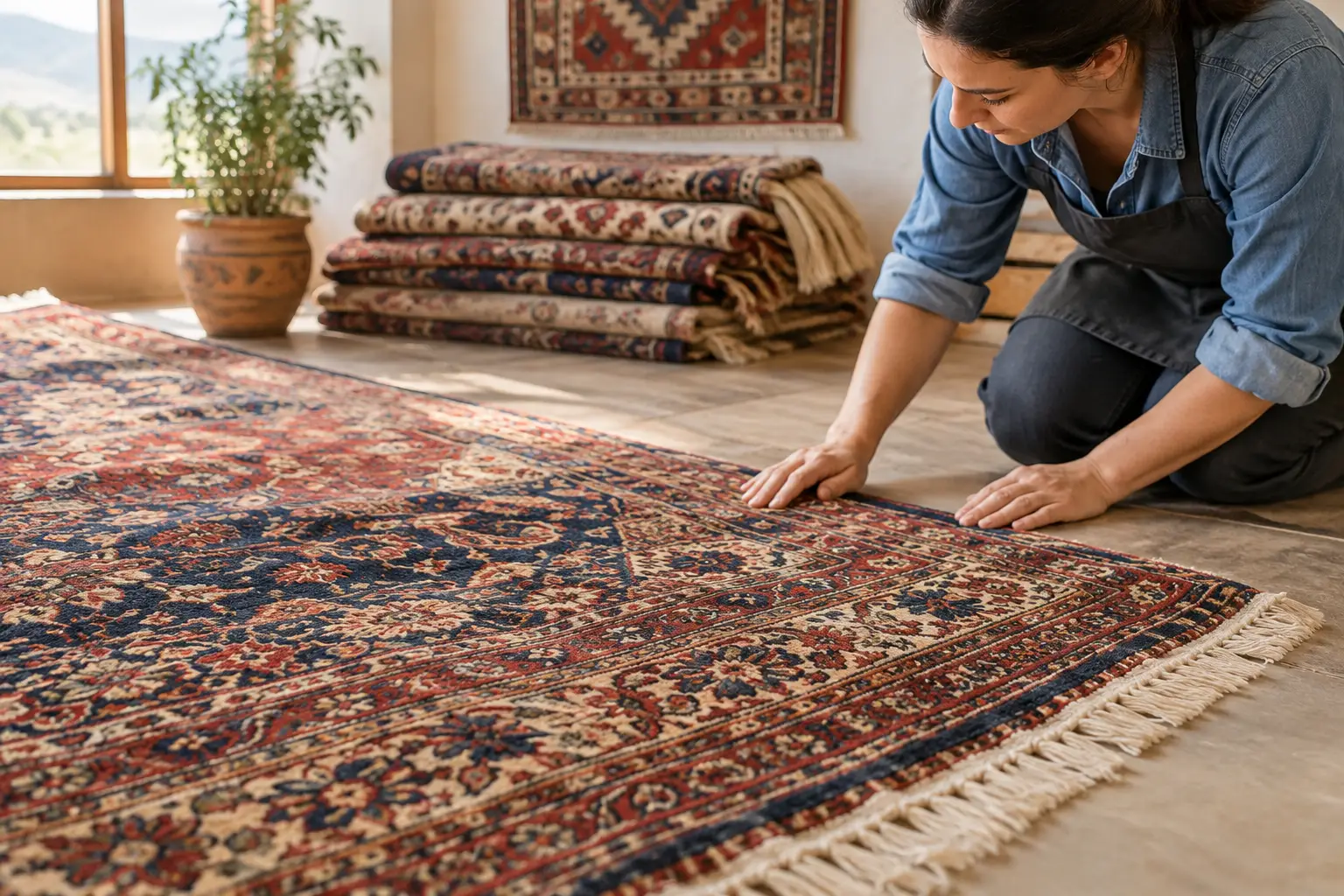
A rug needs professional attention when fringe damage affects more than appearance. Look closely at both ends of the rug in natural light. Loose knots, bare spots where fringe used to be, broken foundation threads, and a wavy or uneven end edge are all signs that the finish may be failing.
Fringe damage often begins in the places a household uses most. A vacuum beater bar can catch and twist strands in seconds. Door traffic pulls on one end repeatedly. Pets may chew or soil a small section, while furniture legs and frequent shifting can abrade the fibers. Sun exposure can make cotton fringe brittle, especially when the rug itself has been protected from direct light less consistently than its ends.
Professional repair is especially worth considering when:
- The fringe is pulling away from the rug body or taking knots with it.
- One or both rug ends are beginning to unravel beneath the fringe.
- Pet damage, moth activity, or a spill has weakened a concentrated section.
- The rug is handmade, antique, silk, or has family, collector, or design value.
- The fringe has been cut very short, leaving little material for a secure finish.
A repair professional can tell the difference between surface wear and foundation loss. That distinction matters. Replacing decorative fringe on a machine-made rug is different from rebuilding and securing the ends of a hand-knotted rug whose structural warps are exposed.
Can I clean up damaged fringe at home?
Home care can prevent additional wear, but it cannot restore missing foundation threads or reweave an unraveling rug end. For light dust, gently shake loose debris outdoors if the rug can be handled safely, or use a vacuum without a beater bar near the fringe. Keep the vacuum head several inches away and use upholstery-style suction only if it does not pull the strands.
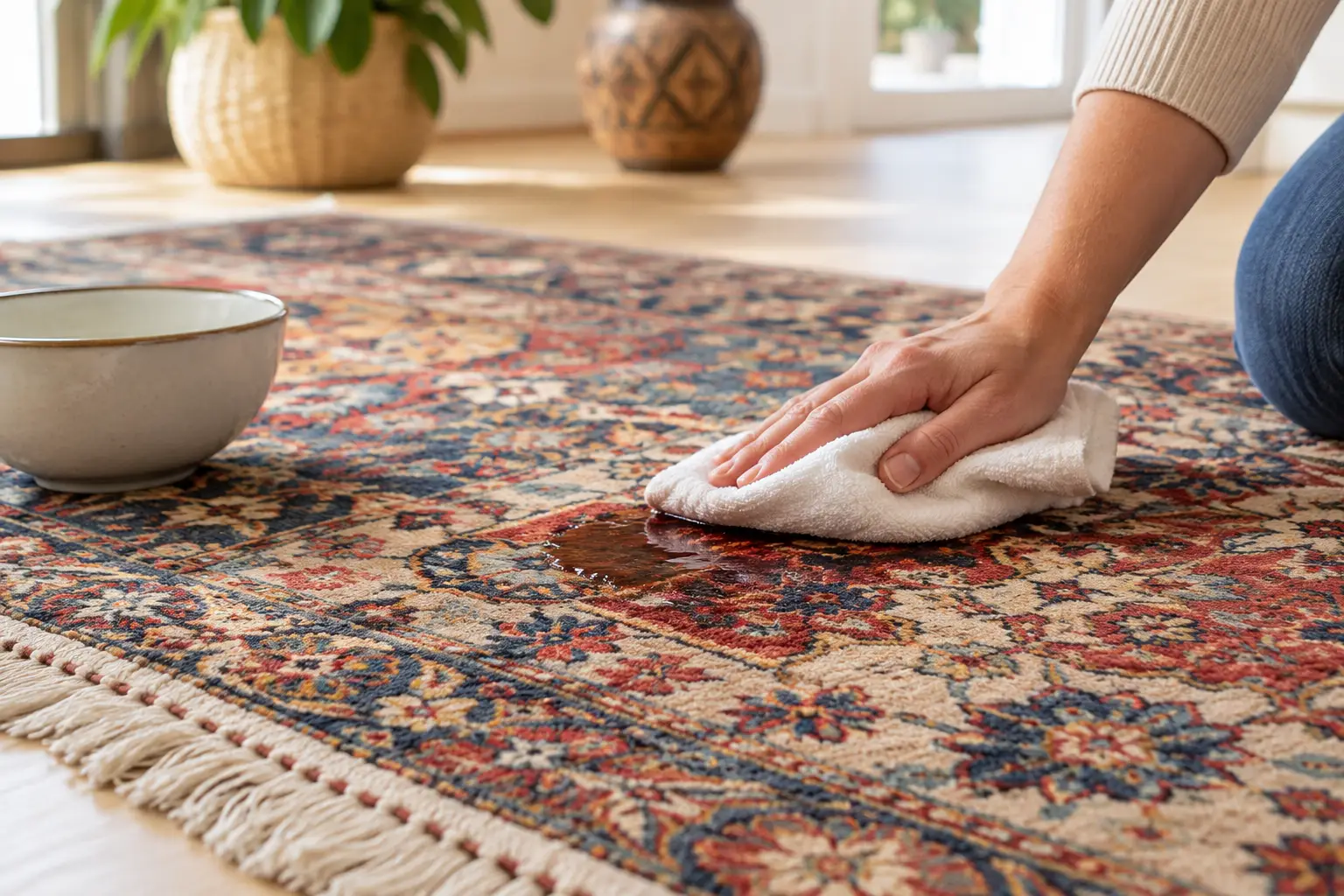
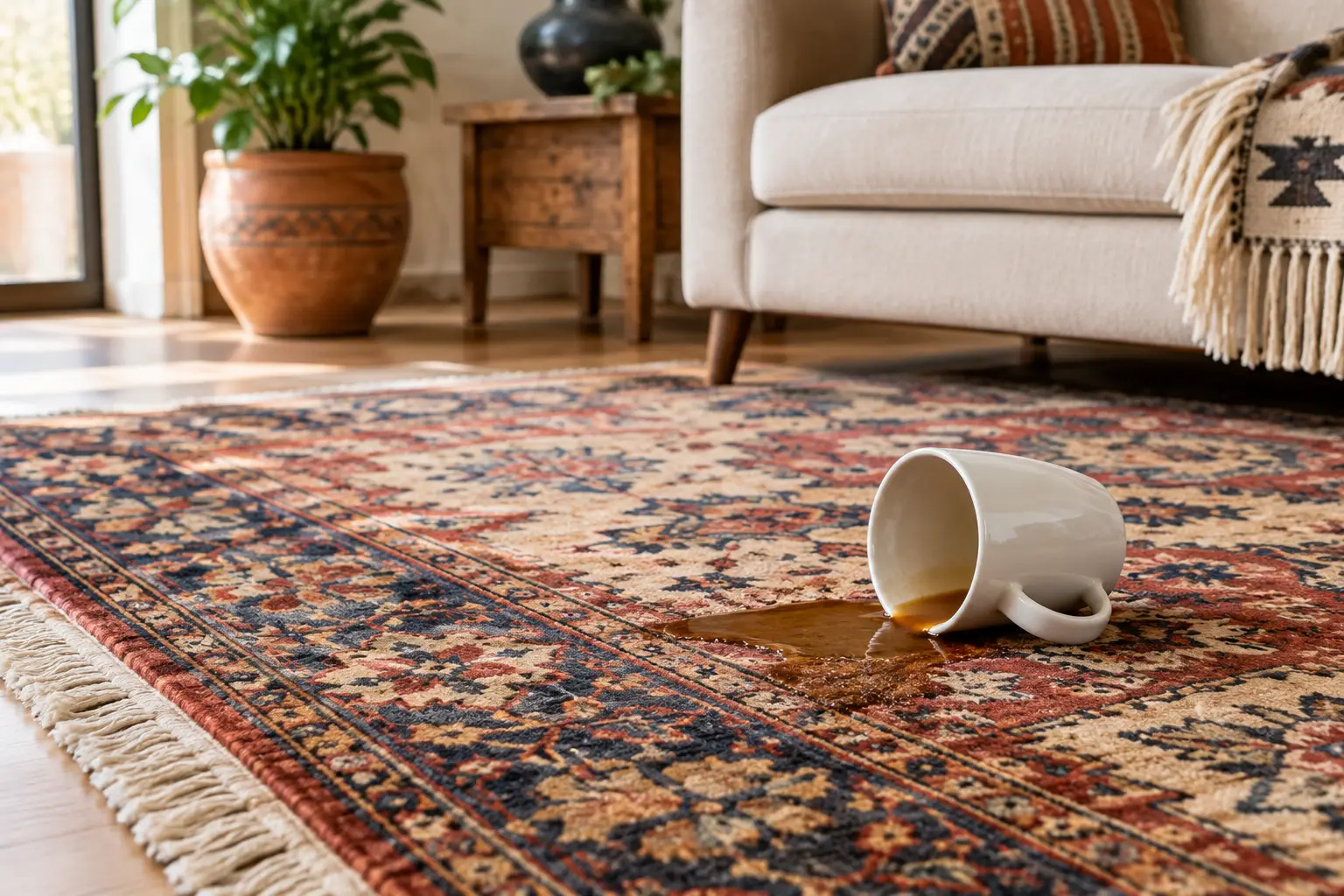
For a fresh spill, blot the fringe with a clean white towel. Do not scrub, twist, bleach, or soak it. Cotton fringe can absorb moisture quickly, and colored wool or silk near the end of the rug can bleed into it. If a pet accident reaches the fringe and underlying edge, the concern is not just odor. Urine can travel into the foundation, where it may contribute to fiber weakening if it is left in place.
Avoid combing hard through snarls, using adhesive to hold strands together, or tying new fringe onto old remnants. Glue can become stiff and attract soil. Aggressive brushing breaks aged cotton. A knot tied in the wrong spot can create tension on a fragile warp. These attempts can also make a later repair less tidy.
If fringe is simply lying unevenly but remains fully attached, a rug professional may be able to clean, align, and stabilize it without replacing it. The right answer depends on the rug’s age, materials, condition, and how much original fringe remains.
How is professional rug fringe repair evaluated?
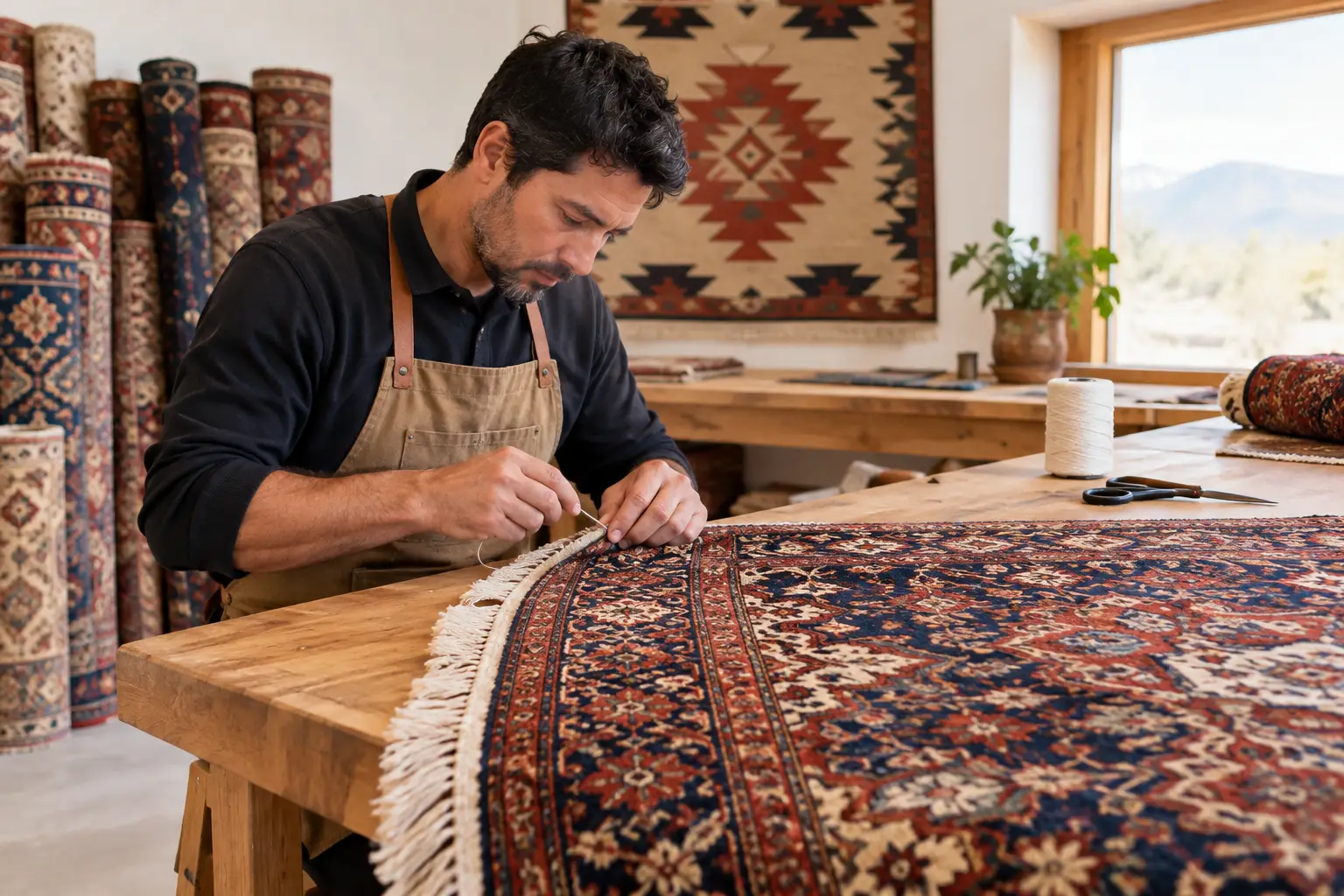
A careful repair begins with inspection, not a one-size-fits-all fringe replacement. The rug is examined at both ends to identify loose warps, missing knots, prior repairs, color variation, wear patterns, and fiber type. Cotton is common in rug fringe, but wool, silk, and blended materials require different handling.
The repair decision usually falls into one of three paths. When original fringe is intact but loose, it may be secured and the end finish reinforced. When fringe is worn away but the rug body remains stable, compatible new fringe may be added in a way that supports the end. When the weave itself has begun to recede, the edge may need to be rebuilt or stabilized before any fringe work is done.
Matching matters, but perfect visual uniformity is not always the goal. On an antique rug, brand-new white cotton fringe can look out of place beside naturally aged wool and dyes. A thoughtful repair considers length, thickness, twist, color, and the rug’s existing character. It should also respect the construction rather than hiding a weakness under a decorative strip.
At One World Rug Care, rugs are inspected before treatment because repair and cleaning often belong in the same conversation. Embedded grit near the ends can continue abrading fibers, while soil or pet contamination can obscure the condition of the foundation. When cleaning is needed, rugs are handled in the shop using material-specific methods, including inspection, dye testing, dusting, hand washing in cool water when appropriate, and climate-controlled drying.
Should fringe repair happen before or after rug cleaning?
It depends on the condition of the edge. A rug with loose, fragile ends may need stabilization before washing so the weakened area is protected during handling. In other cases, cleaning first removes soil that hides the true extent of wear and allows repair materials to be matched against the rug’s actual color.
This is particularly relevant after pet accidents, food spills, or long-term dust buildup. A fringe repair may look sound at first glance, yet the fibers beneath it can be stiff, stained, or weakened. Cleaning and repair should be planned together rather than treated as unrelated jobs.
For silk and viscose rugs, dyed fringe, and older handmade pieces, testing is essential. Water, cleaning solutions, and friction do not affect every fiber or dye the same way. That is why an in-plant assessment is safer than assuming a standard household cleaning method will suit the rug.
How can I protect repaired fringe from future wear?
Once fringe is repaired, small changes in routine can make a meaningful difference. Vacuum the rug body in the direction of the pile and stop before reaching the fringe. Do not run a rotating brush across either end. If the rug sits in a doorway, rotate it periodically when practical so one edge does not carry all the traffic.
A properly sized rug pad helps as well. It reduces sliding, cushions foot traffic, and can limit the repeated tugging that happens when a rug shifts across hard flooring. Pads should fit inside the rug edge, not extend under the fringe, where they can create an awkward bump or catch loose strands.
Check the ends every few months, especially in homes with pets, active children, or strong afternoon sun. You do not need to inspect every individual strand. A quick look for new gaps, curled corners, loose end threads, or a change in the rug’s shape is enough to catch a developing problem early.
Fringe is often the first part of a rug to show its age because it is exposed, flexible, and easy to snag. Giving it timely attention protects more than a tidy finish. It helps preserve the structure, history, and everyday usefulness of the rug beneath it.
Rug Care in Albuquerque and Northern New Mexico
For fringe that is thinning, unraveling, or damaged by pets, a close inspection can clarify whether the rug needs cleaning, stabilization, or a more involved repair.
Have a rug that needs care? One World Rug Care has been cleaning, repairing and protecting area rugs in Albuquerque since 2012. Email a few photos of your rug to admin@oneworldrugcare.com for a free estimate, call us at (505) 821-0302, or visit the shop at 7200 Jefferson St NE, Suite A, Monday to Saturday 9 to 5. Pickup and delivery is free in Albuquerque and Santa Fe on orders of $150 or more, and available in Taos, Durango, Pagosa Springs and Las Cruces.