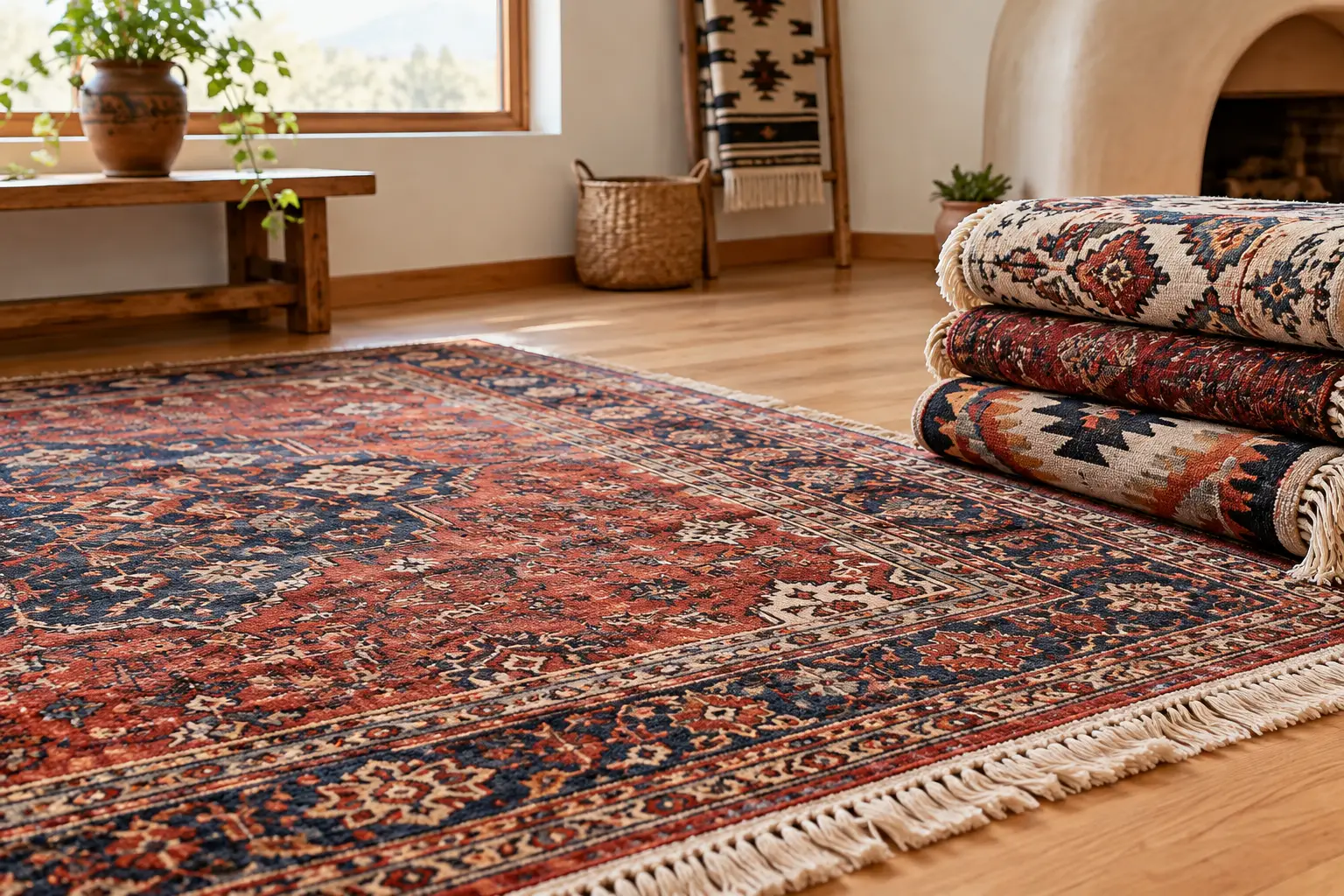
Yes. Custom rug pads in Albuquerque help a rug stay flat, protect the floor beneath it, and reduce wear caused by slipping, bunching, and hard contact with the surface below. The right pad depends on the rug’s fiber, construction, size, location, and the type of floor in the room.
A pad may be out of sight, but it does real work every day. It cushions footsteps, allows airflow under the rug, and helps absorb some of the pressure from furniture and foot traffic. For a hand-knotted wool Persian, a Navajo or Southwest textile, or a finely woven silk rug, that support can help preserve the structure that took years to make.
Why does a rug need a pad?
A rug without a pad is more likely to creep across a hard floor, curl at the corners, and show uneven wear. When people walk over an unpadded rug, the yarns are compressed directly against wood, tile, concrete, or stone. Fine dust and grit can also collect underneath, where they act like a mild abrasive as the rug moves.
A good pad creates a buffer. It gives the rug a more stable foundation and can make a thin flatweave feel more comfortable underfoot. It also helps keep the rug’s edges from lifting, which matters in hallways, entryways, kitchens, and other places where a raised corner can become a tripping hazard.
Pads are especially useful in Albuquerque homes with tile, concrete, hardwood, engineered wood, or luxury vinyl floors. Those hard surfaces do not provide much give, and some react poorly to the wrong backing material. A pad should protect both the rug and the floor, not create a residue, discoloration, or trapped moisture problem.
What makes a custom rug pad different?
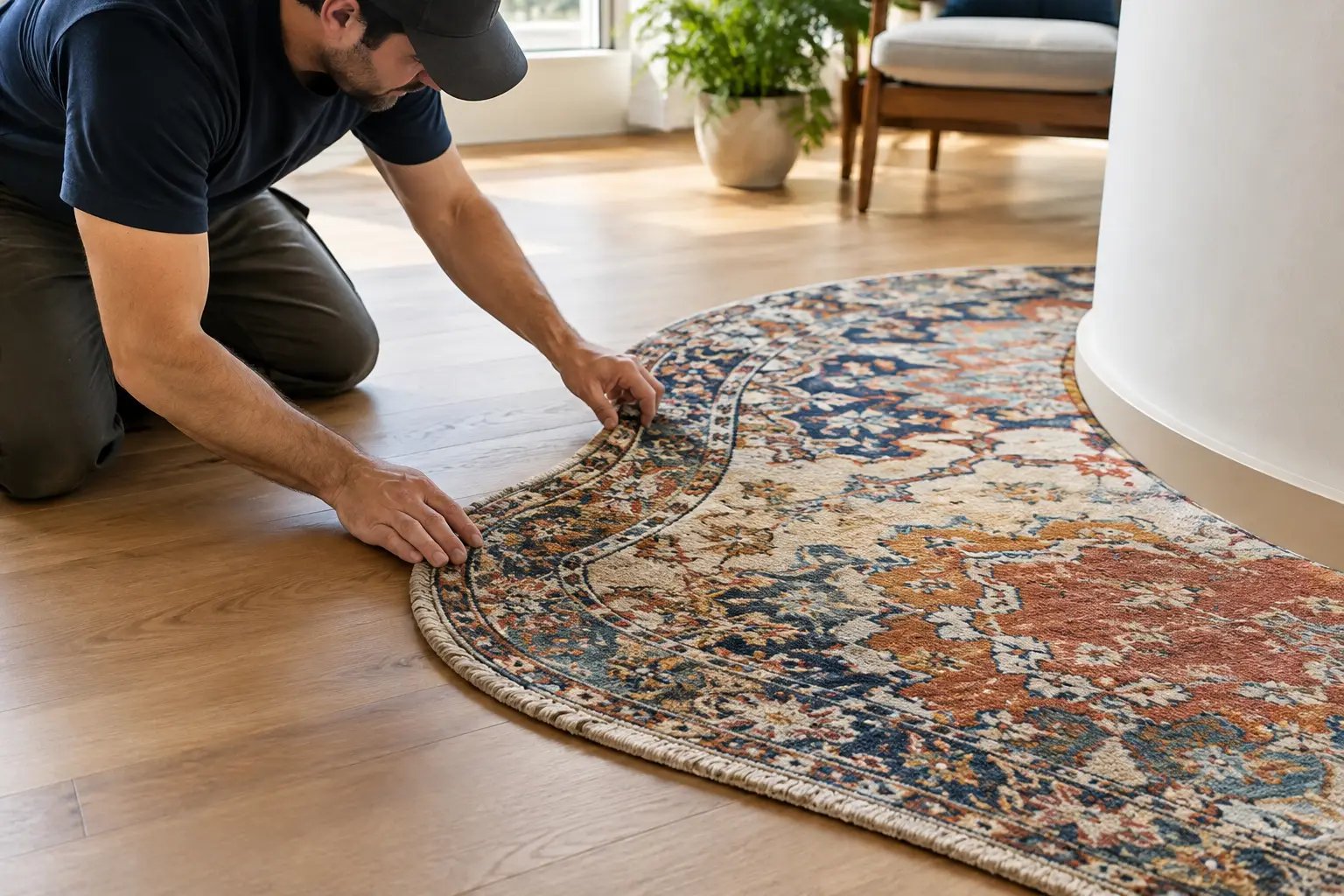
A custom pad is cut to match the actual dimensions and shape of the rug. It is normally trimmed about 1 inch inside the rug’s outer edge on each side, so the pad supports the field of the rug without showing around the border. For an 8-by-10-foot rectangular rug, that means the pad is generally closer to 7 feet 10 inches by 9 feet 10 inches.
That small setback matters. A pad that reaches the edge can make corners roll upward or leave a visible line around the rug. A pad that is much too small leaves the edges unsupported, which can cause the perimeter to bend down, ripple, or wear sooner than the center.
Custom sizing is even more useful for runners, rounds, ovals, hearth rugs, and rugs made for a particular room. It is also practical when a rug has been resized, bound, or repaired. A prepackaged rectangle may be close enough for an inexpensive temporary rug, but it often does not fit a handmade or unusually shaped piece correctly.
Which pad material belongs under your rug?
There is no single pad material that belongs under every rug. The answer depends on the floor finish, the rug’s weight, and whether the main goal is grip, cushioning, floor protection, or all three.
Natural rubber and felt combinations are a common choice for rugs on hard surfaces. The rubber side helps resist movement while the felt side adds density and cushioning. A dense felt pad is often a thoughtful option under heavy wool rugs because it supports the rug without adding a squishy feel that can make furniture unstable.
For a low-profile rug in a doorway or under a door with limited clearance, a thinner pad may be necessary. The pad still needs enough density to keep the rug from sliding and to protect the fibers, but thickness has to fit the room. Measure the clearance by opening the door slowly over the rug area. If the door catches, do not force it or simply remove the pad. The rug may need a lower-profile pad, a different placement, or professional adjustment.
Some older pads are made with plastics, adhesives, or rubber compounds that can stick to certain finishes over time. This is one reason a pad should be selected with the specific floor in mind. If you are unsure what finish is on a wood floor, especially in an older home or a recently refinished room, ask the flooring installer or manufacturer before placing a pad.
How thick should a custom rug pad be?
For most living rooms and bedrooms, a pad around one-quarter inch thick provides useful cushioning without making the rug feel unstable. A thinner option may be better for a low-pile rug, a flatweave, a dining room, or an entry where chair legs, doors, and transitions need to stay level.
Thicker is not automatically better. A very plush pad can make a rug feel soft, but it may also allow dining chairs to rock, create a raised edge, or put extra stress on delicate rugs when heavy furniture sits on top. Under a fine antique rug, a dense, supportive pad is usually more appropriate than a thick, springy one.
The rug itself also affects the decision. A substantial hand-knotted wool rug already has weight and body. A lighter cotton flatweave, viscose rug, or small accent rug may need more grip. Silk and viscose deserve extra care because their pile can crush and their fibers can be more sensitive to friction, moisture, and aggressive handling.
Can an old rug pad damage a rug or floor?
It can. Pads eventually compress, shed, harden, or lose their grip. A pad that once held a rug firmly may become smooth enough for the rug to travel several inches over a week. If you find yourself straightening the same rug every few days, inspect the pad instead of blaming the rug alone.
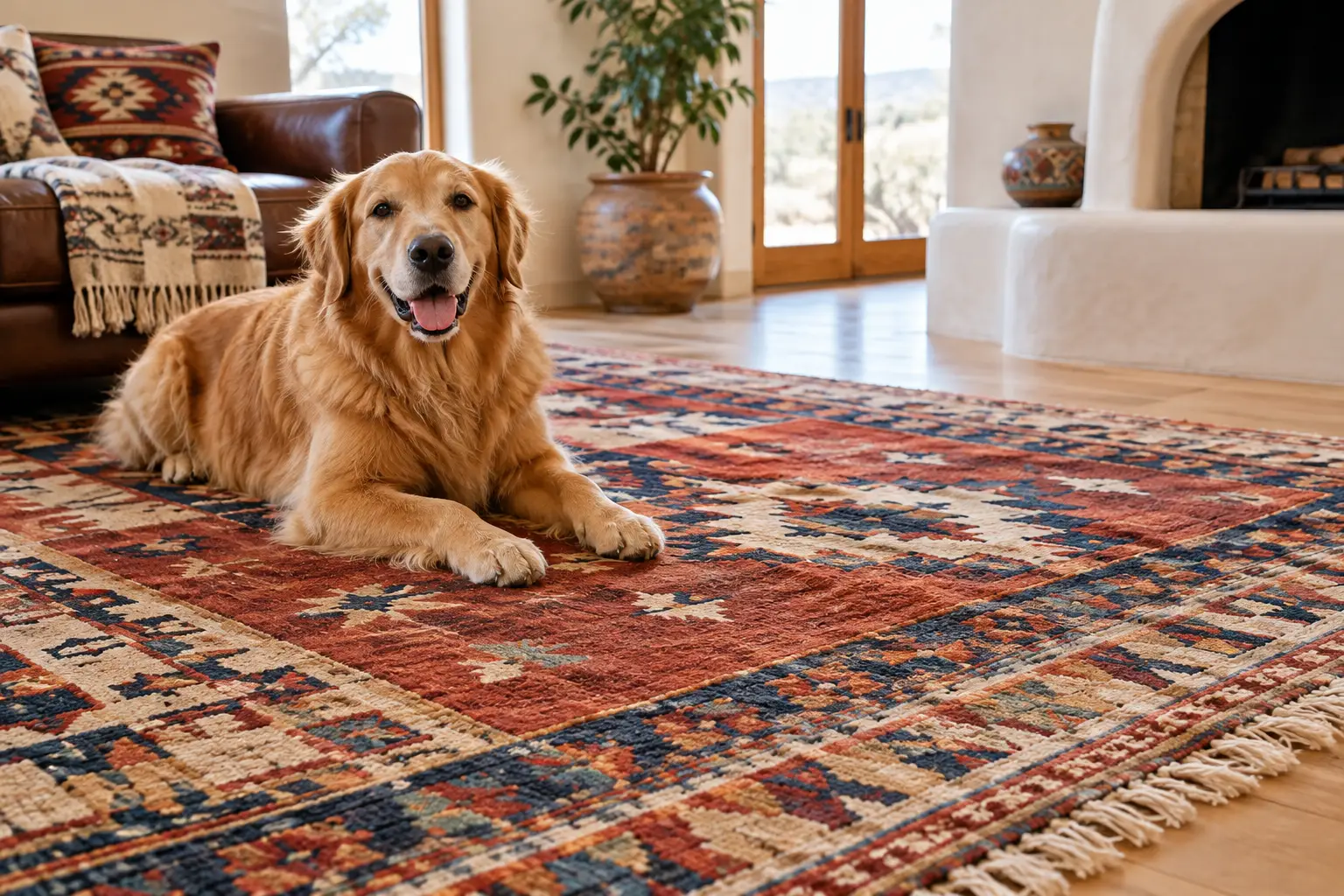
Look beneath the rug once or twice a year, or every three to six months in a busy entry or pet area. Check for crumbling material, a tacky surface, discoloration on the floor, mildew odor, pet accidents, and embedded debris. Vacuum the floor and the pad surface carefully before putting the rug back down. Do not vacuum fringe with a beater bar, and do not pull a rug across the floor to reposition it. Roll it with help when it is large or heavy.
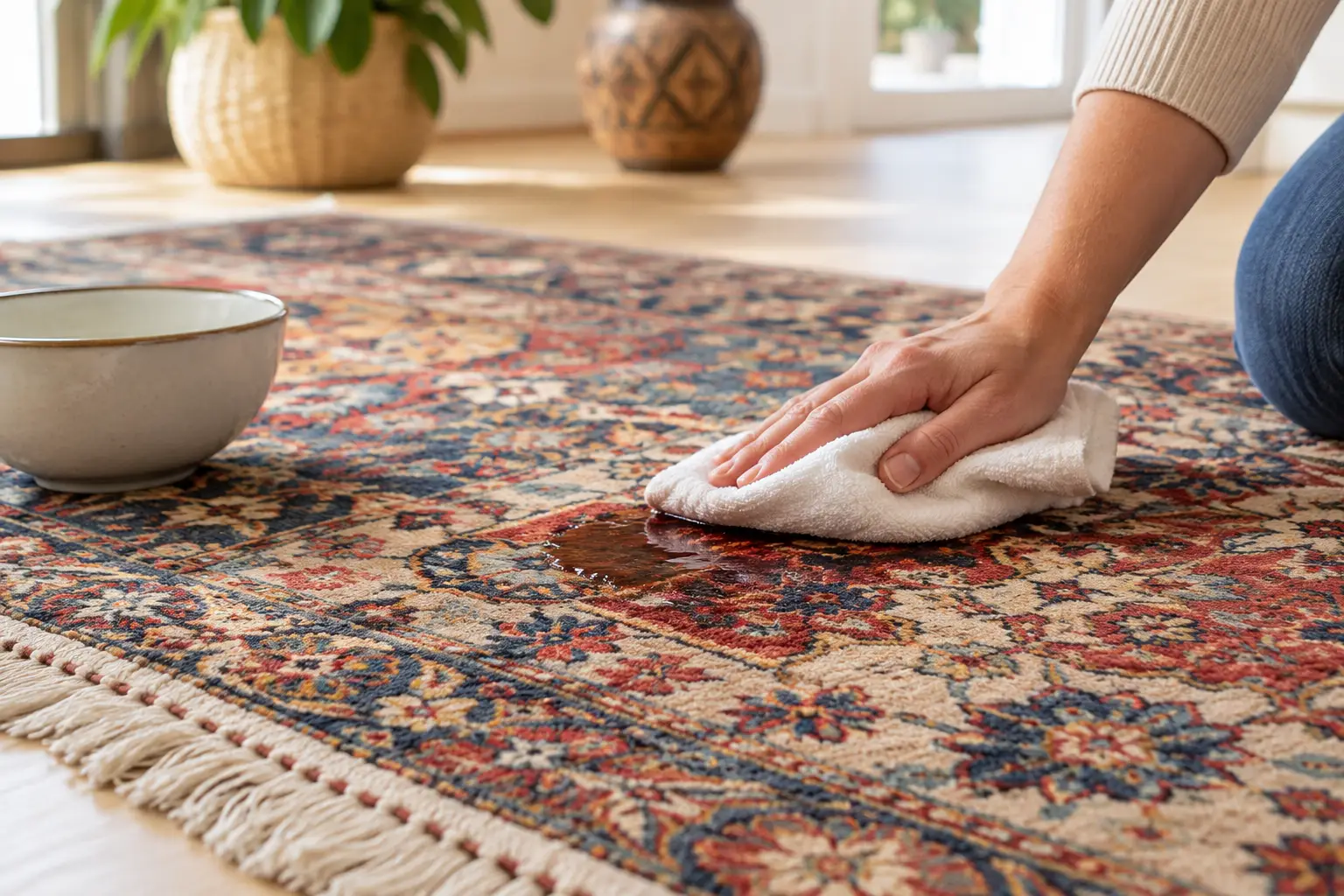
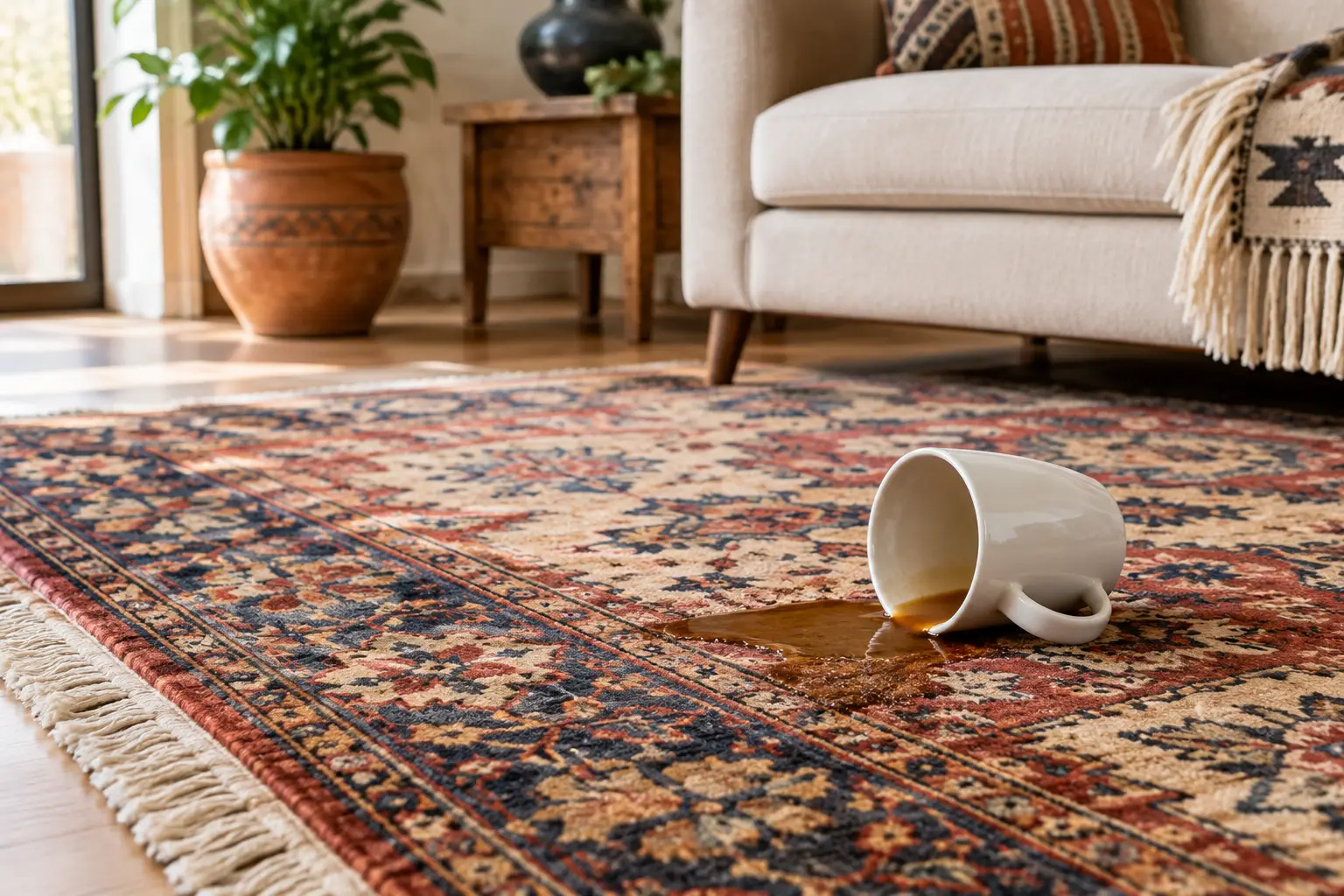
Pet urine is a separate concern. A pad can absorb urine and hold odor even after the rug looks clean on the surface. Blot a fresh accident promptly with clean white towels and avoid saturating the rug with household cleaners. If urine has reached the pad or backing, the rug and pad may both need professional evaluation. Odor treatment needs to reach the affected materials, not merely cover the smell.
When should a rug and pad be handled by a specialist?
Call for professional guidance when a rug has bleeding colors, a musty odor, pet contamination, moth activity, brittle fringe, loose edges, or a sticky old pad beneath it. Those are not good candidates for a rental machine, steam cleaning, or a strong spot treatment. Water, heat, and the wrong cleaning chemistry can change dyes, shrink foundations, or damage delicate fibers.
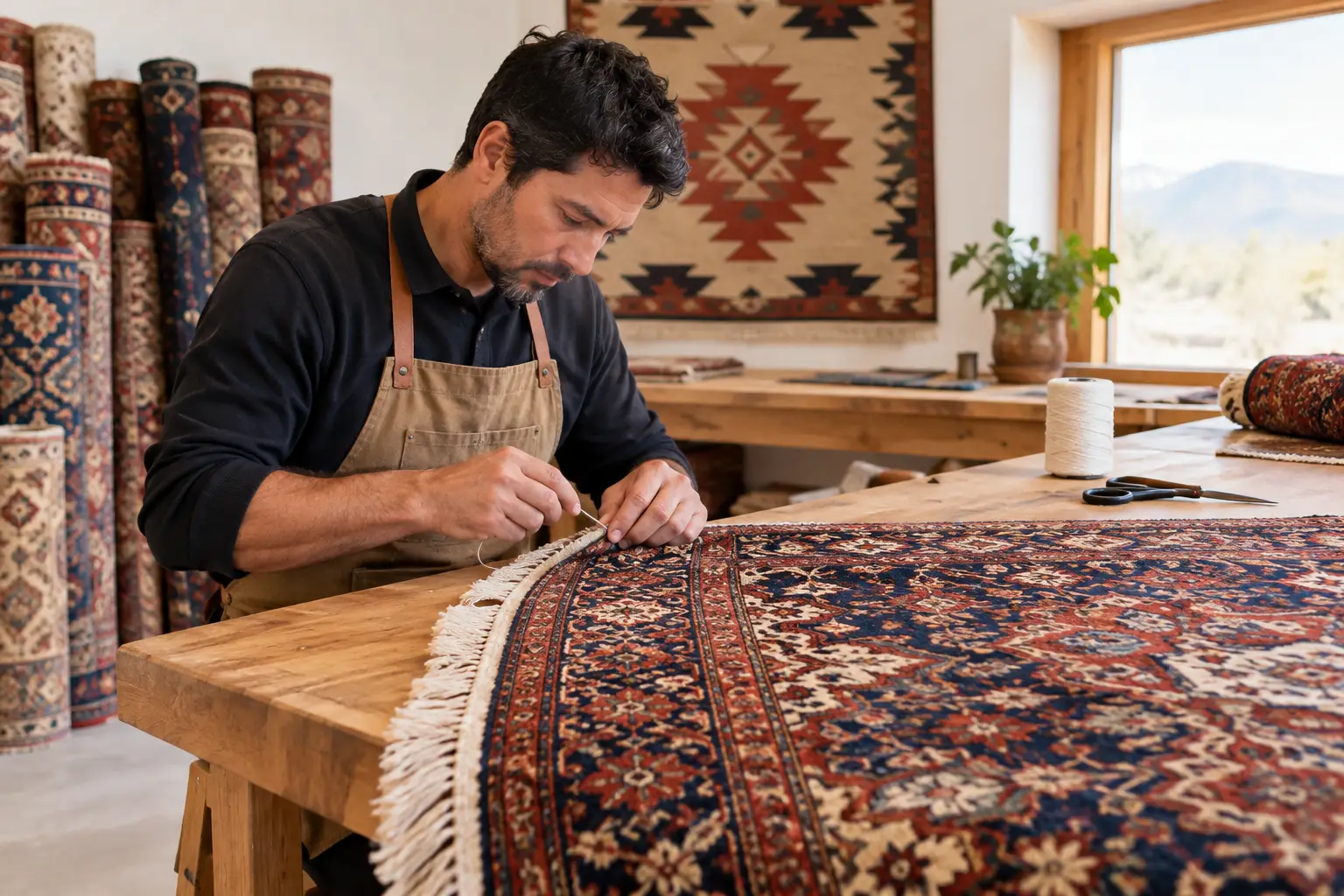
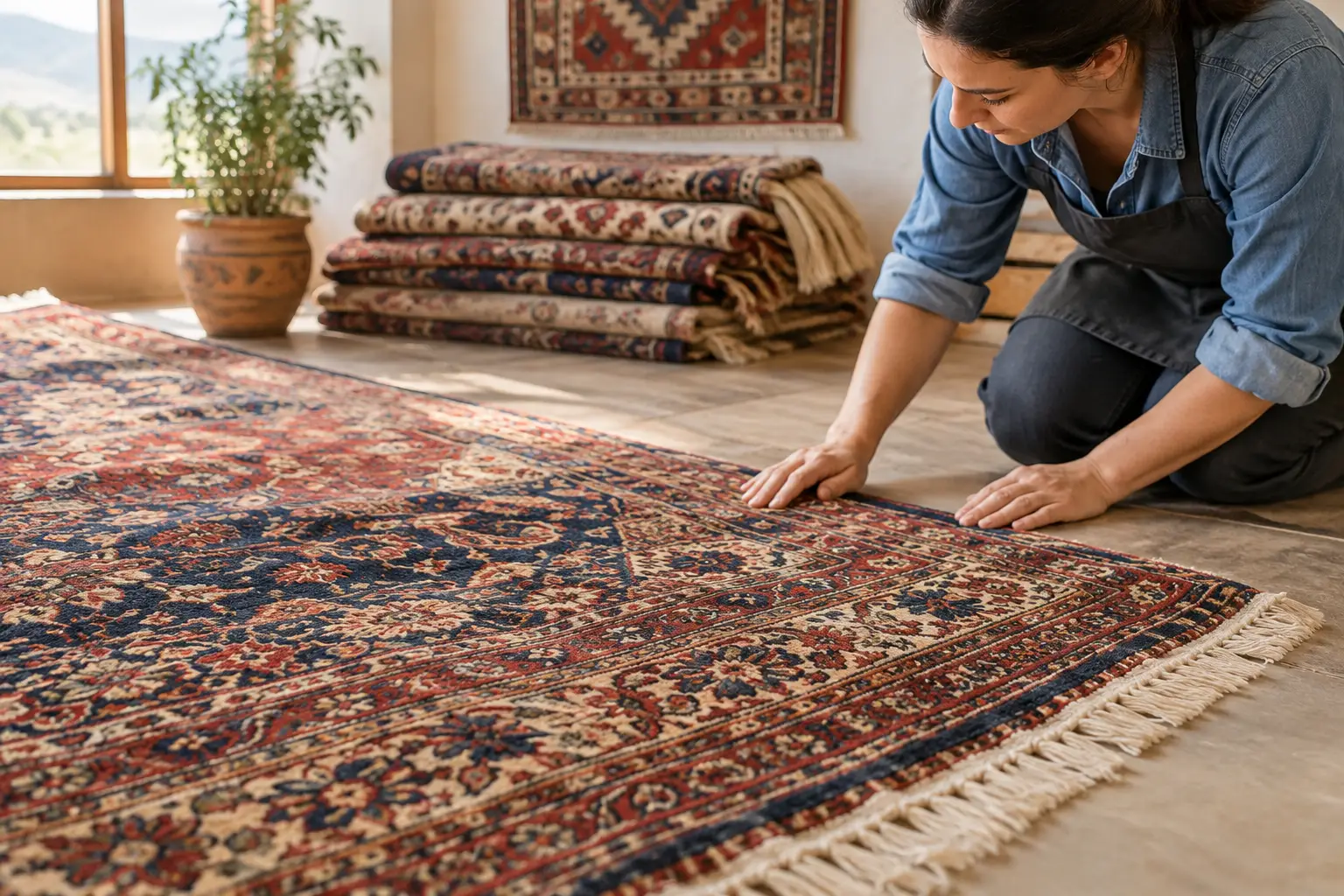
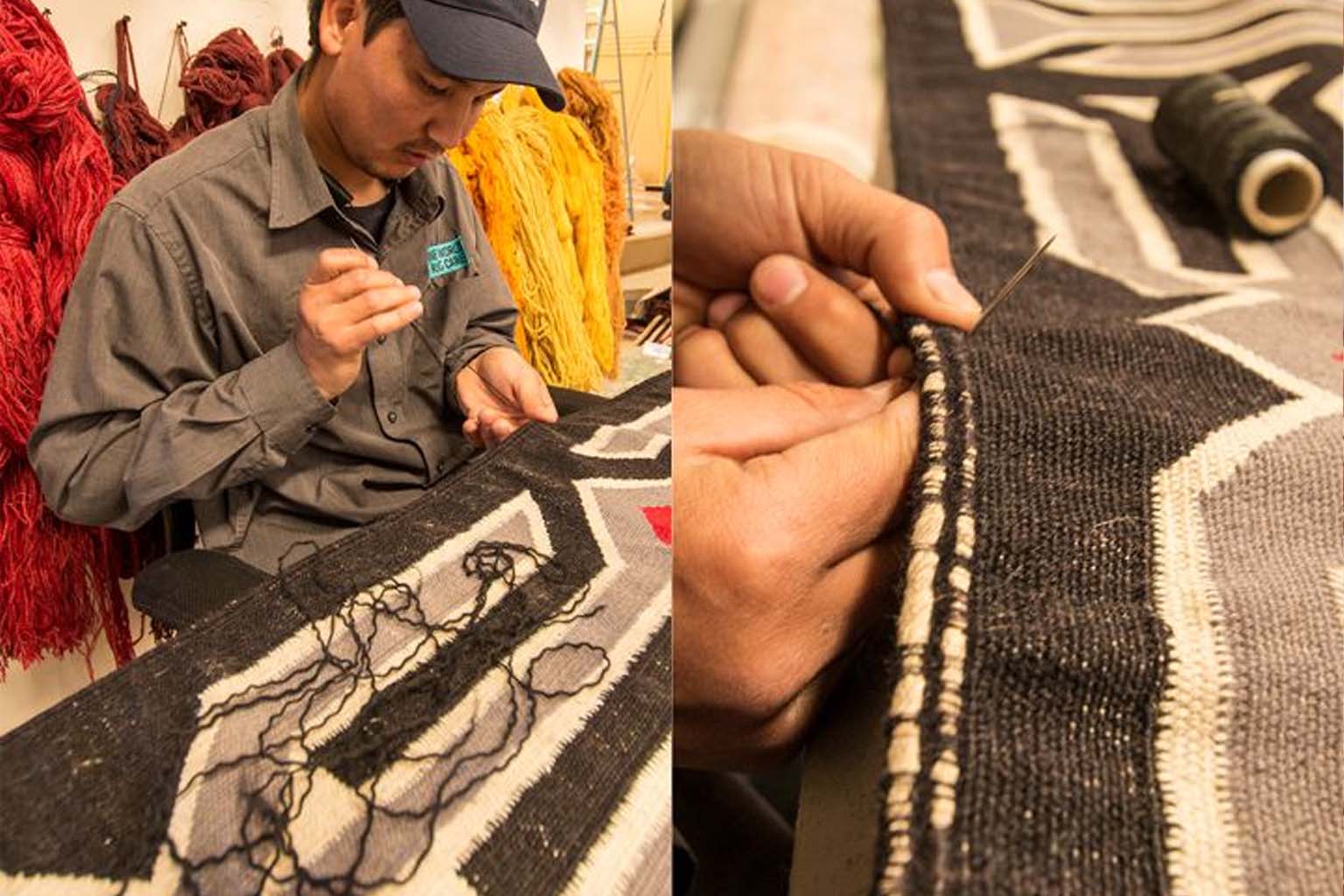
A specialist can inspect the rug’s construction and decide whether cleaning, odor treatment, repair, padding, resizing, or binding should come first. At One World Rug Care, rugs are inspected and dye-tested before being cleaned in the shop with methods suited to the material. That is particularly valuable for handmade, antique, Navajo, Southwest, silk, viscose, and wool rugs whose needs are not visible from the top surface alone.
Custom fitting can also help when a rug does not quite work in its room. A rug that is too long for a hall, too wide for an entry, or irregularly shaped around built-ins may need professional sizing and binding before a pad is made. The aim is a rug that lies flat, looks intentional, and has support where it needs it.
Rug Care in Albuquerque and Northern New Mexico
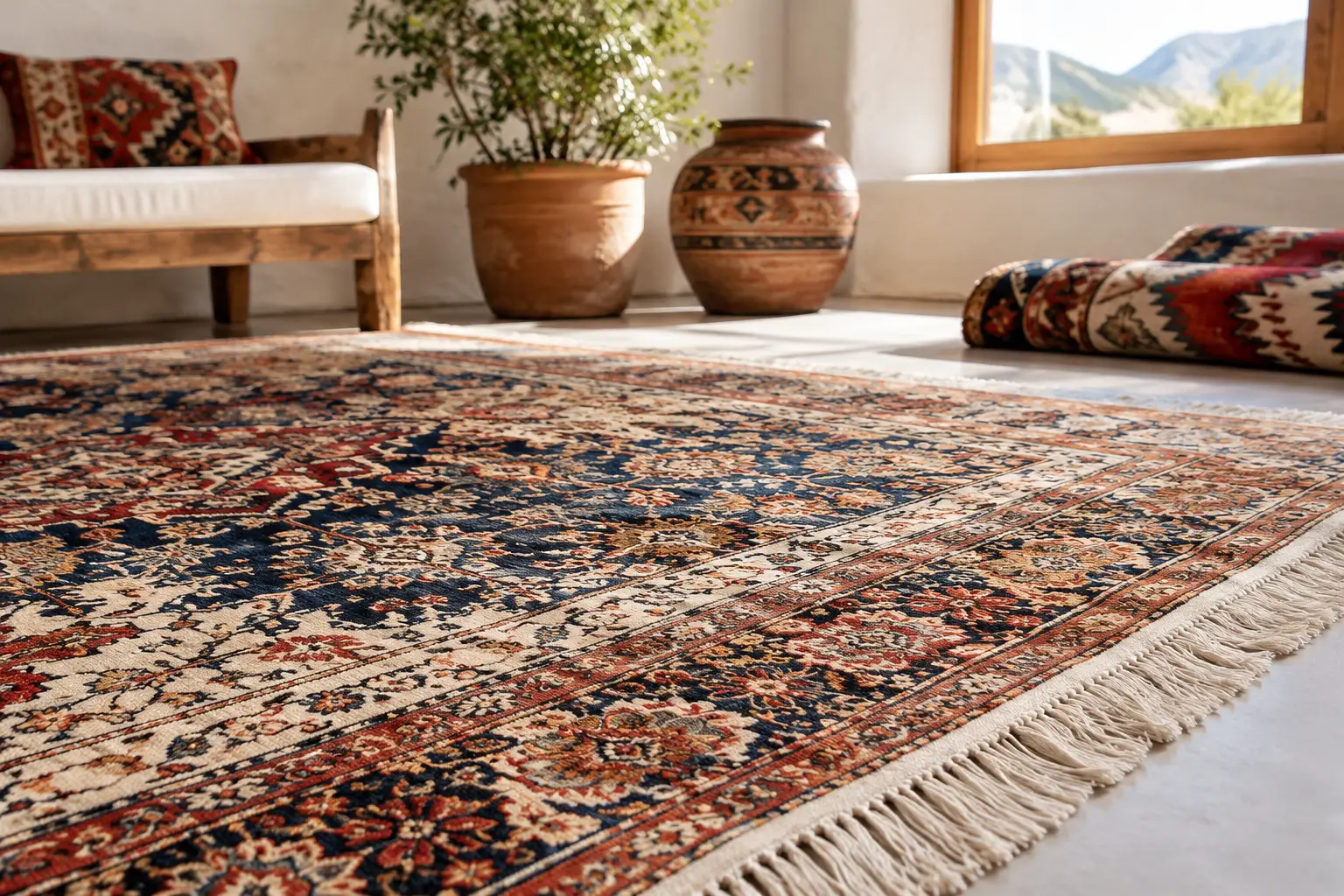
A properly fitted pad is quiet protection for the rug and the floor beneath it.
Have a rug that needs care? One World Rug Care has been cleaning, repairing and protecting area rugs in Albuquerque since 2012. Email a few photos of your rug to admin@oneworldrugcare.com for a free estimate, call us at (505) 821-0302, or visit the shop at 7200 Jefferson St NE, Suite A, Monday to Saturday 9 to 5. Pickup and delivery is free in Albuquerque and Santa Fe on orders of $150 or more, and available in Taos, Durango, Pagosa Springs and Las Cruces.