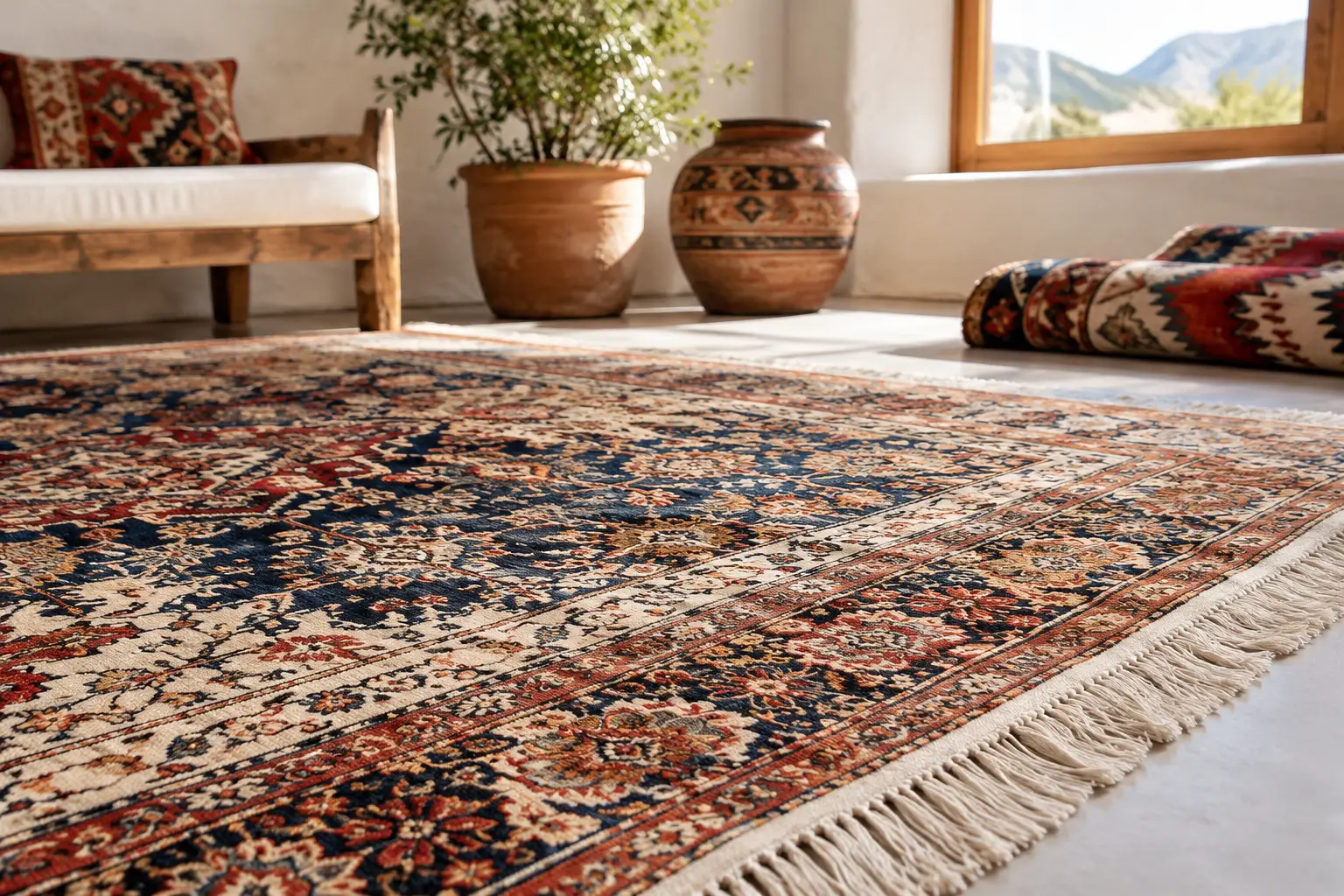
Area rug pickup and delivery lets a specialist move your rug safely from your home to a proper wash facility and return it when the work is complete. It is especially useful for large, heavy, delicate, or valuable rugs that should not be cleaned in place.
A hand-knotted Persian rug, a Navajo textile, or even a large wool rug under a dining table can be awkward to move without bending, dragging, or catching fringe. Pickup service takes that part of the job off your hands while giving the rug the careful cleaning environment it needs.
How does area rug pickup and delivery work?
The process usually begins with a few smartphone photos. A clear full-rug photo, close-ups of stains or damage, and a picture of the back can help identify the rug’s likely fiber, construction, and condition before pickup is arranged. If you know the rug’s age, where it was purchased, or whether it has been exposed to pet urine or water, that information is helpful too.
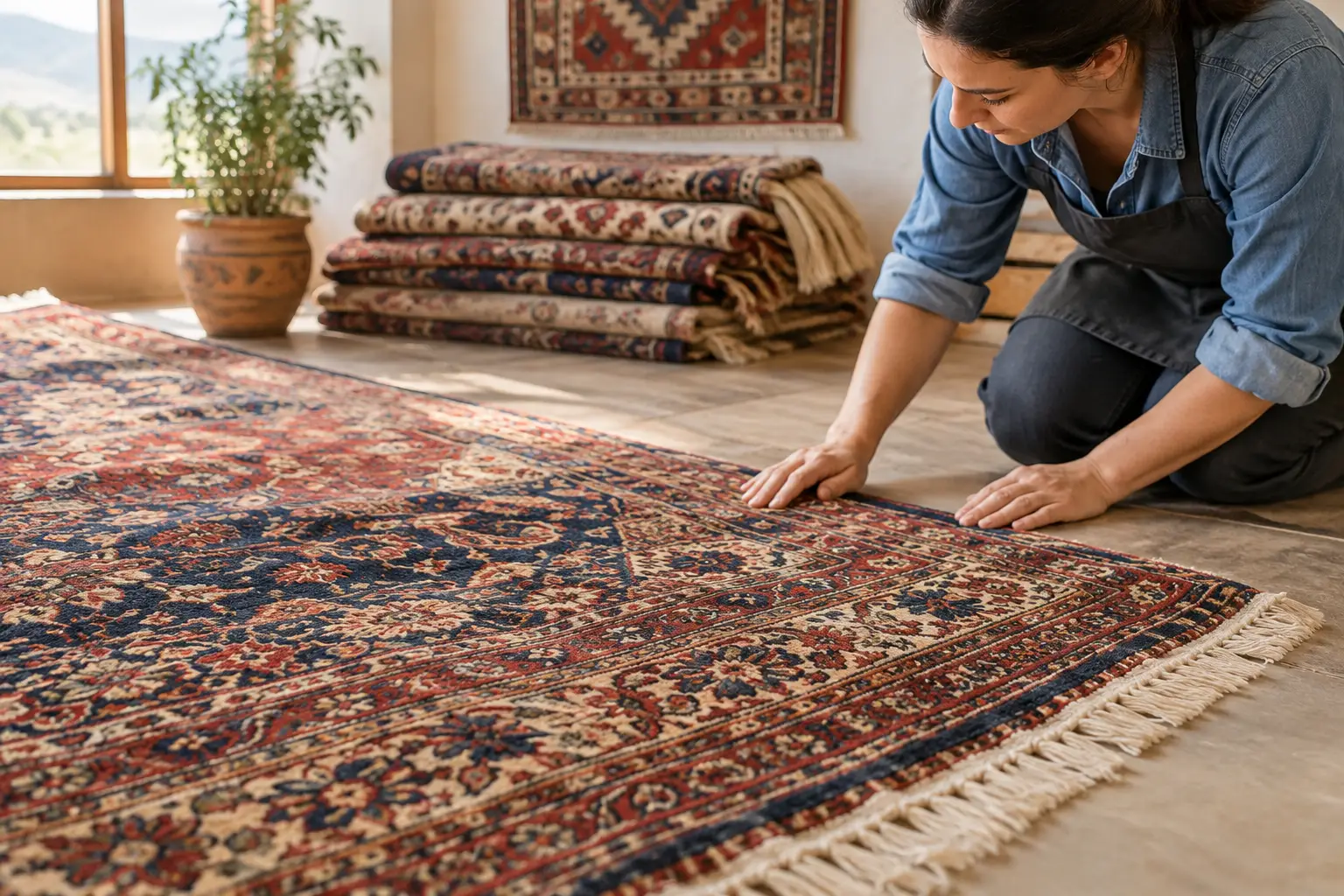
At pickup, the rug is assessed for visible concerns such as worn edges, loose fringe, stains, odor, fading, moth activity, or previous repairs. A careful handler will roll the rug rather than fold it. Folding can put stress on older foundation fibers, create hard creases in some materials, and complicate the handling of rugs with brittle fringe or worn areas.
Once the rug reaches the shop, it can be inspected more closely under proper lighting. That matters because surface dirt, dye instability, and old spills are not always apparent in a living room. Pickup and delivery are free on orders of $150 or more throughout Albuquerque, Santa Fe, Taos, Corrales, Rio Rancho, Placitas, Farmington, Durango, and Pagosa Springs.
What should I do before my rug is picked up?
Clear lightweight furniture, lamps, baskets, and breakable objects from the rug if possible. If a large piece of furniture sits on it, mention that when arranging service so the pickup can be planned appropriately. You do not need to scrub a spill or try to deodorize a pet accident before the rug leaves.
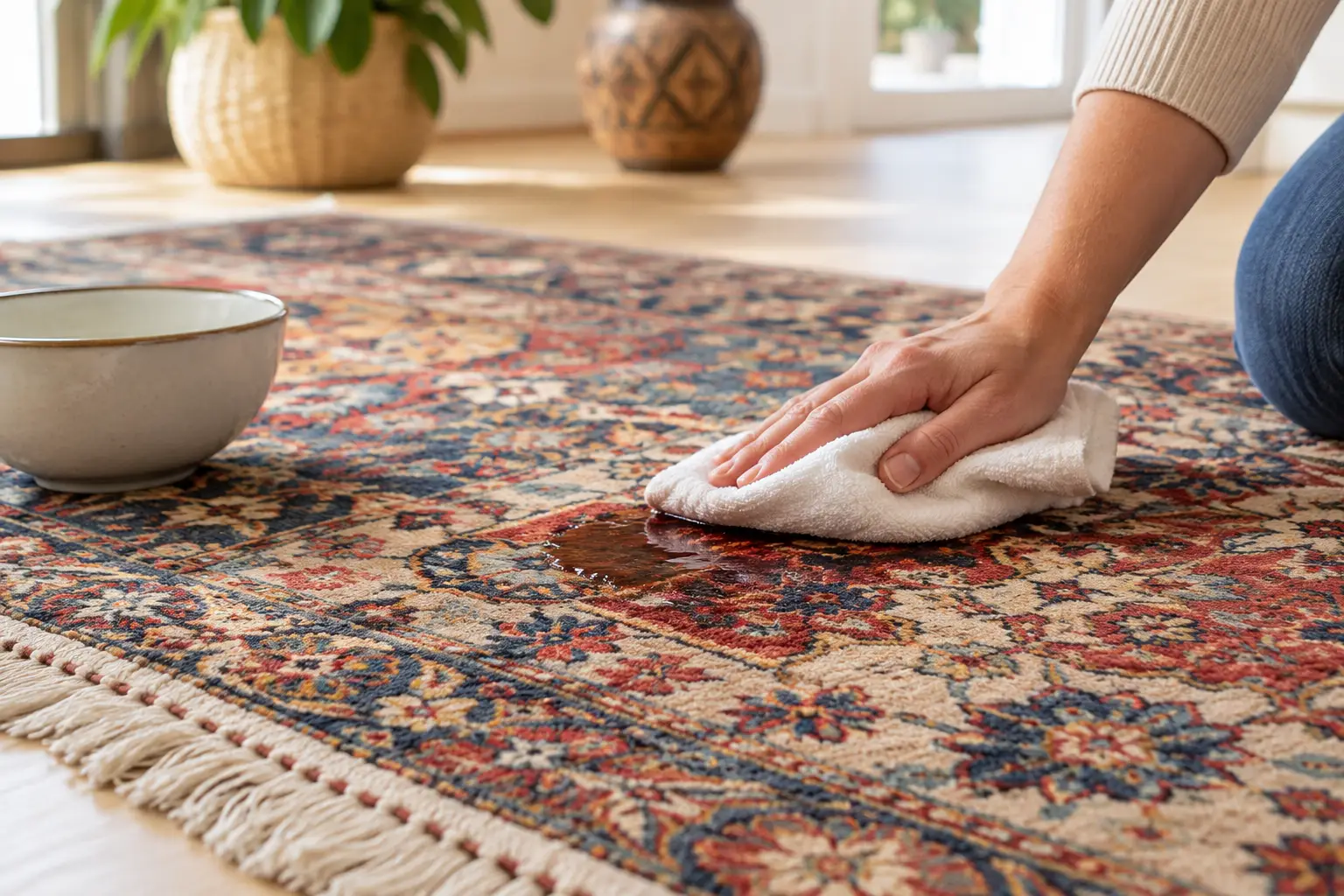
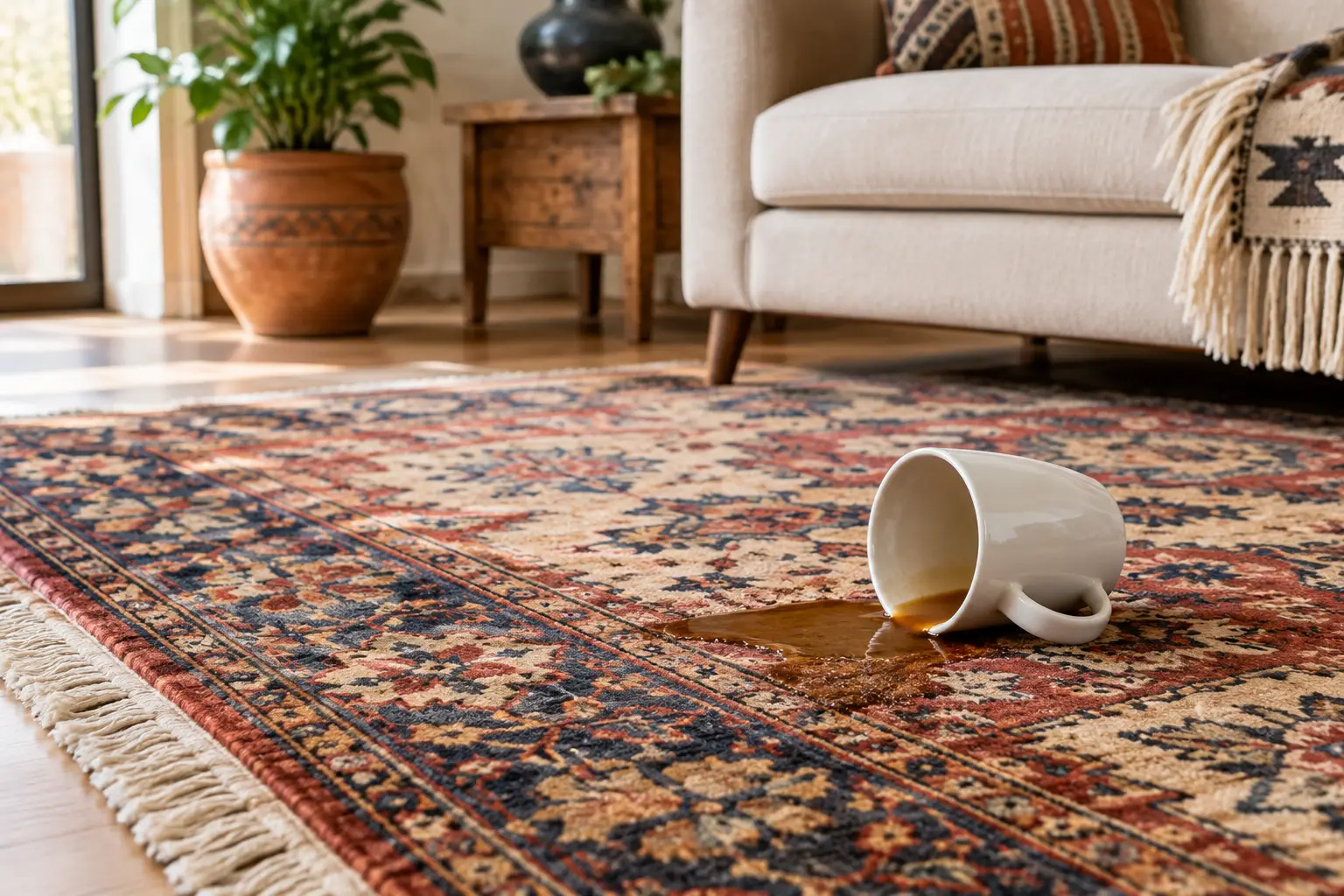
For a fresh liquid spill, blot gently with a clean white towel to lift what you can without rubbing it deeper into the pile. Keep pets and foot traffic away from the damp area. Avoid household spot removers, vinegar mixtures, powders, and scented sprays unless a rug specialist has advised you otherwise. These products can leave residue, set a stain, affect dyes, or make professional odor treatment more difficult.
If the rug has pet urine exposure, point out every known area, even if it looks clean. Urine can travel through the pile and foundation to the rug pad or floor below. The visible mark may be smaller than the affected area, and odor often becomes more noticeable during humid weather or after the rug is warmed by sunlight.
Why should an area rug be cleaned at a shop instead of at home?
A rug is not simply a small piece of carpet. Its fibers, dyes, backing, and construction determine how it should be cleaned. Wool, cotton, silk, viscose, and synthetic fibers react differently to moisture, agitation, and cleaning solutions. Handmade rugs may also have natural dyes, hand-spun wool, cotton foundations, or repairs that need special attention.
In-home equipment cannot provide the same level of dust removal, controlled washing, rinsing, and drying as a dedicated rug-care shop. Fine dust and grit settle deep in a rug’s foundation over years of use. Vacuuming is valuable routine care, but it cannot remove everything lodged below the surface.
At One World Rug Care, rugs are inspected and dye-tested before cleaning. They are dusted, washed by hand in cool water using material-specific methods, and dried in a climate-controlled room. This approach gives the team time to evaluate color stability and construction rather than treating every rug as though it responds the same way.
The trade-off is that a rug is away from your home while it is being cared for. For many households, that is preferable to rushing a delicate rug through an unsuitable process or trying to manage a heavy wet rug in place. A proper wash and complete drying cycle are particularly important after pet accidents, odor concerns, or heavy soil.
What happens if the rug has damage or an old stain?
Cleaning often reveals a rug’s true condition. Dirt can hide worn pile, weak edges, insect damage, previous color loss, and old repairs. A stain may also prove to be something more complicated, such as a color change caused by a spill, sunlight, or a cleaning product used years earlier.
This does not mean every problem can be reversed. Some stains permanently alter fibers, and sun fading cannot always be corrected without careful color work. An honest inspection should distinguish between soil that can be washed out, damage that can be repaired, and changes that may remain part of the rug’s history.
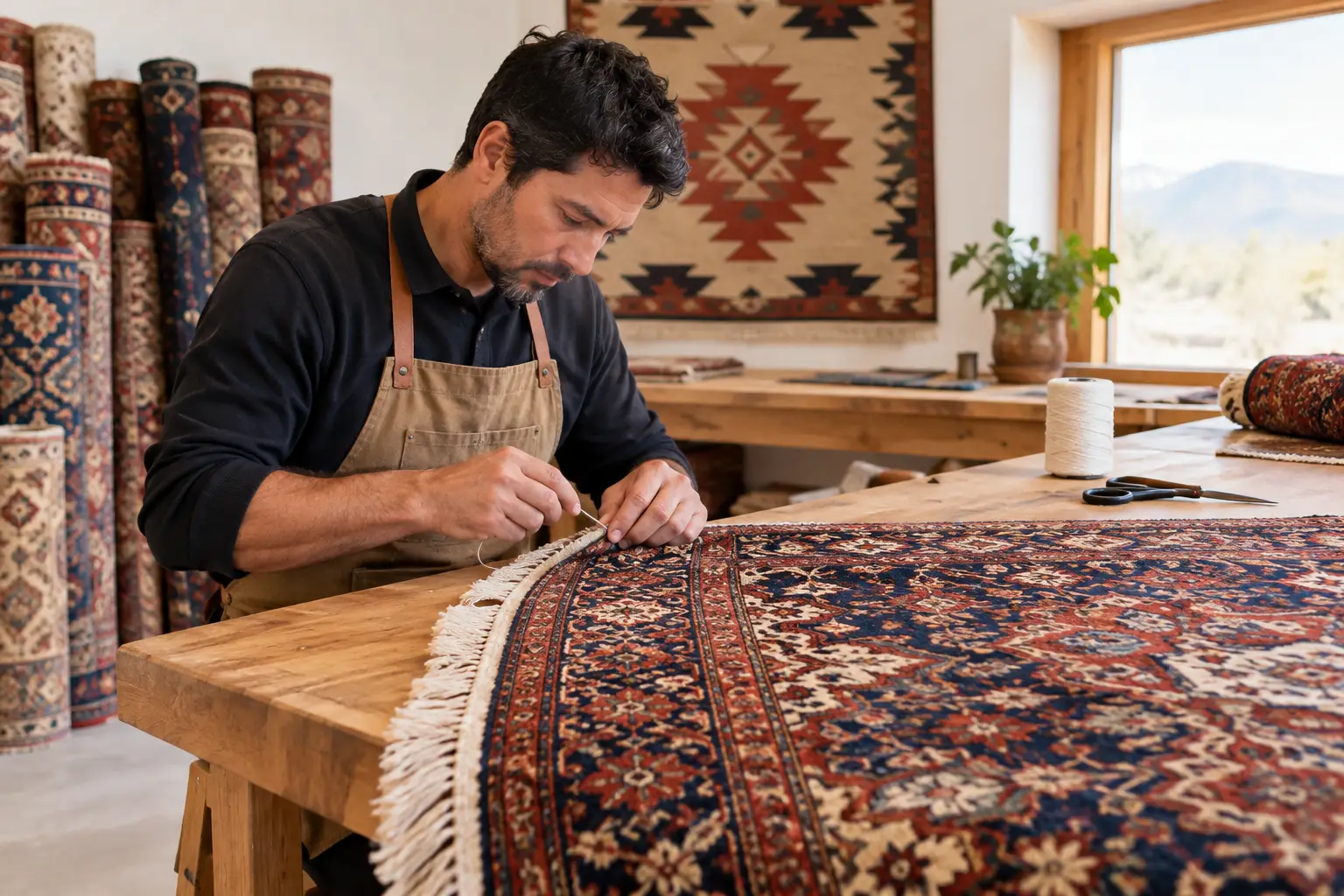
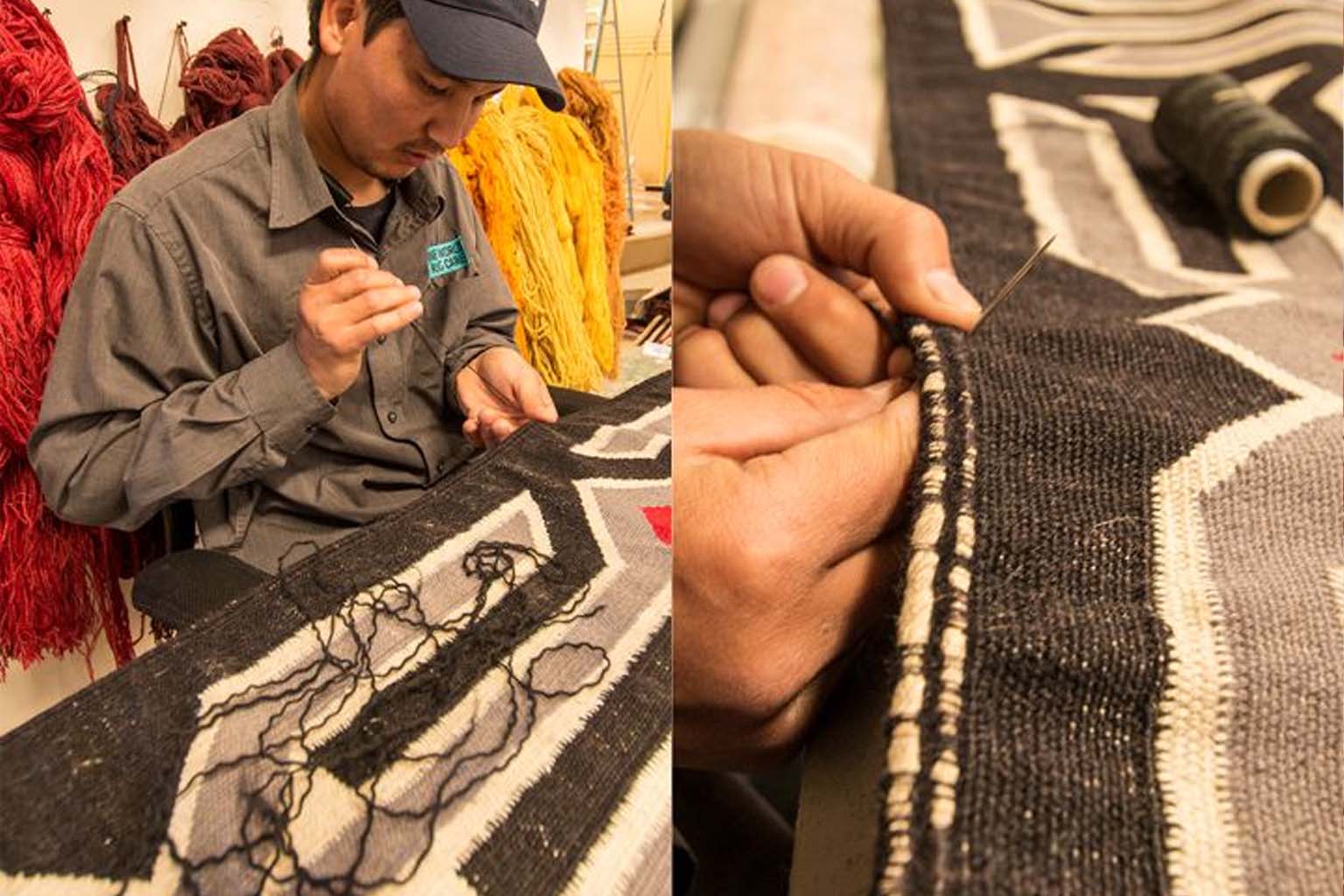
Fringe, side cords, holes, and separated seams can often be repaired before they become larger problems. Moth damage also deserves prompt professional attention, since larvae feed on animal fibers such as wool and silk. If you see irregular bare patches, loose fibers, or tiny web-like material, avoid shaking the rug indoors and arrange an inspection.
How are rugs returned after cleaning?
Before delivery, the rug should be fully dry and ready to return to use. If repairs, odor treatment, color correction, or rug protection were recommended, those services are completed as part of the planned care. When the rug comes home, it is a good time to look at the rug pad as well.
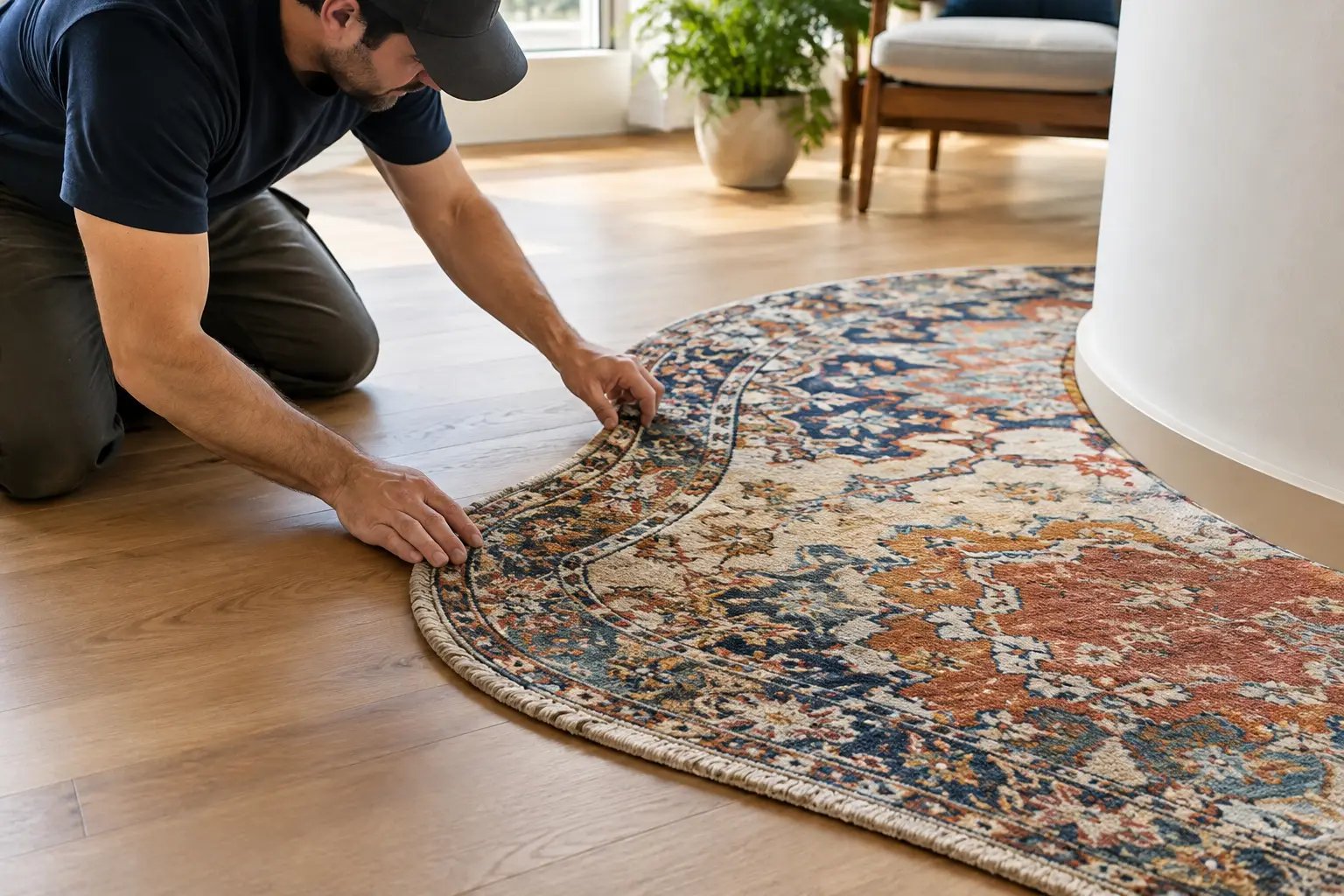
A pad that is crumbling, sticky, too small, or not suited to the floor beneath the rug can contribute to slipping and uneven wear. A properly sized pad adds cushioning, helps the rug lie flat, and reduces movement. For hardwood or other finished floors, the pad should be chosen with the floor surface and rug type in mind.
After return, rotate rugs in high-traffic areas about every six to 12 months when practical. This helps distribute foot traffic and sunlight exposure. Vacuum regularly, but use extra care around fringe and avoid aggressive beater bars on delicate handmade rugs. If a new spill occurs, blot it promptly and call before experimenting with a cleaner.
When is pickup service especially useful?
Pickup is practical for any rug that is difficult to move, but it is particularly helpful for second-home owners, collectors, and households managing several rugs at once. It also makes sense when a rug is under a bed or dining table, when stairs make carrying unsafe, or when a family is handling an inherited rug and wants a professional opinion before deciding what to repair, keep, donate, or sell.
Designers and property managers may also need rugs picked up for cleaning before installation, resizing, binding, or fitting. In those cases, careful measurements and clear notes about the room can prevent surprises when the rug returns.
For a valuable handmade or antique rug, convenience is not the only reason to use pickup. The way a rug is rolled, transported, inspected, washed, dried, and returned is part of its long-term care. A few minutes spent sharing the rug’s history and concerns at the beginning can guide better decisions throughout the process.
Rug Care in Albuquerque and Northern New Mexico
Pickup and delivery give your rug a safer path to the specialized attention it may need, without asking you to wrestle with a heavy roll or take chances with home cleaning methods.
Have a rug that needs care? One World Rug Care has been cleaning, repairing and protecting area rugs in Albuquerque since 2012. Email a few photos of your rug to admin@oneworldrugcare.com for a free estimate, call us at (505) 821-0302, or visit the shop at 7200 Jefferson St NE, Suite A, Monday to Saturday 9 to 5. Pickup and delivery is free in Albuquerque and Santa Fe on orders of $150 or more, and available in Taos, Durango, Pagosa Springs and Las Cruces.