Pet urine odor removal rugs require treatment of the contamination below the surface, not just a fragrance or spot cleaner. When urine reaches the rug’s foundation or pad, odor can return with moisture, warm weather, or a humid monsoon day.
Why do rugs hold pet urine odor?
A rug is not one flat piece of fabric. It has face fibers, a backing or foundation, and often a pad underneath. Urine can travel through all of them in seconds, especially in an absorbent wool rug or a thick hand-knotted rug with a dense pile.
As urine dries, it leaves behind salts and organic residue. A room may smell fine for a few days, then the odor becomes noticeable again when the residue draws moisture from the air. That is why a rug can seem clean after a surface treatment but still carry odor at its core.
The amount of urine matters, but so does the rug’s construction. A small accident on a low-pile synthetic rug may be limited to one area. Repeated accidents on wool, cotton foundation, silk, viscose, antique, Oriental, Navajo, or Southwest rugs require a more careful assessment. Those materials can react differently to moisture, cleaning solutions, and agitation.
What does pet urine odor removal for rugs require?
Effective pet urine odor removal for rugs begins by locating the affected areas and determining how far the contamination has traveled. The visible spot is not always the full area of concern. Urine may wick outward in the pile or pass through the rug into the pad and floor below.
The goal is to flush and remove the urine residue rather than cover its smell. Deodorizers may make a room smell better temporarily, but they do not remove the source. If the rug has been exposed more than once, treatment may need to address both the front and back of the rug, along with the pad.
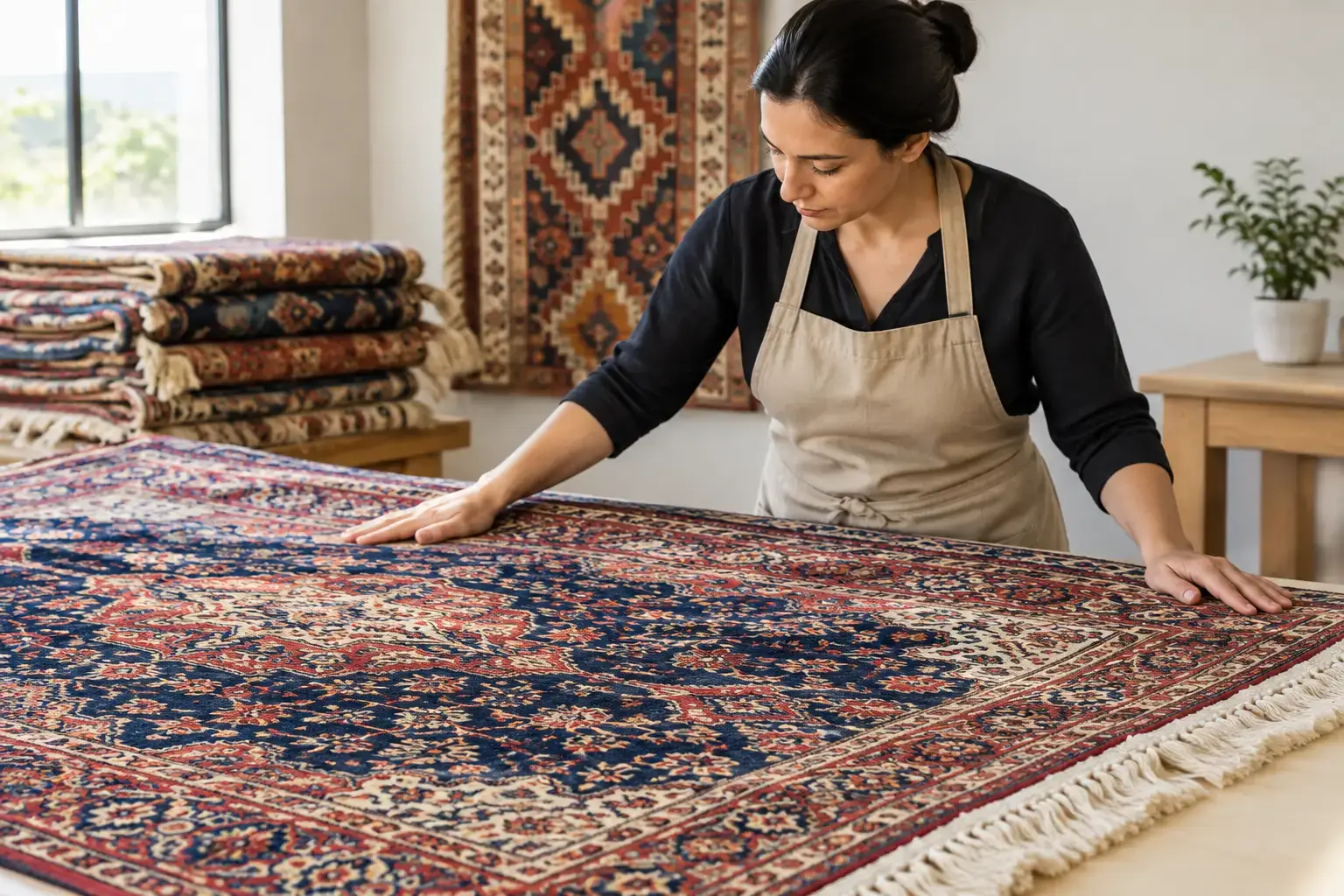
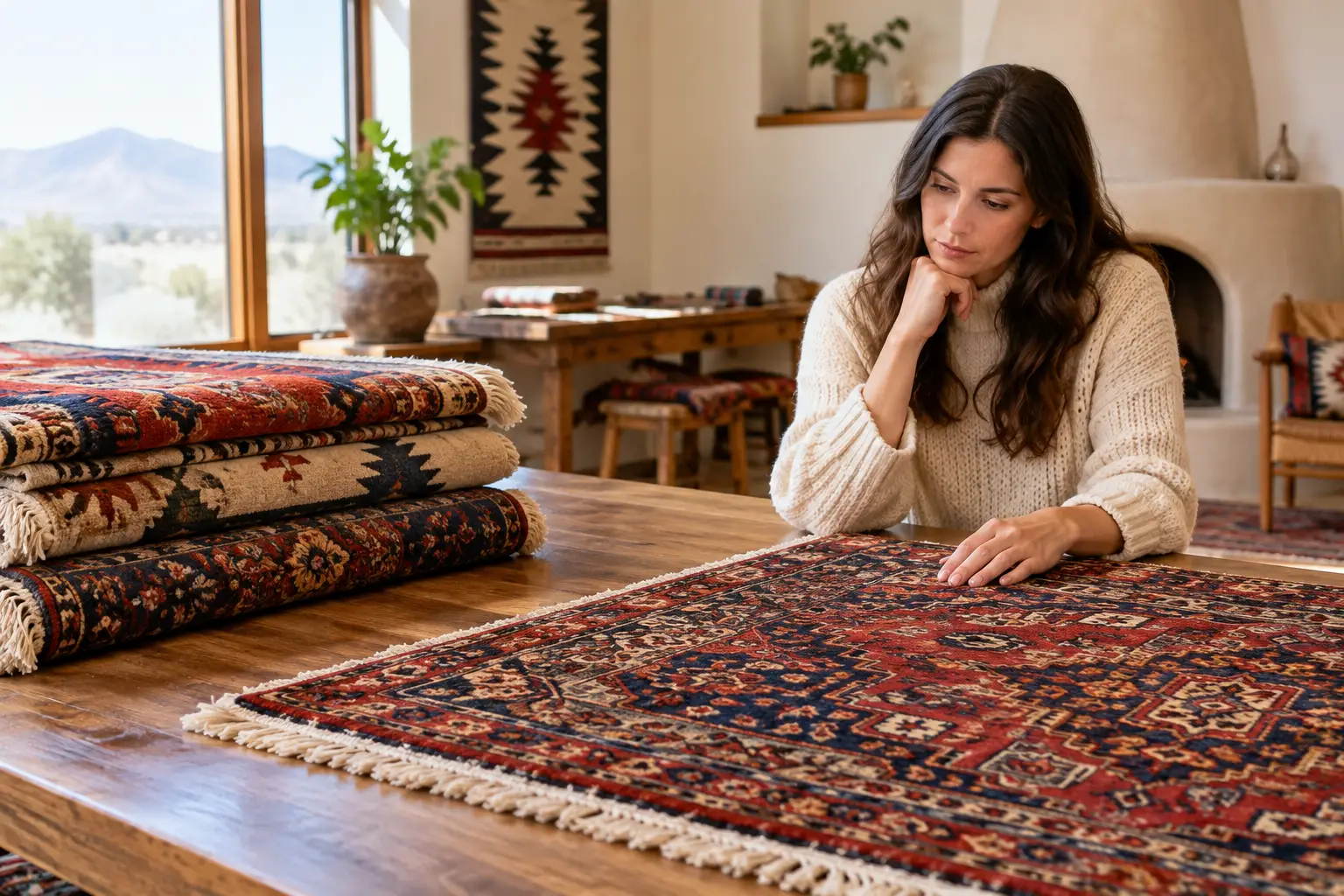
For a valuable or delicate rug, the right method depends on fiber, dye stability, age, construction, and prior cleaning history. Before washing, a specialist should inspect the rug and test its dyes. A handmade wool Persian rug, for example, should not be treated like a machine-made polypropylene area rug. Silk and viscose need even more restraint because fibers can distort, weaken, or develop texture changes when handled incorrectly.
Can I treat a fresh accident at home?
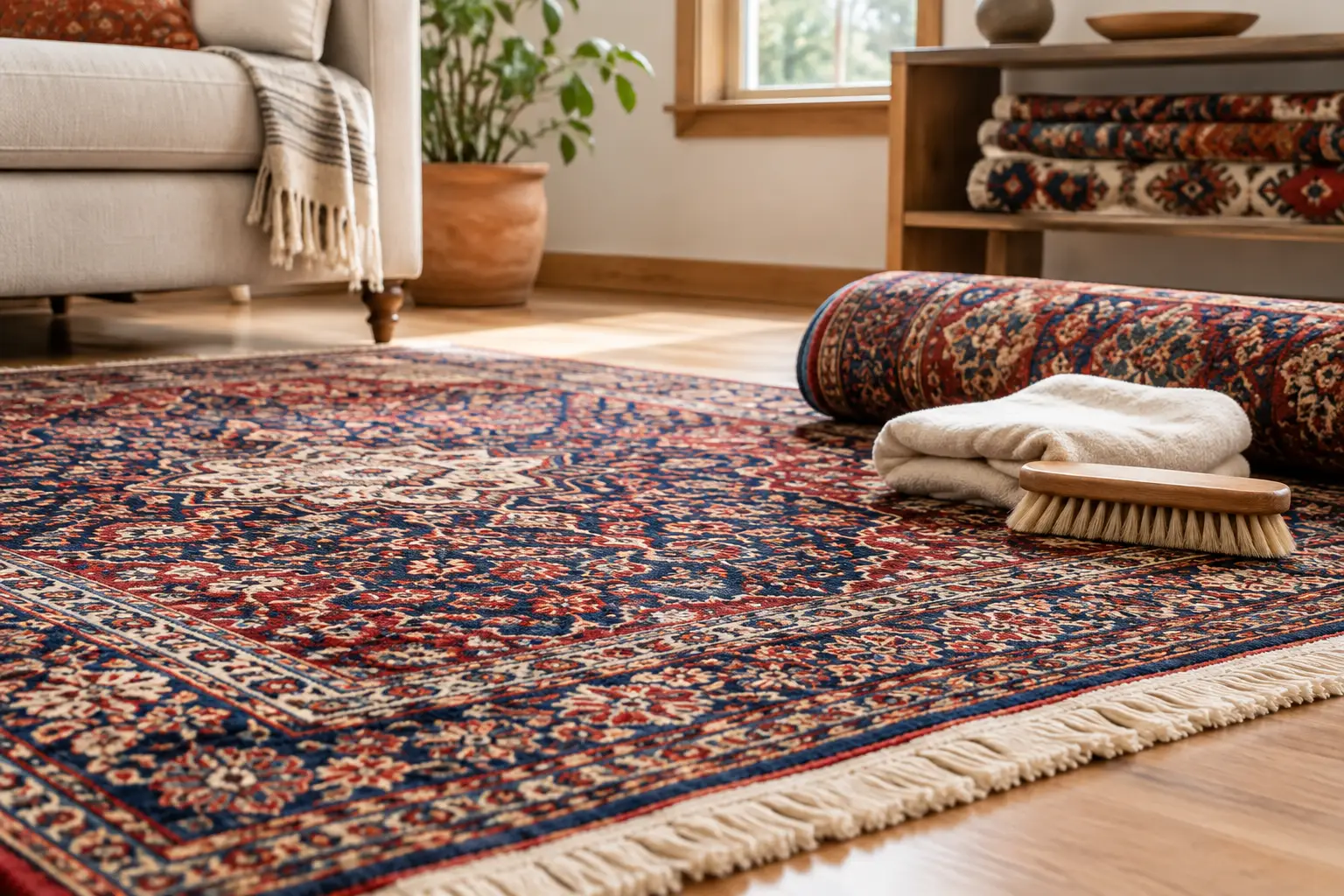
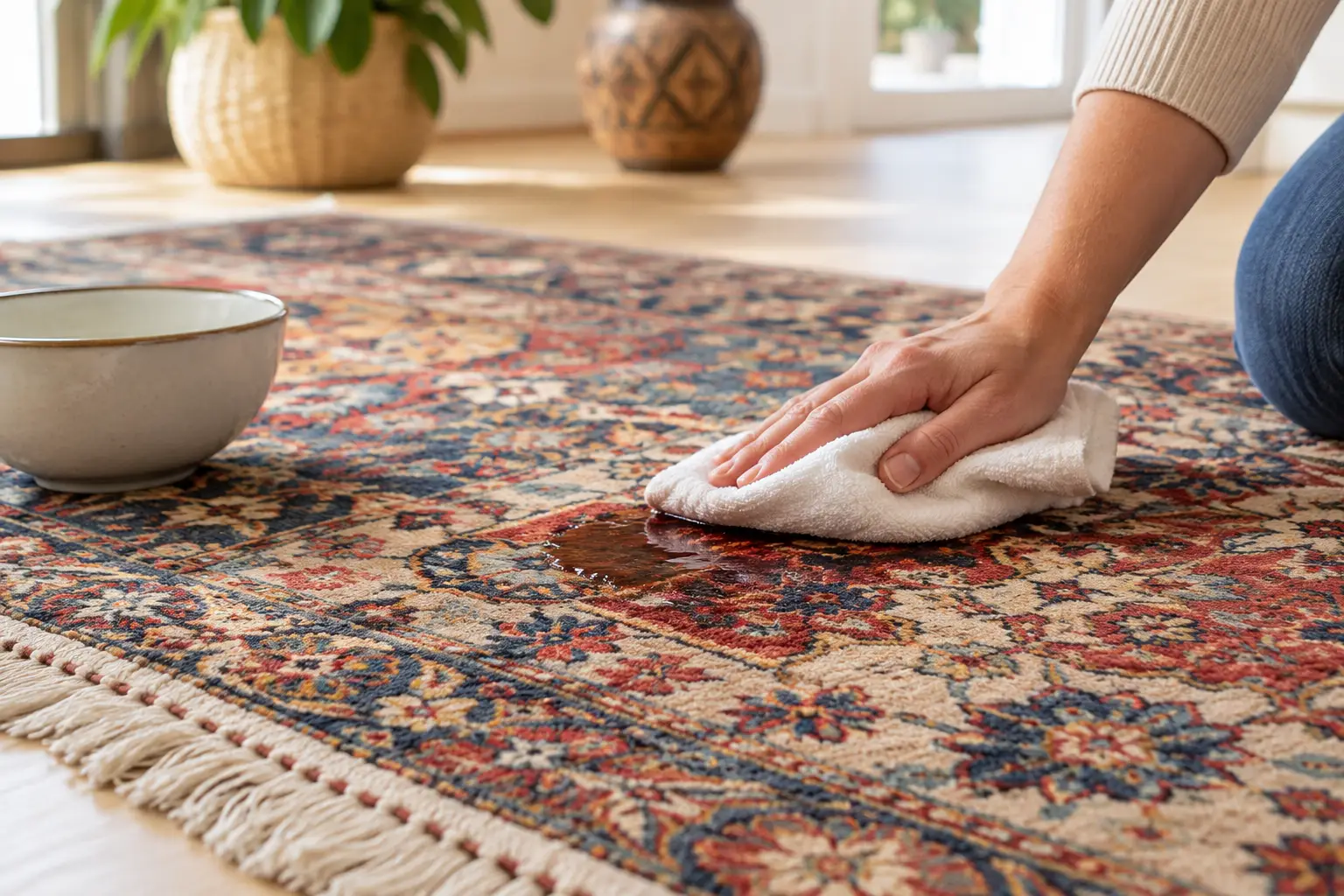
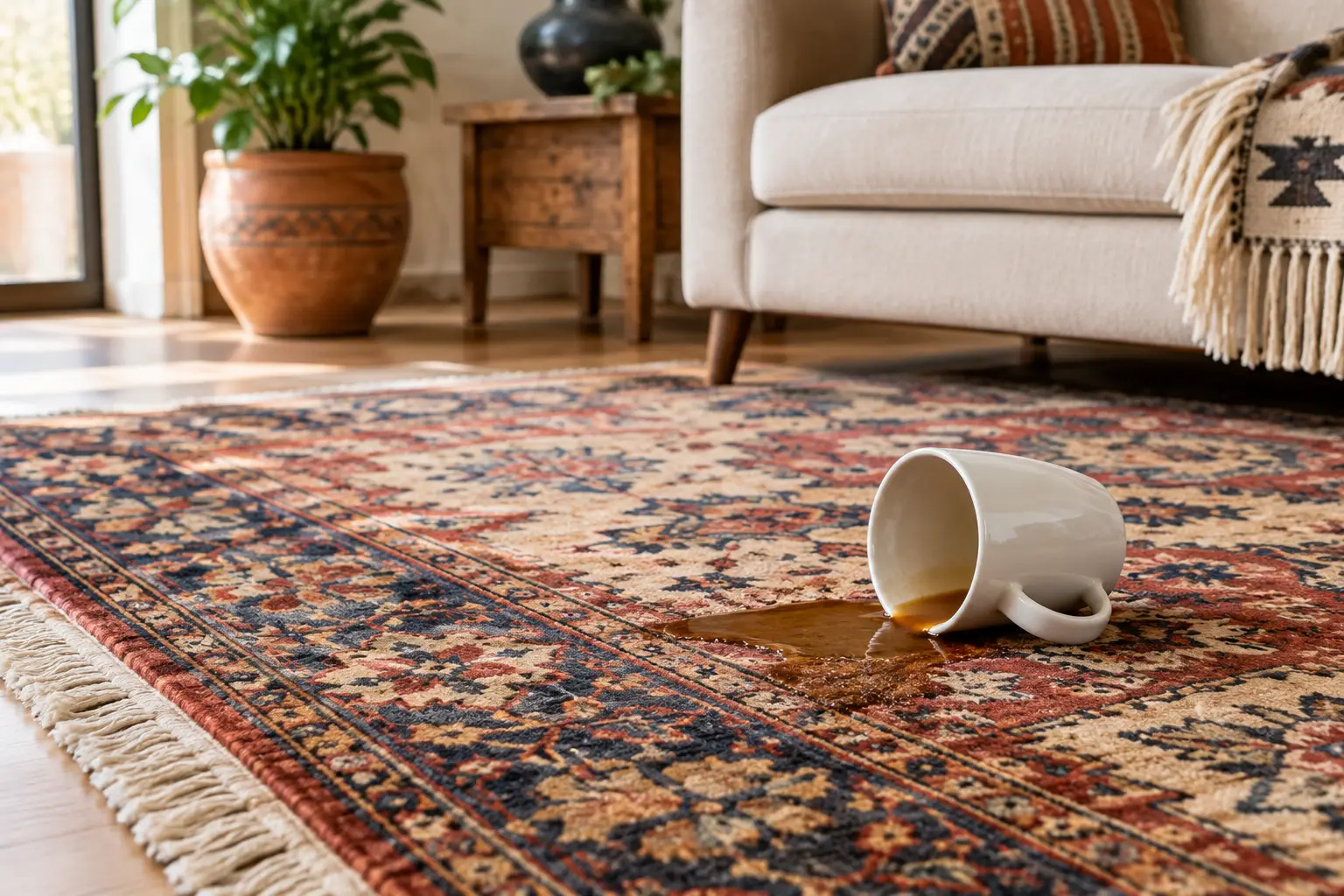
Yes, simple first aid can limit damage when an accident is fresh. Blot the area promptly with clean white towels or plain paper towels. Press down firmly and replace towels as they become wet. Do not rub, because rubbing pushes moisture deeper into the pile and can distort delicate fibers.
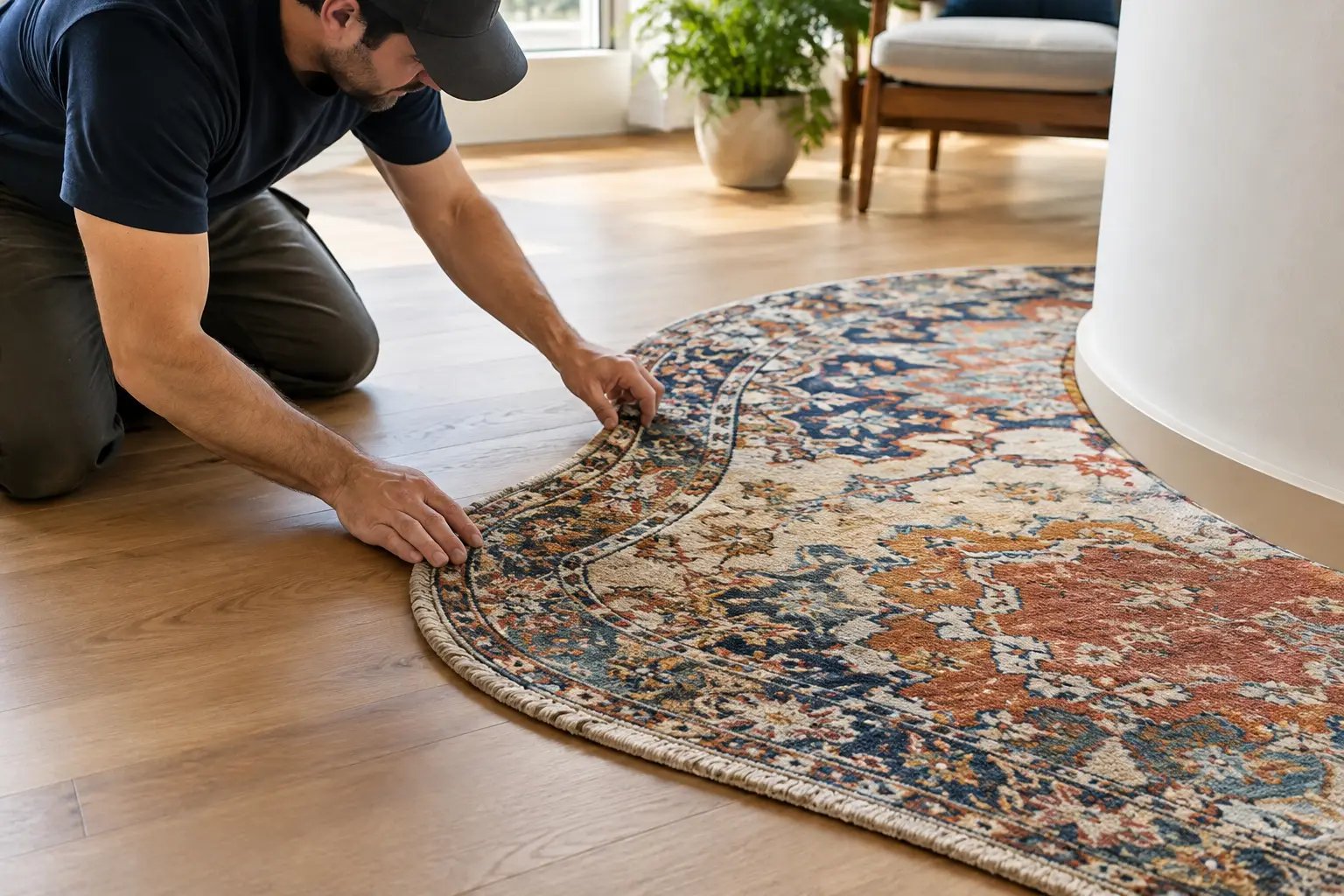
If the rug is small enough to lift safely, check whether the urine reached the floor or pad. Blot beneath the rug as well. Then allow air to circulate around the area. A fan can help with drying, but avoid high heat, which can set odors and may affect fibers or dyes.
Skip household shortcuts such as vinegar, ammonia, peroxide, bleach, laundry detergent, dish soap, or heavily scented sprays. Products that seem harmless can leave sticky residue, alter colors, cause dye bleeding, or make later professional rinsing more difficult. Ammonia-based products are particularly unhelpful around pets because their scent can resemble urine to some animals.
If you can still smell the accident after the rug is dry, if the spot feels stiff, or if the pet returns to the same place, it is time for professional evaluation. Those are signs the contamination may remain below the surface.
Why does the odor come back after cleaning?
Recurring odor usually means one of two things: urine residue remains in the rug, or the pad and floor beneath it were also affected. A rug that was cleaned only from the front may look better while contamination remains in its foundation.
Humidity is often the reason an old odor suddenly becomes noticeable. Moisture in the air reactivates odor-producing residue. Albuquerque’s dry climate can disguise the problem for part of the year, while rainy weather, a closed-up home, or a spill near the same spot can make it apparent again.
Repeated pet accidents add another complication. Each occurrence can spread beyond the last, creating a larger affected area than the visible stain suggests. In some cases, an old pad should be replaced after the rug is treated. A contaminated pad can transfer odor back into a clean rug.
Which rugs need specialist handling?
Any rug with persistent odor deserves a careful inspection, but some rugs should not be experimented on at home. This includes hand-knotted Persian and Oriental rugs, antique rugs, Navajo and Southwest textiles, silk, viscose, wool rugs with unstable dyes, and rugs with fragile fringe or worn edges.
Natural fibers are absorbent and often hold contamination deeper than synthetic fibers. Wool has a natural protective outer layer, but it can still absorb urine into its structure. Cotton foundations can hold moisture for an extended period, creating a stubborn odor issue if a rug is not dried correctly.
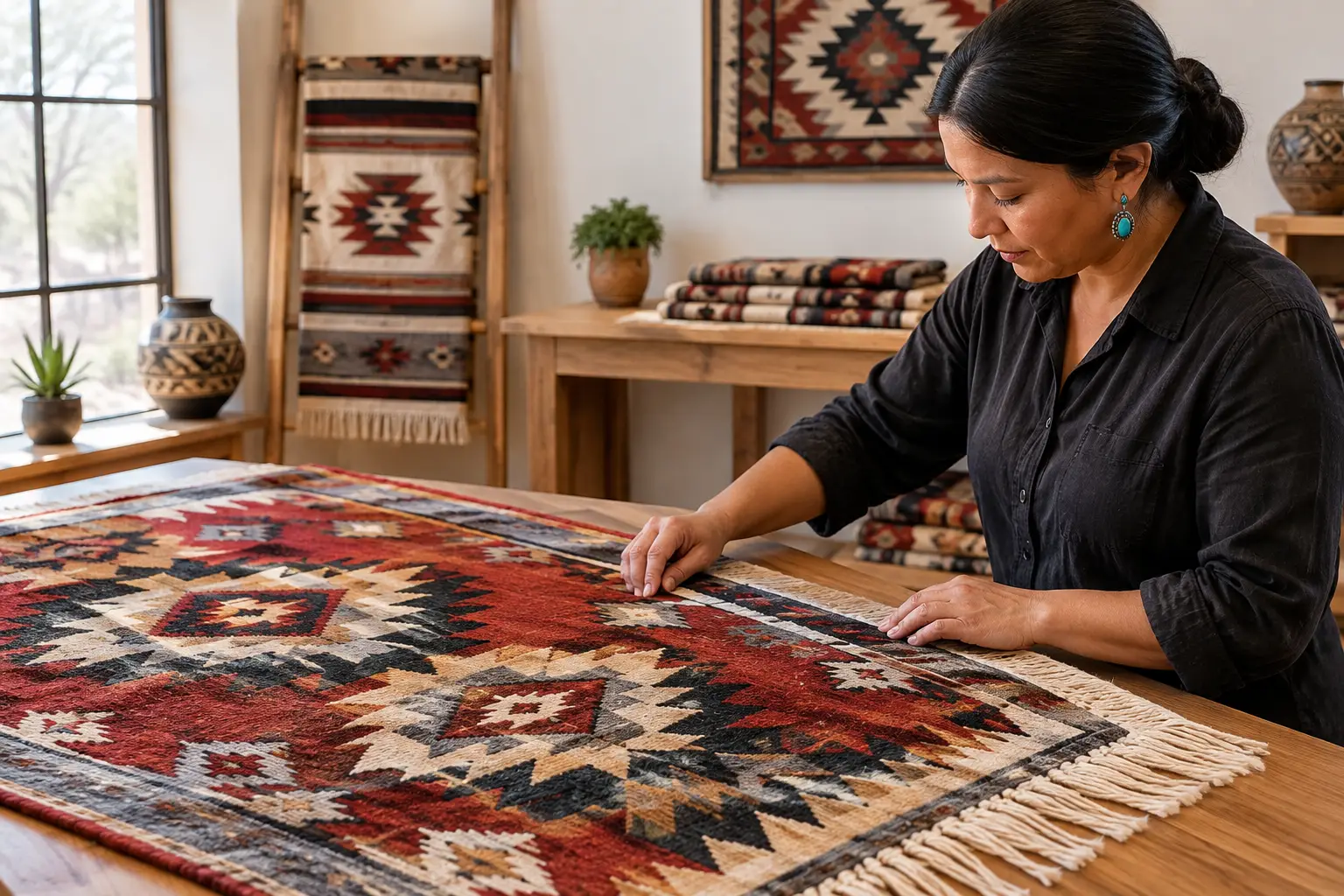
Navajo and Southwest textiles deserve particular restraint because their construction, dyes, age, and cultural significance vary widely. A surface cleaner, excessive water, or aggressive brushing can cause permanent changes. If there is any uncertainty about fiber or dyes, leave the testing and washing to a rug specialist.
What happens during professional urine treatment?
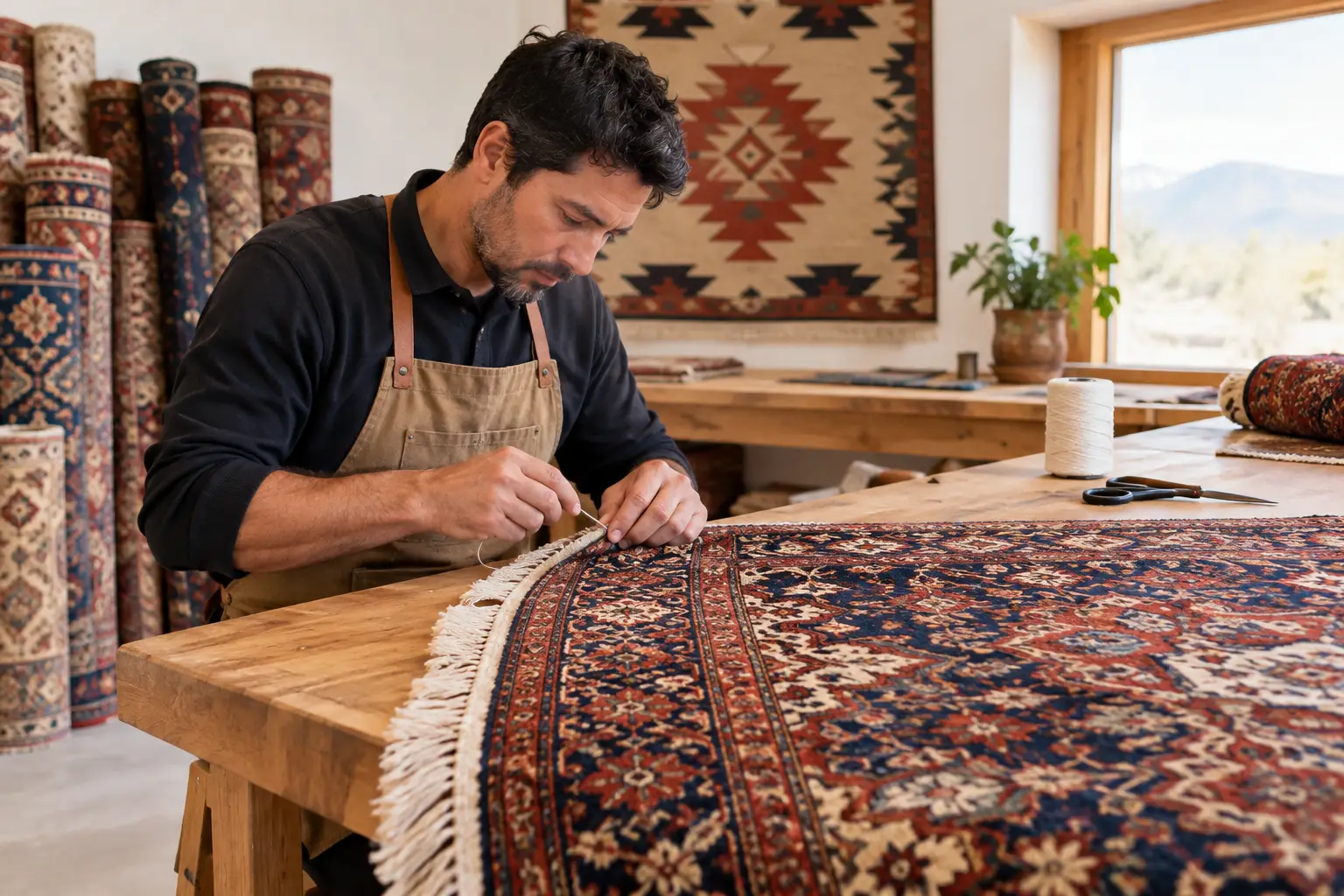
At One World Rug Care, rugs are treated in the shop rather than cleaned in the home. That matters because thorough urine treatment requires controlled washing, complete rinsing, and managed drying that are difficult to accomplish on a floor.
The process starts with inspection, including identifying fiber type, construction, condition, odor areas, stains, and dye stability. The rug is dusted to remove dry soil before washing. Embedded dirt can hold odors and interfere with rinsing, so removing it first is an important part of the work.
After testing, the rug is washed by hand using a material-specific method and cool water when appropriate. Urine-affected areas may need focused treatment and repeated flushing. The rug is then dried in a climate-controlled room so moisture does not remain in the foundation longer than necessary.
No responsible cleaner should promise that every odor or stain will disappear. Age of the contamination, repeated exposure, fiber damage, prior home treatments, and an affected pad all influence the result. A careful inspection provides a clearer picture of what treatment can reasonably address and whether other steps, such as replacing a pad, should be considered.
How can I prevent the next accident from becoming a rug problem?
Responding within the first 10 to 15 minutes gives you the best chance of limiting how far urine travels. Keep absorbent white towels nearby, blot rather than scrub, and dry the area with moving air. If an accident happens repeatedly in one place, consider temporarily removing the rug while you address the pet’s routine or health needs.
A quality rug pad can add cushioning and help reduce shifting, but it is not a barrier against a large urine accident. Check pads when you rotate or clean a rug. If a pad holds odor, it may need attention even after the rug itself has been washed.
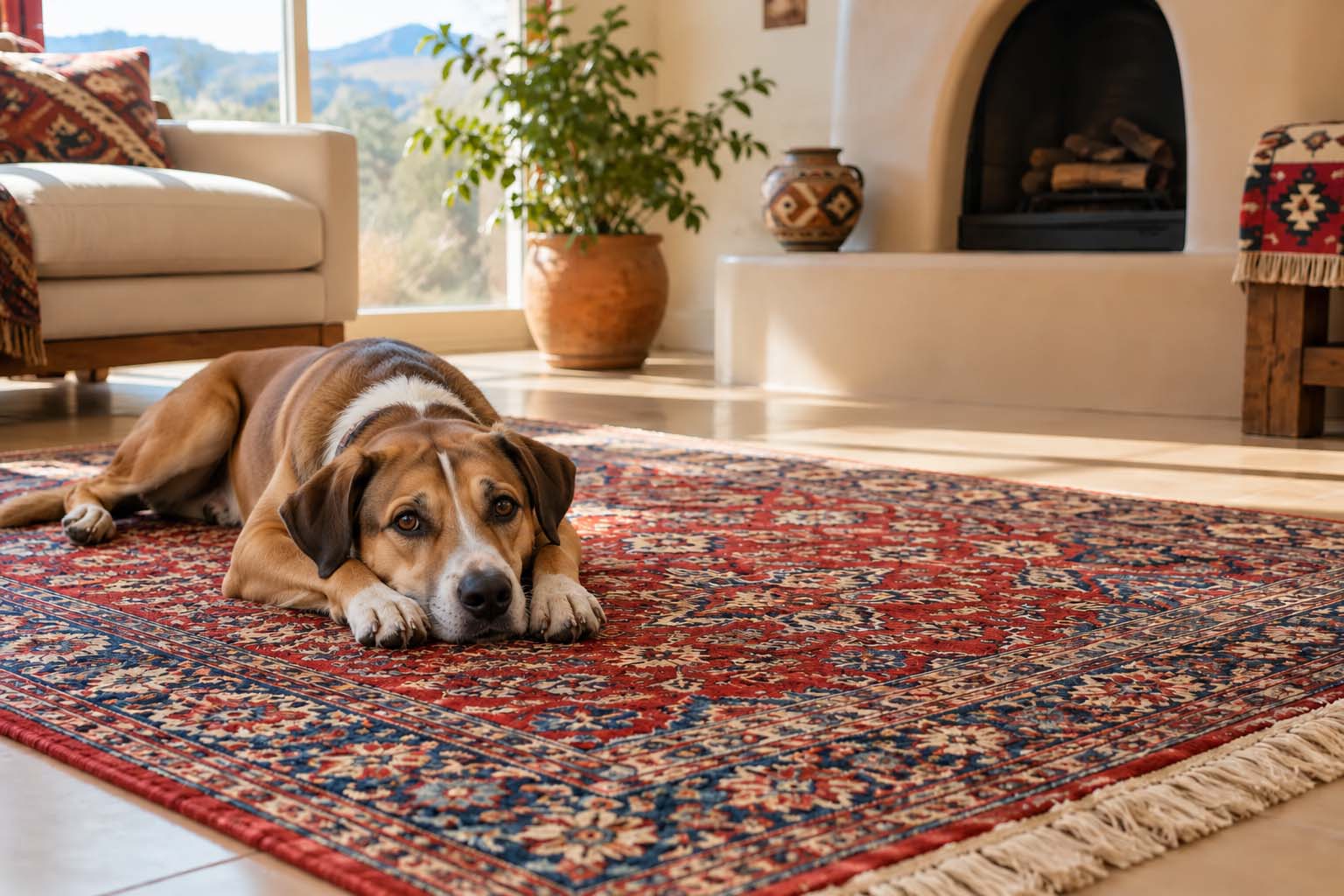
For households with older pets, puppies, or more than one animal, periodic professional cleaning can be a practical part of long-term rug care. It removes the dry soil that settles into a rug over time and gives a specialist an opportunity to spot odor, fringe wear, moth activity, or dye concerns before they become more complicated.
Rug Care in Albuquerque and Northern New Mexico
For urine odor, early blotting and a proper inspection protect both the rug and the home around it.
Have a rug that needs care? One World Rug Care has been cleaning, repairing and protecting area rugs in Albuquerque since 2012. Email a few photos of your rug to admin@oneworldrugcare.com for a free estimate, call us at (505) 821-0302, or visit the shop at 7200 Jefferson St NE, Suite A, Monday to Saturday 9 to 5. Pickup and delivery is free in Albuquerque and Santa Fe on orders of $150 or more, and available in Taos, Durango, Pagosa Springs and Las Cruces.